






Definition and Meaning
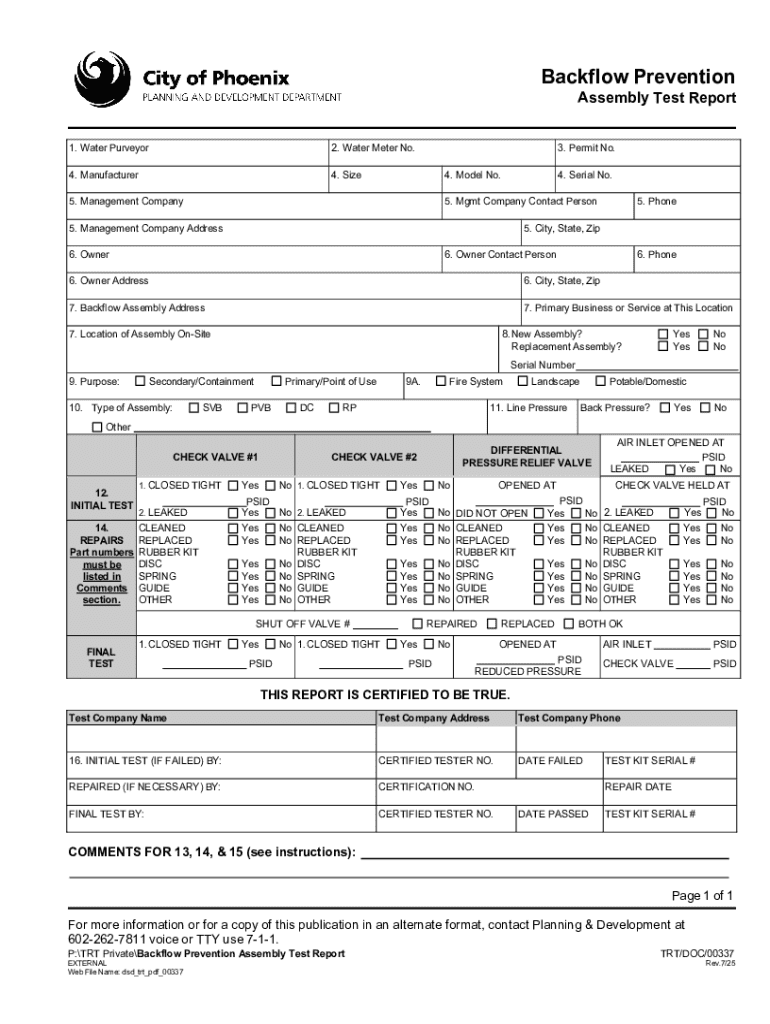
A Backflow Prevention Assembly Test Report is a crucial document used to record the testing and maintenance results of backflow prevention assemblies. These assemblies are devices designed to protect potable water supplies from contamination or pollution due to backflow. This report ensures that the assemblies function correctly, maintaining compliance with safety standards to prevent water contamination in municipal systems. Key sections of the report often include detailed assembly specifications, water purveyor details, and testing outcomes. By maintaining this documentation, water suppliers and system managers can guarantee that their potable water remains safe for consumption.
How to Use the Backflow Prevention Assembly Test Report
Using a Backflow Prevention Assembly Test Report involves several steps to ensure comprehensive data collection and accurate reporting. First, trained personnel must conduct the assembly tests, noting test results meticulously. Once the assembly has been tested, data, such as the condition of check valves and relief valves, should be recorded in the report. This documentation then facilitates decision-making about necessary repairs or replacements. The report also acts as a communication tool, often shared with state or local water authorities to demonstrate system compliance.
Steps to Complete the Backflow Prevention Assembly Test Report
Completing a Backflow Prevention Assembly Test Report involves a detailed and systematic process. First, gather all necessary details about the water purveyor and the specific backflow prevention assembly. Next, conduct a thorough inspection and test of the assembly, which may require specialized equipment and expertise. Following the inspection, document the specifications, test results, and any repairs made on the form. Finally, the tester should provide their certification, confirming the assembly has been tested according to relevant standards. Completion of this report often requires adherence to specific protocols and regulations to ensure accuracy and compliance.
Key Elements of the Backflow Prevention Assembly Test Report
The Backflow Prevention Assembly Test Report consists of several critical elements, ensuring that it covers all necessary aspects of the testing process:
- Water Purveyor Information: Includes the name and contact details of the water supplier responsible for the system.
- Assembly Specifications: Details such as the type, model, and serial number of the assembly.
- Test Results: Documenting the condition and performance of various components like check valves and relief valves.
- Repairs and Maintenance: Any fixes or maintenance activities performed on the assembly during the test.
- Certification by Tester: Includes the tester's details and a certification statement confirming the assembly's test results.
State-Specific Rules for the Backflow Prevention Assembly Test Report
Backflow Prevention Assembly Test Reports must adhere to specific state regulations, which can vary greatly. Some states have mandated testing frequencies, while others may require specific credentials for testing personnel. States like California may have stringent reporting and record-keeping requirements, while others might have different protocols for assembly inspection and testing. Understanding these state-specific rules is essential for compliance and to ensure that potable water remains uncontaminated. It is therefore recommended for water authorities and service providers to consult state guidelines regularly to stay updated with any regulatory changes.
Examples of Using the Backflow Prevention Assembly Test Report
Real-world scenarios of utilizing a Backflow Prevention Assembly Test Report include municipal water management systems, residential property management, and industrial complexes. For instance, a city water department might use these reports annually to ensure compliance with local regulations. Property management entities employ these documents to safeguard the communal water supply against contamination risks. On an industrial scale, factories might use them to track and verify the safety and functionality of their water lines, particularly if their operations involve potentially hazardous materials.
Required Documents
When preparing the Backflow Prevention Assembly Test Report, various supporting documents are often necessary:
- Past Test Reports: To provide historical data for comparison and verification.
- Assembly Maintenance Records: Documentation of past repairs, replacements, and maintenance schedules.
- Certification Documents: Proof of qualifications for individuals performing the tests.
- Compliance Reports: Any regulatory compliance certificates or mandates specific to the locality.
These documents ensure the report’s comprehensiveness and allow inspectors or regulatory agencies access to a full picture of the assembly's operational status.
Form Submission Methods (Online / Mail / In-Person)
Submitting a Backflow Prevention Assembly Test Report can be done through various methods, depending on local regulations and technological infrastructure. Many governing bodies accept electronic submissions through dedicated portals where reports can be uploaded directly, streamlining the process. Alternatively, reports can be mailed to the relevant water authority’s office. In-person submission might also be required, especially in regions where digital infrastructure for submissions is less developed. Each submission method has its procedural requirements, and it is crucial for holders of these reports to familiarize themselves with the preferred or required method of submission in their area.
Penalties for Non-Compliance
Failure to properly complete or submit a Backflow Prevention Assembly Test Report can incur significant penalties. These can range from fines imposed by local water authorities to stricter regulatory scrutiny or mandated additional inspections. In severe cases, non-compliance can result in legal action, especially if improper reporting leads to contamination of the public water supply. Stakeholders such as property owners and water suppliers must prioritize compliance by regularly submitting accurate and timely test reports. Compliance helps not only in avoiding penalties but also in ensuring the safety and reliability of potable water systems.
Digital vs. Paper Version
The Backflow Prevention Assembly Test Report is available in both digital and paper formats, each with its advantages. The digital version offers benefits like easy storage, retrieval, and submission through electronic platforms — valuable for efficient record-keeping and compliance management. Paper versions, however, remain indispensable in situations where digital access is limited or when physical documentation is preferred for certain legal or verification processes. Whether digital or paper, maintaining accurate and accessible records is essential for compliance and effective water management.