




01. Edit your form online
Type text, add images, blackout confidential details, add comments, highlights and more.

Type text, add images, blackout confidential details, add comments, highlights and more.

Draw your signature, type it, upload its image, or use your mobile device as a signature pad.

Send it via email, link, or fax. You can also download it, export it or print it out.
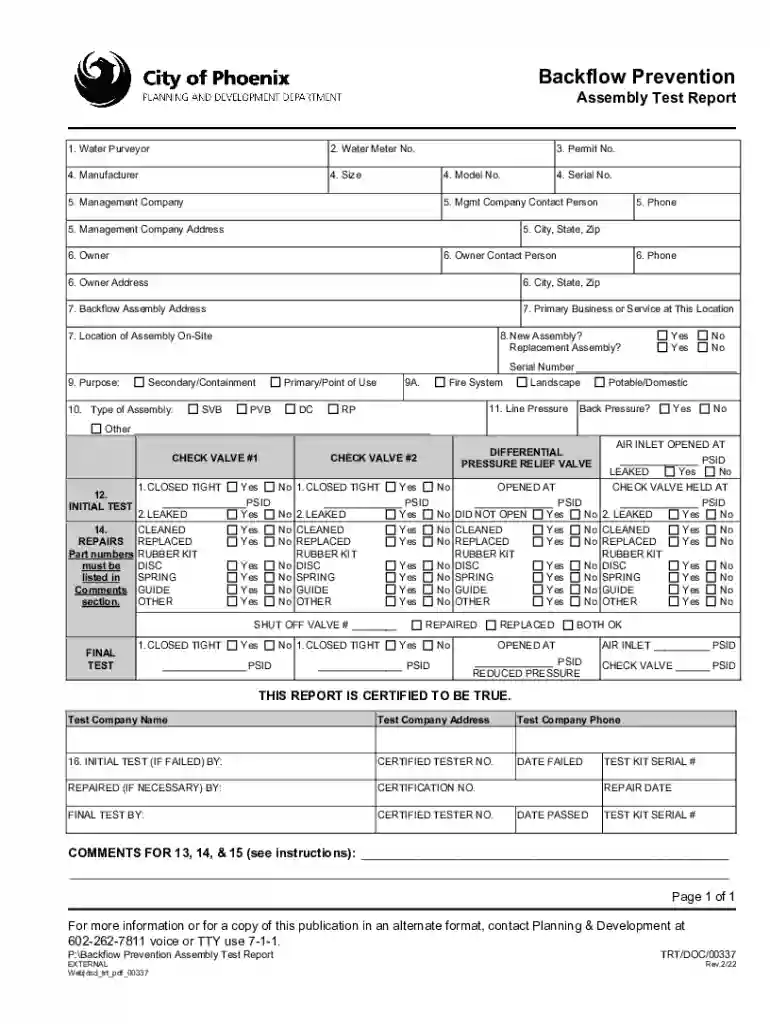
The Backflow Prevention Assembly Test Report is a critical document used to assess the functionality and safety of backflow prevention assemblies in plumbing systems. These assemblies are essential for protecting potable water supplies by preventing contaminated water from flowing backward into clean water lines. This test report is a formal record that ensures assemblies function correctly, adheres to safety standards, and complies with local water authority regulations.
Completing the Backflow Prevention Assembly Test Report involves several critical steps to ensure comprehensive compliance and accurate documentation. Here are detailed instructions:
Gather Required Information: Collect data about the water system, assembly type, and testing personnel. Ensure accurate details are provided to facilitate verification.
Conduct Initial Test: Perform initial tests on the assembly per manufacturer guidelines. Document results meticulously, focusing on device performance metrics.
Evaluate Assembly Performance: Analyze test results to determine if the assembly meets safety standards. Note any discrepancies or failures for corrective actions.
Perform Repairs if Necessary: If initial tests reveal issues, conduct immediate repairs and document these efforts within the report, including parts replaced and service provider information.
Retest the Assembly: Once repairs are complete, retest to confirm that the assembly now meets the required standards. Record the successful results in the report.
Complete the Report: Fill out remaining sections of the report to provide a complete and verified account of the testing process and outcomes.
Understanding the core elements of the Backflow Prevention Assembly Test Report can enhance compliance and facilitate robust record-keeping.
This report is not just a technical requirement but serves legal purposes in water quality management compliance.
The application of the Backflow Prevention Assembly Test Report spans various scenarios:
While the fundamental principles of backflow prevention are universal, specific rules and guidelines may vary across states.
When preparing to complete the Backflow Prevention Assembly Test Report, ensure you have the following documents:
Ensure that all related documents, such as repair logs or compliance certificates, are readily available and attached to the report for validation and future reference.
The decision on whether to use a digital or paper version of the Backflow Prevention Assembly Test Report depends on several factors affecting workflow efficiency and record-keeping.
Choosing the right format involves weighing these advantages against organizational requirements or regulatory obligations.
We've got more versions of the Backflow Prevention Assembly Test Report form. Select the right Backflow Prevention Assembly Test Report version from the list and start editing it straight away!
At DocHub, your data security is our priority. We follow HIPAA, SOC2, GDPR, and other standards, so you can work on your documents with confidence.





Protection against pollution of potable water installations and general require- ments of devices to prevent pollution by backflow. DIN EN 442. Radiators and
Check Valve 1. Check Valve 2. Relief Valve. Check Valve 1. Check Valve 2. Relief Valve. Bypass Check. PSID. Leaked. Closed Tight. Leaked. PSID.
BACKFLOW PREVENTION ASSEMBLY TEST REPORT. An annual test is required on all field-testable backflow prevention assemblies.


