







Definition & Meaning
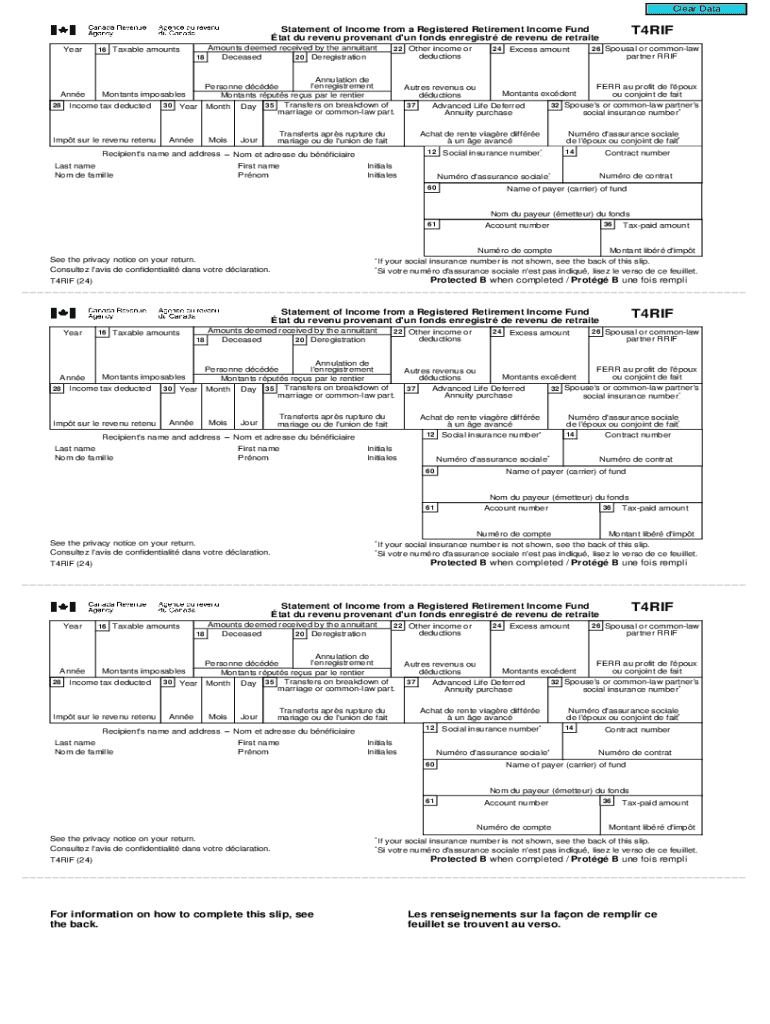
The T4rif form, a Statement of Income from a Registered Retirement Income Fund (RRIF) in Canada, serves as a critical document for annuitants. It provides a comprehensive outline of all taxable amounts distributed from an RRIF, capturing essential financial details. This form ensures the correct reporting of income for tax purposes, detailing not only the income received but also any deductions and credits applicable to the annuitant's financial situation. By understanding the purpose and content of the T4rif, RRIF beneficiaries can accurately manage their tax liabilities and avoid discrepancies in tax filings.
How to Obtain the T4rif
Obtaining the T4rif form is an essential step for individuals who receive income from a Registered Retirement Income Fund. Typically, the financial institution managing the RRIF issues the T4rif form annually. You should expect to receive it by the end of February for income earned in the previous tax year. If you do not receive the form by this time, contact your financial institution directly to request a copy. Ensuring timely access to the T4rif is crucial for meeting tax filing deadlines and maintaining compliance with Canadian tax laws.
Steps to Complete the T4rif
Completing the T4rif form involves several detailed steps to accurately report income and deductions:
- Review Personal Information: Ensure that your personal details, such as name, address, and social insurance number, are correctly pre-filled on the form.
- Verify Income Amounts: Cross-check the income figures displayed in the boxes with your records to confirm their accuracy.
- Check Deductions and Credits: Accurately report any deductions, such as transfers or withheld taxes, to ensure all financial obligations are met.
- Consult Instructions: Follow the instructions provided with the form for specific field entries, especially in dealing with items like marriage breakdown transfers.
- Finalize and Sign: Complete the form by filling all necessary fields, then print, sign, and prepare it for submission with your tax return.
Key Elements of the T4rif
Understanding the key elements of the T4rif form is critical for ensuring accurate tax reporting. These elements include:
- Box 16: Reporting the total taxable amount received from the RRIF.
- Box 20: Recording transfers upon the breakdown of a marriage or common-law partnership.
- Box 29: Indicating the pension income that qualifies for pension income splitting.
- Other Deductions: Details about any taxes deducted at the source or other adjustments to the income.
Familiarity with these components allows taxpayers to adequately prepare their returns and leverage any applicable tax benefits.
Who Typically Uses the T4rif
The T4rif form is primarily used by retirees and annuitants who draw income from a Registered Retirement Income Fund. These individuals include:
- Retirees: Who have converted their RRSPs into RRIFs to provide a source of regular income during retirement.
- Beneficiaries: Who inherit funds from an RRIF and receive annuity payments as part of an estate.
- Survivors of RRIF Holders: Such as spouses or common-law partners receiving income under certain conditions.
Understanding the user base of the T4rif helps in structuring financial planning strategies.


Examples of Using the T4rif
Here are scenarios demonstrating the practical application of the T4rif form:
- Retirement Planning: A retiree planning their annual income distribution reviews the T4rif to ensure adequate tax withholdings.
- Tax Preparation: A professional tax preparer uses the details on a client's T4rif to complete their income tax return, ensuring compliance with CRA requirements.
- Financial Audits: In an audit, companies may request the T4rif to verify the amounts reported against their records for accuracy.
Each example highlights the form's role in financial management and tax compliance.
Legal Use of the T4rif
The legal application of the T4rif is governed by Canadian tax laws, specifically the Income Tax Act. The form is used to declare RRIF income annually to the Canada Revenue Agency (CRA). Compliance with this legal requirement:
- Facilitates Proper Taxation: The income declared must align with tax obligations, as incorrect reporting can result in penalties.
- Enables Benefit Claims: Accurate reporting through the T4rif might qualify taxpayers for credits or benefits, such as the pension income credit in Canada.
Understanding the legal implications of the T4rif is integral to avoiding legal repercussions and maximizing eligible tax benefits.
Filing Deadlines / Important Dates
For Canadian taxpayers, respecting the filing deadlines associated with the T4rif is crucial. The key dates related to this form include:
- February 28: The deadline by which the financial institution must provide the T4rif to the annuitant or beneficiary each year.
- April 30: Standard deadline for filing the annual income tax return, incorporating the T4rif, unless an extension applies.
Adhering to these deadlines helps in avoiding late filing penalties and ensures compliance with national tax regulations.




