
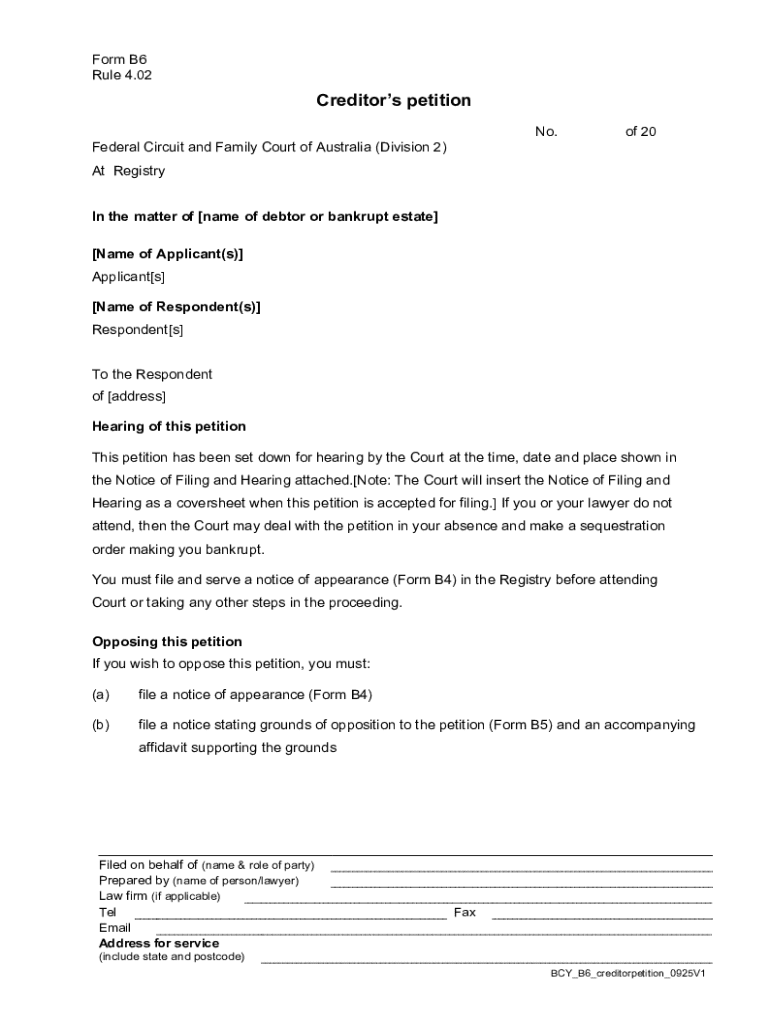







Definition & Purpose of Form B6
Form B6 is a critical document used in bankruptcy filings within the United States. It is part of the official forms required under the Bankruptcy Act of 1966. The primary purpose of this form is to provide a detailed list of a debtor's creditors. This ensures that all parties involved in a bankruptcy proceeding are disclosed, enabling a transparent and fair process.
Understanding the significance of Form B6 is crucial, as it forms the basis for notifying creditors about the debtor’s bankruptcy status. This action triggers the automatic stay provision, preventing creditors from pursuing collection actions against the debtor. Form B6 is devoid of nuances, serving a precise role in simplifying the complex landscape of bankruptcy proceedings.
How to Use Form B6
The process of using Form B6 begins by gathering comprehensive details about your creditors. This includes names, addresses, and the amounts owed to each creditor. Once this information is complete, you will document it systematically on the form. It is crucial to ensure the accuracy and completeness of the data to maintain the integrity of the bankruptcy process.
- Gather information: Collect names, addresses, and contact details.
- Record amounts: Specify the debts owed to each creditor.
- Check accuracy: Verify all entries for precision to avoid delays or complications in your case.
Form B6 must be submitted as part of the bankruptcy petition package, and failure to provide complete information can result in dismissals or sanctions from the court.
Steps to Complete the Form B6
Completing Form B6 involves a systematic approach to ensure precision and compliance with legal standards. Here's a detailed guide:
- Identify all creditors: Make a comprehensive list of everyone or every entity to whom you owe money.
- Classify creditor debts: Organize by priority based on bankruptcy code requirements, such as secured, unsecured, or priority debts.
- Input detailed information: Precisely enter the creditor's name, address, and the amount due.
- Review for accuracy: Double-check each entry to ensure correct information is presented.
- Submit with other filings: Include Form B6 in your overall bankruptcy documentation.
A meticulous and attentive approach to completing Form B6 is necessary to prevent errors that could adversely affect the bankruptcy proceeding.
Important Terms Related to Form B6
Understanding relevant terminology in Form B6 can streamline the completion process. It's essential to familiarize yourself with key terms and their implications:
- Creditor: An individual or entity to whom a debt is owed by the debtor.
- Secured Debt: Debt backed by collateral, offering protection to the creditor.
- Unsecured Debt: Debt not protected by any collateral, leading to potential full or partial discharge.
- Priority Debt: Obligations that are given precedence in repayment, often non-dischargeable.
- Automatic Stay: Provision stopping creditors from collections post-bankruptcy filing.
Each term plays a significant role in interpreting the rights and obligations of both creditors and debtors during bankruptcy proceedings.
Legal Use of Form B6
The legal use of Form B6 is grounded in its requirement by the bankruptcy courts to ensure full disclosure of all financial obligations. This form serves several legal functions:
- Disclosure: Guarantees transparency by listing known creditors.
- Notification: Ensures all creditors are informed and able to claim in the bankruptcy process.
- Automatic Stay: Triggers this protection, preventing creditors from collecting debts without court permission.
The form must be used strictly according to legal guidelines to ensure compliance and maintain the procedural integrity of the bankruptcy process.
State-Specific Rules for Form B6
Different states may have nuanced differences in handling bankruptcy forms due to varying interpretations of federal laws. Being aware of your state's rules regarding Form B6 is pivotal:
- State exemptions: Some states allow additional or alternative exemptions beyond federal options.
- Local procedures: Certain states may have specific filing procedures influenced by regional bankruptcy court practices.
- Documentation requirements: Variations might exist in supporting documentation mandated by state courts.
Understanding specific state rules assists in preparing Form B6 accurately and adhering to localized legal expectations.
Filing Deadlines and Important Dates
Timing is crucial in bankruptcy proceedings, and knowing when to file Form B6 is essential:
- Initial filing: Form B6 must be filed with initial bankruptcy petitions.
- Amendment windows: Courts may allow amendments within designated periods.
- Notification periods: Ensure creditors are informed within the court-mandated timelines to facilitate the orderly progression of the bankruptcy case.
Staying informed on deadlines avoids jurisdictional penalties and ensures that the process moves forward seamlessly.
Penalties for Non-Compliance with Form B6
Failing to correctly comply with Form B6 filing requirements can result in significant repercussions:
- Case dismissal: Incomplete or inaccurate submissions can lead to dismissal of the bankruptcy case.
- Sanctions: Monetary or procedural penalties may be imposed for failure to disclose.
- Fraud allegations: Intentional omissions or inaccuracies could lead to charges of bankruptcy fraud.
Ensuring compliance ensures that your bankruptcy proceeding is both valid and effective, protecting your legal and financial interests.
Attention to detail and adherence to proper procedures when dealing with Form B6 can effectively navigate the complexities of bankruptcy law and safeguard against adverse legal consequences.




