
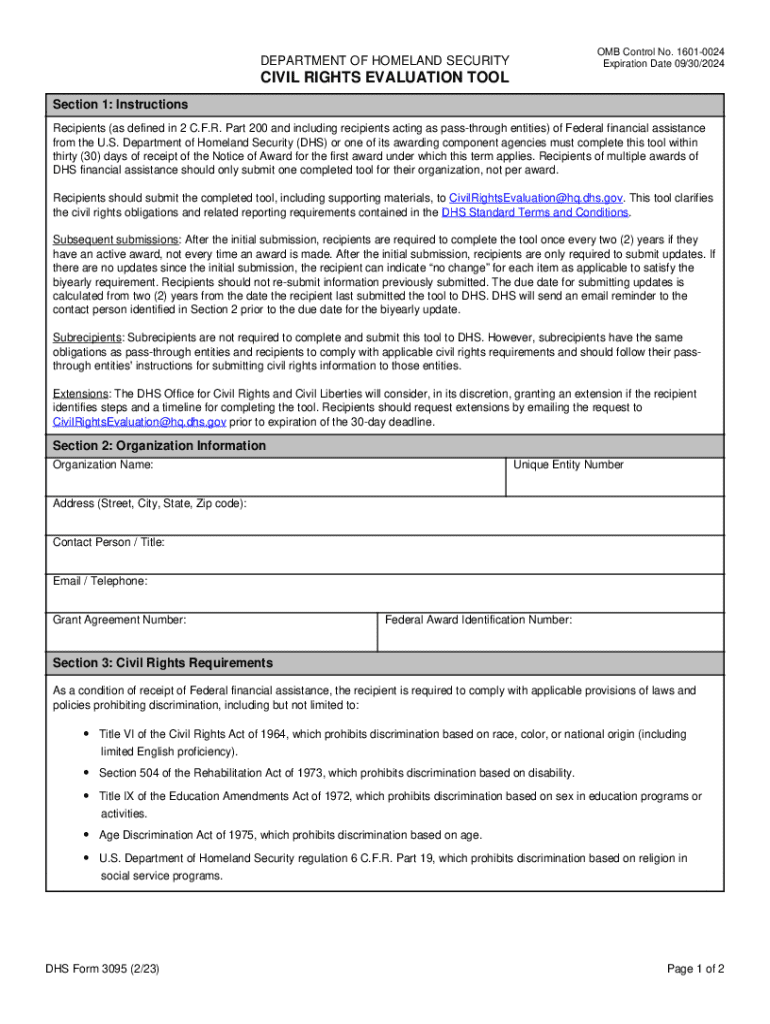







Definition and Meaning of the Civil Rights Evaluation Tool
The Civil Rights Evaluation Tool is a comprehensive documentation instrument utilized by recipients of Federal financial assistance from the U.S. Department of Homeland Security (DHS). This tool ensures compliance with civil rights laws and standards, mandating that organizations receiving federal funds uphold civil rights principles. It serves both as a checklist for compliance and as a reporting framework that recipients must complete to detail their adherence to anti-discrimination statutes.
The tool assesses programs funded by DHS to verify that they are free from discriminatory practices based on race, color, national origin, sex, disability, and other protected characteristics. By requiring detailed information, the tool facilitates monitoring and enforcement of civil rights laws, safeguarding against discrimination in federally assisted programs.
How to Obtain the Civil Rights Evaluation Tool
To acquire the Civil Rights Evaluation Tool, organizations must typically access official DHS channels. This process often involves contacting the relevant DHS department to request the form or accessing it through designated online portals. Availability may depend on the organization's level of engagement with Federal programs or their specific compliance obligations.
- Online Access: Many recipients can download the template directly from DHS websites or secure portals once their eligibility or need is verified.
- Direct Notification: DHS might directly provide the tool to organizations required to comply as part of their grant award process.
Steps to Complete the Civil Rights Evaluation Tool
Completing the Civil Rights Evaluation Tool involves several steps that ensure comprehensive reporting and compliance with civil rights standards. Detailed understanding of each section and legal requirements is crucial.
-
Review the Instructions: Start by thoroughly reading the instructions accompanying the tool to understand the specific requirements and sections.
-
Gather Required Information: Compile all necessary information regarding your organization's compliance with civil rights laws, including policies, complaint records, and training schedules.
-
Section-by-Section Completion: Work through each section of the tool, entering accurate and detailed information. Ensure to address all prompts related to discrimination policies, procedures, and incidents.
-
Verification: Cross-check the information provided with relevant documentation and policies to ensure accuracy and completeness.
-
Submission: Follow the specified submission guidelines, either electronically or through traditional mail, within the stipulated timeframe.
Key Elements of the Civil Rights Evaluation Tool
The Civil Rights Evaluation Tool is structured to address multiple facets of compliance and reporting. Key elements include:
-
Discrimination Policies: Documentation of policies detailing anti-discrimination safeguards within the organization.
-
Complaint Handling Procedures: Processes for addressing discrimination complaints, ensuring swift and fair resolution.
-
Training Initiatives: Records of training and workshops aimed at educating staff about civil rights obligations and preventing discrimination.
These elements are crucial for demonstrating adherence to civil rights laws and ensuring that federally funded programs operate within legal and ethical boundaries.
Important Terms Related to the Civil Rights Evaluation Tool
Understanding the terminology specific to this tool is crucial for accurate completion and compliance. Important terms include:
-
Anti-Discrimination Laws: Legal frameworks prohibiting discrimination in various contexts, including employment, housing, and participation in federally funded programs.
-
Compliance Reviews: Evaluations conducted to ensure that organizations adhere to the required civil rights standards.
-
Protected Classes: Specific groups shielded from discrimination by law, such as race, gender, age, or disability.
These terms form the backbone of the comprehensive compliance process outlined by the Civil Rights Evaluation Tool, guiding organizations in maintaining lawful and non-discriminatory practices.
Examples of Using the Civil Rights Evaluation Tool
Practical application of the tool can vary based on the organization and its specific needs. Some scenarios include:
-
Non-Profit Organizations: Ensuring their programs do not practice discrimination when utilizing DHS funding for community services.
-
Educational Institutions: Completing the tool to secure or verify funding for educational programs without engaging in discriminatory enrollment practices.
-
Healthcare Providers: Verifying compliance when receiving federal assistance for healthcare initiatives aimed at diverse populations.
These examples highlight the tool's flexibility and importance across various sectors engaged with DHS-funded initiatives.
Penalties for Non-Compliance
Non-compliance with the Civil Rights Evaluation Tool can have significant repercussions. Organizations failing to complete or improperly reporting on the tool may face penalties, including:
-
Loss of Funding: Withdrawal of existing federal support and disqualification from future DHS funding opportunities.
-
Legal Action: Potential lawsuits or legal scrutiny for failing to comply with federal discrimination laws.
-
Reputational Damage: Loss of trust and credibility, impacting the organization's ability to collaborate with federal entities.
Ensuring accurate and timely completion of the tool helps mitigate these risks and fosters credibility and legal compliance.
Digital vs. Paper Version of the Civil Rights Evaluation Tool
Organizations may have the option to complete the tool either digitally or on paper, each with its advantages:
-
Digital Version: Offers a streamlined completion process with electronic submission, reducing potential for human error and improving expedite verification.
-
Paper Version: Useful for entities preferring traditional documentation methods or those without easy digital access.
The choice between digital and paper formats should consider the organization's existing technological infrastructure and staff comfort levels with digital tools.
Legal Use of the Civil Rights Evaluation Tool
Using the Civil Rights Evaluation Tool appropriately is a legal obligation for recipients of DHS funding. It:
-
Ensures Compliance: Underpins the organization’s commitment to civil rights laws, preventing discriminatory practices in program execution.
-
Facilitates Transparency: Promotes open reporting, reducing incidences of covert discrimination and enhancing accountability.
The legally binding nature of the tool emphasizes the importance of diligent and accurate completion to meet federal standards and contribute to the fair distribution of resources.




