







Definition & Meaning
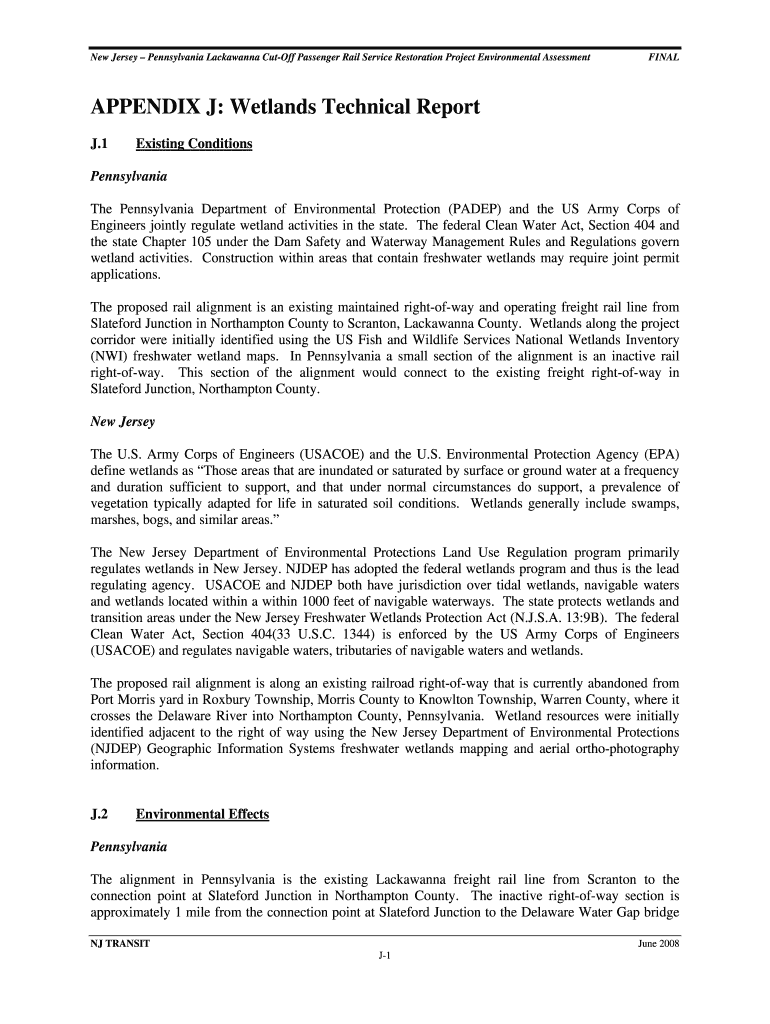
The New Jersey Pennsylvania Lackawanna Cut-Off Passenger Rail Service Restoration Project Environmental Assessment is a comprehensive evaluation of the potential environmental impacts involved in the restoration of passenger rail services along the Lackawanna Cut-Off route. This assessment specifically focuses on the conditions and regulatory frameworks governing wetlands along the proposed rail alignment in both Pennsylvania and New Jersey.
Key Elements
- Wetland Conditions: Detailed description of existing wetland ecosystems along the proposed rail line.
- Regulatory Frameworks: Overview of local, state, and federal regulations affecting construction activities in wetlands.
- Environmental Impacts: Examination of potential ecological disturbances that may result from construction and operations.
- Mitigation Strategies: Outline of required measures to minimize and rectify any negative environmental effects.
How to Obtain the Assessment
To acquire a copy of the New Jersey Pennsylvania Lackawanna Cut-Off Passenger Rail Service Restoration Project Environmental Assessment, interested parties typically need to contact the state transportation department or the agency responsible for overseeing environmental assessments within the region.
Steps to Access
- Identify the Responsible Agency: Determine which governmental body is managing the project.
- Formal Request: Submit a request for the document through email or their official website.
- Online Access: Some assessments may be available for direct download online.
- Physical Copies: If online access is not available, request a physical copy to be mailed.
Steps to Complete the Assessment
Although not completed by the public, understanding the completion process can be insightful for stakeholders.
Process Breakdown
- Data Collection: Gather comprehensive data on the current wetland conditions and other environmental factors.
- Impact Analysis: Evaluate how the construction and operation of the rail line will affect the local environment.
- Regulatory Review: Compare planned activities against existing environmental regulations.
- Drafting the Report: Compile findings into an integrative document outlining potential impacts and mitigation plans.
- Stakeholder Consultation: Engage with local communities and environmental groups for feedback.
- Finalization and Approval: Incorporate feedback and finalize the document for approval by relevant authorities.
Why Assess the Environmental Impact
Conducting an environmental assessment is a crucial step in responsibly developing infrastructure projects. It ensures that potential negative impacts on the environment are identified and mitigated, thereby protecting biodiversity and complying with legal requirements.
Benefits
- Legal Compliance: Adhering to both state and federal environmental laws.
- Biodiversity Protection: Safeguarding local ecosystems from undue harm.
- Community Engagement: Involving local communities in project planning enhances transparency and trust.
- Sustainable Development: Promoting projects that balance ecological preservation with infrastructure growth.
Important Terms
Understanding specific terminology is vital for interpreting the environmental assessment effectively.
Key Terms
- Wetlands: Areas that are inundated or saturated by surface or groundwater supporting vegetation adapted to saturated soil conditions.
- Mitigation: Strategies to reduce adverse effects on the environment.
- Regulatory Framework: Set of rules and guidelines governing activities in specific domains.
- Ecological Disturbances: Events that disrupt ecosystem structure and function.
Legal Use of the Assessment
The legal use of the environmental assessment involves utilizing its findings to guide decision-making in the rail service restoration project. It serves as a foundational document ensuring that any project activity is compliant with necessary environmental regulations.
Legal Implications
- Permitting Processes: Influences the approval of necessary environmental permits.
- Regulatory Compliance: Ensures adherence to environmental laws and policies.
- Litigation Defense: Provides documented evidence of due diligence in environmental protection.
Examples of Using the Environmental Assessment
The assessment could be used in various contexts to illustrate potential scenarios.
Practical Applications
- Project Design Alterations: Using findings to modify project plans to minimize environmental impact.
- Public Consultations: Informing community discussions and transparency efforts.
- Grant Applications: Supporting funding requests with demonstrated environmental stewardship.
Penalties for Non-Compliance
Non-compliance with the requirements and recommendations within the environmental assessment can result in severe legal and financial consequences for the project stakeholders.
Consequences
- Fines and Penalties: Imposed by regulatory bodies for violations of environmental laws.
- Project Delays: Halt construction until compliance issues are resolved.
- Reputational Damage: Loss of public trust and potential investor skepticism.
In-depth comprehension of these components ensures a thorough understanding of the environmental assessment and its significance in the restoration project.




