






Definition and Meaning
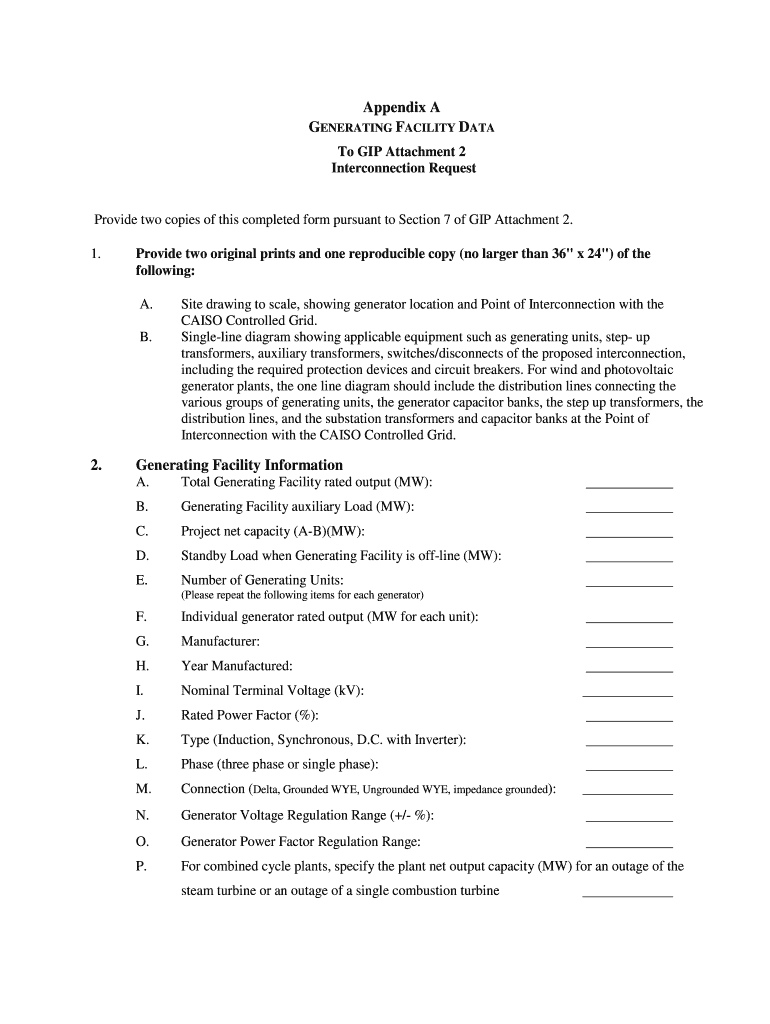
An "Interconnection Request" is a formal application submitted by a power generation facility to connect to the electrical grid. This process involves detailed submissions including technical specifications and grid compliance requirements, ensuring that a proposed energy project aligns with grid standards and capacity. The request typically pertains to new projects like wind, solar, or other types of generation facilities seeking to feed power into the grid. Understanding its precise meaning is critical for any entity planning to contribute to the energy supply network.
Steps to Complete the Interconnection Request
- Initial Preparation: Gather necessary documentation, including technical specifications and operational details of your facility.
- Form Completion: Fill out the interconnection request form with precise information about your generation project, such as capacity, type, and output characteristics.
- Technical Analysis: Submit technical data regarding facility modeling for compliance assessment, including load flow and dynamic response characteristics.
- Submission: Send the completed form and all required documents to the appropriate utility entity or grid operator.
- Review Process: Await evaluation and respond to any additional requests for information or modifications to ensure compliance.
- Approval and Connection: Once approved, proceed with physical interconnection to the grid as per the agreed terms and conditions.
Important Considerations
- Ensure accuracy in technical submissions to avoid delays.
- Provide clear drawings and electrical schematics as part of the submission.
Required Documents
The interconnection request requires a comprehensive set of documents, which may include:
- Technical Specifications: Detailed descriptions of equipment, including generators and transformers.
- Facility Output Data: Information on projected energy output and variability.
- Modeling Data: Load flow and dynamic response models for grid integration.
- Excitation and Stabilizer Information: Details on power system stabilizers and excitation systems to maintain grid stability.
Key Elements of the Interconnection Request
- Generator Specifications: Type, capacity, and technical parameters of generators used.
- Transmission Information: Connection points and related load details.
- Compliance Data: Documentation proving adherence to grid standards.
- Operational Plans: Strategies for maintenance and grid support during varied operational states.
Legal Use of the Interconnection Request
The interconnection process is governed by regulations that ensure safe and reliable grid operation. Facilities must comply with laws set by authorities such as the Federal Energy Regulatory Commission (FERC) or regional entities like CAISO. Legal adherence involves:
- Meeting all technical standards for grid safety and reliability.
- Entering into agreements that define the operational and financial terms of grid connection.
Examples of Using the Interconnection Request
Consider a solar power company aiming to connect a new 50 MW utility-scale project to the grid. The company would submit an interconnection request detailing:
- Project Size and Location: Highlighting the potential energy contribution and geographic positioning.
- Technical Compatibility: Demonstrating compatibility with existing grid infrastructure.
Another scenario may involve a community wind farm seeking to participate in a distributed energy resource initiative, requiring similar detailed submissions for regulatory and grid inclusion.
Who Typically Uses the Interconnection Request
- Renewable Energy Developers: Seeking to integrate solar, wind, and hydroelectric projects with the grid.
- Municipal Utilities: Looking to support regional energy needs through additional connections.
- Industrial Power Generators: Planning to contribute excess power to local or regional grid systems.
- Research Entities: Interested in pilot demonstration projects to study grid impacts.

Form Submission Methods
Submitting an interconnection request can vary depending on regional regulations and utility operations. Common methods include:
- Online Submission: Many utilities offer digital portals for form submission, facilitating easier documentation handling.
- Mail: Physical copies can be mailed to the respective grid authority's address.
- In-Person: Direct submission may be required for comprehensive reviews or significant projects.
State-Specific Rules for the Interconnection Request
Regulations governing interconnection requests can vary significantly by state. States may have specific incentives, rules, or processes designed to promote renewable energy projects. For example:
- California: Utilizes rules governed by CAISO, which require extensive documentation and technical verification.
- Texas: Has distinct processes under ERCOT that are tailored for its unique independent grid infrastructure.
Understanding state-specific rules is essential for smooth interconnection processes and compliance.