
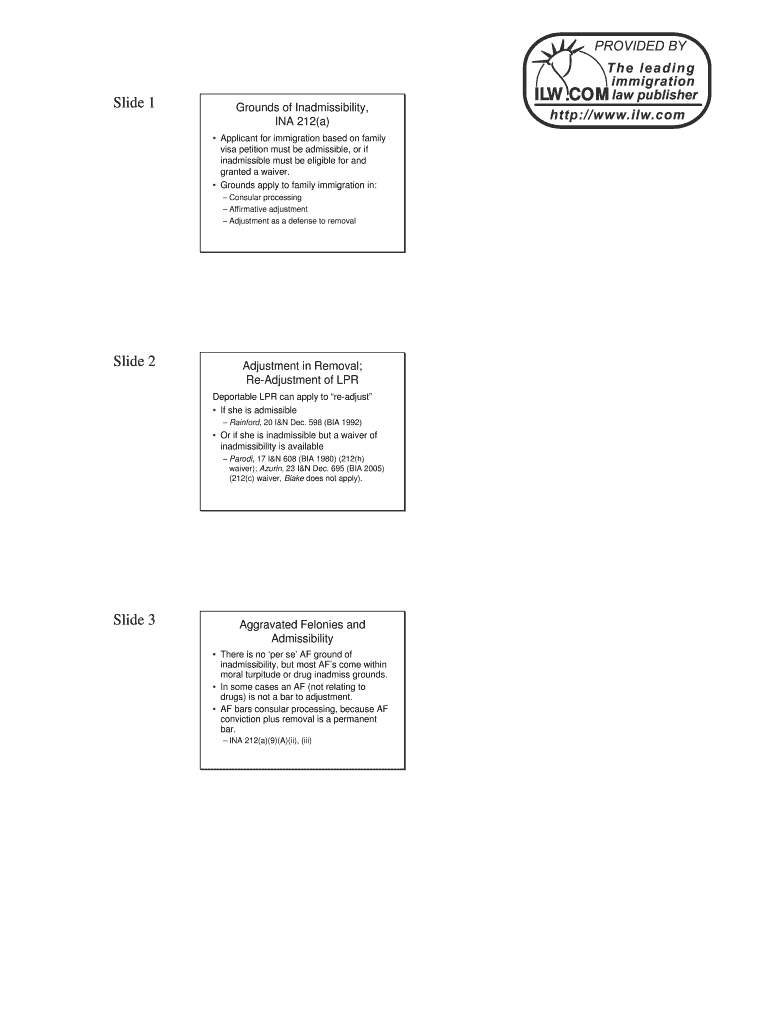







Definition and Meaning of Grounds of Inadmissibility
The term "Grounds of Inadmissibility" refers to specific criteria outlined primarily under the Immigration and Nationality Act (INA) Section 212(a) that can bar foreign nationals from entering or obtaining permanent residency in the United States. These grounds encompass various areas such as health-related issues, criminal activities, security concerns, public charge grounds, and previous immigration violations, among others. Understanding these criteria is crucial for individuals seeking entry into the U.S. as they will determine eligibility for visas or adjustments of status.
Grounds of inadmissibility are not limited to a specific demographic and can affect people across different age groups, professions, and backgrounds. The precise impact of these grounds can vary based on the nature of the inadmissibility and possible waivers one may qualify for, making it essential to navigate them with precision.
Key Elements of Grounds of Inadmissibility
Understanding the key elements of the grounds of inadmissibility involves a comprehensive look into various categories:
-
Health-Related Grounds: These include communicable diseases, lack of required vaccinations, and mental or physical disorders with behaviors posing a threat to property or safety.
-
Criminal Grounds: Crimes involving moral turpitude (CMT), aggravated felonies, and involvement in drug trafficking constitute significant impediments under this section.
-
Security and Related Grounds: These relate to espionage, sabotage, or participation in terrorist activities, posing concerns to U.S. national security.
-
Public Charge: This ground examines whether an individual is likely to become dependent on government benefits for subsistence.
-
Illegal Entrants and Immigration Violators: Previous visa fraud or abuse and illegal entry or overstays fall under this category.
-
Documentation Requirements: Lack of proper documentation or attempts to enter without inspection can lead to inadmissibility.
Analyzing these key elements allows applicants and professionals to better manage their potential pathways into the United States by identifying applicable waivers or solutions.
Legal Use of the Grounds of Inadmissibility
The legal framework encompassing the grounds of inadmissibility is embedded within U.S. immigration law. Legal professionals and applicants must be adept at interpreting these regulations to navigate cases of inadmissibility effectively. The use of this framework determines admission eligibility, adjustments of status, and removal defenses.
Legal Considerations
-
Waivers: Certain inadmissibility grounds can be waived under INA 212(h), especially related to crimes, requiring applicants to demonstrate rehabilitation or hardship to qualified relatives.
-
Advisory Opinions: Legal experts often seek advisory opinions from governmental bodies to deduce complex circumstances that might affect an individual's admissibility.
-
Case Law: Existing precedents and judicial interpretations of the INA guide many legal arguments and strategies related to grounds of inadmissibility.
Effectively using this legal framework requires a robust understanding of U.S. immigration statutes and often necessitates collaboration with immigration attorneys or experts specializing in waiver applications.
Steps to Address Grounds of Inadmissibility
Addressing grounds of inadmissibility involves several critical steps to ensure compliance with U.S. immigration laws:
-
Assessment of Inadmissibility Grounds: Identify which specific grounds apply to the applicant based on their personal history and circumstances.
-
Gathering Required Documents: Collect all necessary documents, including police reports, court records, medical evaluations, and proof of supporting relationships or hardship.
-
Filing a Waiver Application: Submit a waiver application outlining why the inadmissibility should be waived, including evidence of rehabilitation or undue hardship.
-
Legal Consultation: Collaborate with an immigration attorney to ensure that the waiver and all accompanying documentation align with legal requirements.
-
Follow-up and Compliance: Monitor the application process diligently and communicate with immigration authorities to address further inquiries or provide additional documentation if requested.
These steps require careful consideration and often ongoing legal guidance to ensure successful navigation through U.S. immigration law complexities.
Examples of Using Grounds of Inadmissibility
Real-world situations provide clarity on how grounds of inadmissibility are applied and managed:
-
Health-Related Case: An individual diagnosed with a communicable disease is initially barred entry but acquires a waiver after successful treatment and assurance of no public health risk.
-
Criminal Record Example: A foreign national convicted of a minor theft decades ago applies for a waiver under the petty offense exception, successfully demonstrating rehabilitation.
-
Security Concerns Scenario: An applicant accused of having terrorist affiliations proves a case of mistaken identity, resulting in the removal of inadmissibility grounds.
These examples illustrate the diverse challenges and strategic solutions involved in overcoming inadmissibility concerns within the U.S. immigration system.
How to Obtain Grounds of Inadmissibility Evaluation
Evaluating grounds of inadmissibility typically involves several procedures:
-
Initial Assessment: Conduct an exhaustive review of the applicant's background, including travel history, criminal records, and health status.
-
Legal Aid: Securing consultation from immigration lawyers or accredited representatives who specialize in U.S. immigration law.
-
Documentation Review: Organize and assess critical documents that align with the application requirements for potential waivers and supporting evidence.
Obtaining a formal evaluation is a collaborative process requiring thorough documentation, legal expertise, and a detailed understanding of immigration criteria.
Important Terms Related to Grounds of Inadmissibility
Familiarity with relevant legal and immigration terms is essential:
-
Petty Offense Exception: Allows waivers for individuals with minor offenses that do not indicate harmful behavior.
-
Aggravated Felony: Specific crimes designated by U.S. law that can result in severe immigration consequences.
-
Visa Waiver Program (VWP): Permits eligible citizens of designated countries to travel to the U.S. without a visa for certain periods.
-
Moral Turpitude: Legal criterion used to categorize crimes involving acts of inherently immoral or unethical conduct.
Understanding these terms simplifies the comprehension of grounds of inadmissibility and the associated legal processes involved in U.S. immigration.




