






Definition & Meaning
Hazardous waste forms and checklists are essential documents used in managing and monitoring hazardous waste, ensuring compliance with environmental regulations. These forms are utilized primarily by facilities that generate hazardous waste, such as industrial plants, laboratories, and healthcare facilities. They provide a structured approach to documenting and tracking the handling, storage, and disposal of hazardous materials.
Purpose of the Forms
- Regulatory Compliance: Ensure compliance with federal and state environmental laws.
- Documentation: Accurately document waste generation and management practices.
- Safety: Maintain safe handling and storage of hazardous materials.
- Accountability: Track and mitigate the environmental impact of hazardous waste.
Key Elements of the Hazardous Waste Forms and Checklists
Understanding the components of hazardous waste forms is crucial for accurate completion and compliance. Key elements typically include:
- Generator Information: Details about the facility generating the waste, including contact information and identification numbers.
- Waste Description: Comprehensive descriptions of the waste types, composition, and quantities.
- Storage and Disposal Plans: Specifics on how and where the waste will be stored and disposed of.
- Transport Details: Information about the transportation method, including transporter details and destination facilities.
- Compliance Measures: Documentation of adherence to regulations and safety procedures.
Steps to Complete the Hazardous Waste Forms and Checklists
Completing hazardous waste forms involves several detailed steps to ensure accuracy and compliance:
- Gather Required Information: Compile all necessary data, including waste types, quantities, and facility identifiers.
- Fill Out Generator Details: Enter all relevant information about the waste-generating facility.
- Describe the Waste Accurately: Provide detailed descriptions of the waste, including chemical makeup and potential hazards.
- Detail the Waste Management Plan: Outline how the waste will be handled, stored, and eventually disposed of.
- Verify Transporter Information: Confirm all transportation arrangements and document transporter details.
- Review for Compliance: Ensure all information complies with regulatory requirements.
- Submit the Forms: Follow your state’s submission guidelines, whether electronic or paper-based.
Who Typically Uses the Hazardous Waste Forms and Checklists
The primary users of hazardous waste forms and checklists include:
- Large Quantity Generators (LQGs): Facilities producing significant amounts of hazardous waste.
- Small Quantity Generators (SQGs): Mid-sized operations managing smaller waste volumes.
- Conditionally Exempt Small Quantity Generators (CESQGs): Facilities producing minimal hazardous waste.
- Environmental Compliance Officers: Individuals responsible for ensuring adherence to environmental laws.
- Waste Management Professionals: Experts in handling and disposing of hazardous substances safely.


Legal Use of the Hazardous Waste Forms and Checklists
The legal use of hazardous waste forms is governed by both federal and state regulations, such as the Resource Conservation and Recovery Act (RCRA). Legal considerations include:
- Accurate Reporting: Forms must be filled out accurately to reflect true waste management practices.
- Recordkeeping: Maintain records for a specified period for potential audits or inspections.
- Penalties for Non-Compliance: Failure to comply can result in significant legal and financial penalties.
Examples of Using the Hazardous Waste Forms and Checklists
Real-world scenarios where hazardous waste forms are critical include:
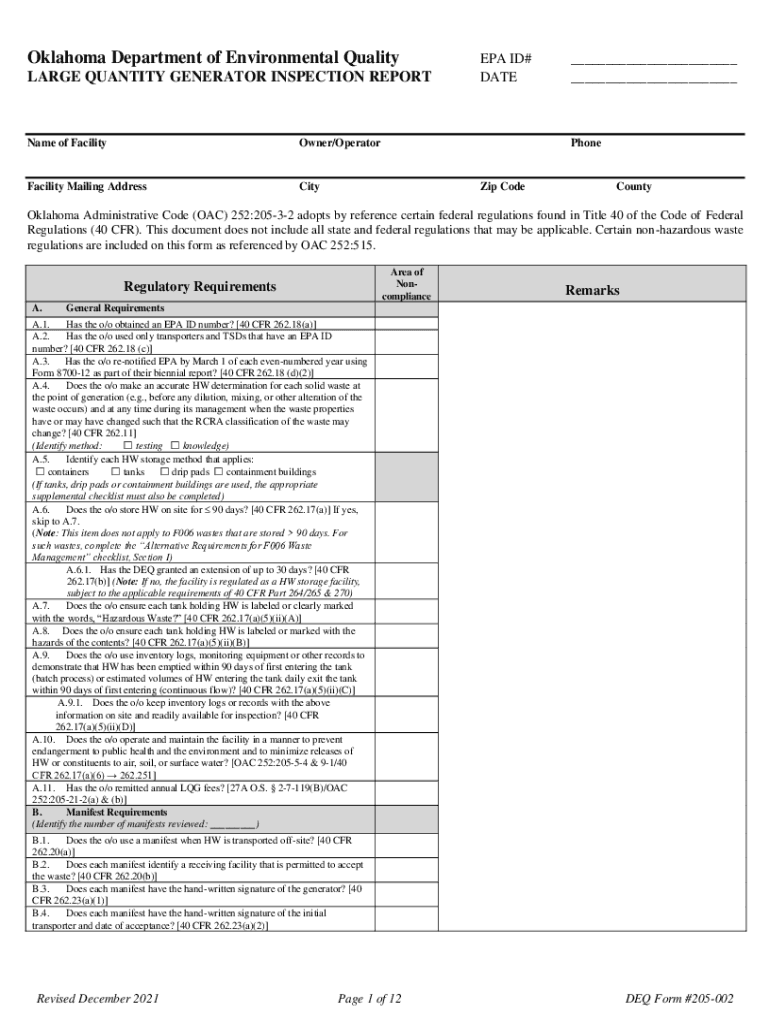
- Inspection Reports: Used by environmental agencies to assess compliance during site inspections.
- Waste Tracking: Facilities use forms to monitor waste from generation through disposal.
- Regulatory Audits: Forms serve as evidence of compliance during official audits and investigations.
State-Specific Rules for the Hazardous Waste Forms and Checklists
Different states may have unique regulations and requirements for hazardous waste management:
- Oklahoma: Additional requirements for satellite accumulation areas and air emission standards.
- California: Stringent rules for electronic waste and specific recycling mandates.
- New York: Detailed recordkeeping requirements, particularly for medical waste.
Penalties for Non-Compliance
Non-compliance with hazardous waste regulations can lead to severe penalties, which may include:
- Fines: Financial penalties for inaccurate reporting or failure to comply with regulations.
- Operational Restrictions: Limitations placed on facilities until compliance is achieved.
- Legal Action: Potential lawsuits or regulatory action for significant breaches.
Versions or Alternatives to the Hazardous Waste Forms and Checklists
Facilities may encounter different versions of hazardous waste forms, which include:
- Federal Forms: Standardized forms required under federal mandates.
- State-Specific Forms: Customized forms to align with local regulations.
- Industry-Specific Checklists: Tailored checklists for specific sectors, such as healthcare or manufacturing.
These varied forms ensure comprehensive compliance across different jurisdictions and industries.