




01. Edit your form online
Type text, add images, blackout confidential details, add comments, highlights and more.

Type text, add images, blackout confidential details, add comments, highlights and more.

Draw your signature, type it, upload its image, or use your mobile device as a signature pad.

Send it via email, link, or fax. You can also download it, export it or print it out.
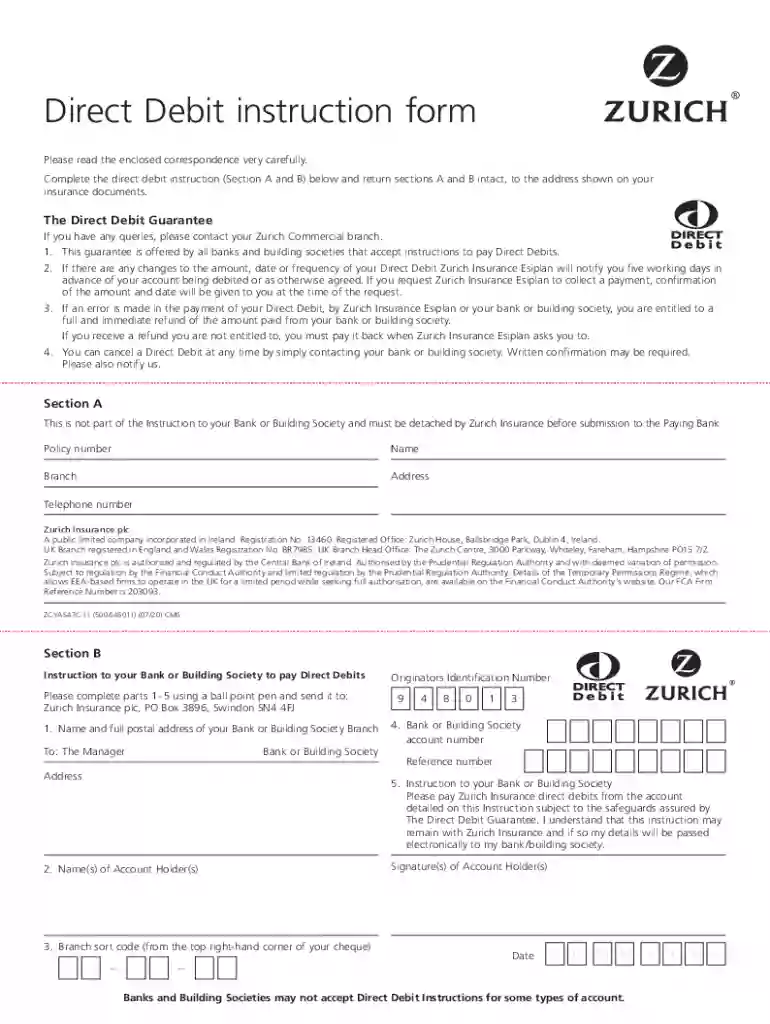
A Direct Debit Instruction Form is a document used by individuals and businesses to authorize an organization to withdraw funds directly from their bank account on a scheduled basis. This process facilitates seamless and automatic payment of recurring expenses, such as insurance premiums, utility bills, or loan repayments. The form typically contains essential details, including the payer's account information, payment amount, and frequency of transactions. The primary purpose of this form is to simplify payments, ensuring timely transactions while reducing administrative work for both the payer and the recipient.
To obtain a Direct Debit Instruction Form, you can visit the organization's official website or contact their customer service department. Many organizations provide downloadable versions of the form through their online portals. Alternatively, physical copies can sometimes be requested via mail. In cases where the service provider is a financial institution or utility company, these forms may also be available in their branch offices. To ensure that you use the correct form, make sure it includes the proper branding and contact information for the specific company you intend to pay.
Completing the Direct Debit Instruction Form involves several critical steps to ensure accurate and secure processing. Follow these steps:
Fill in Personal Information: Include details such as your name, mailing address, and contact information.
Provide Bank Account Information: Enter your bank's name, branch address, and bank account number. Double-check these details to avoid payment errors.
Specify Payment Details: Indicate the amount to be debited, the frequency of the debits (e.g., weekly, monthly), and the start date for the transactions.
Sign the Authorization: Ensure the form is signed by the account holder(s) to authorize the transaction. An unsigned form is invalid.
Submit to the Payee: Return the completed form to the organization managing the debit, either through mail, email, or in-person delivery, as instructed.
Utilizing a Direct Debit Instruction Form offers multiple advantages. First, it streamlines the payment process, ensuring that payments are never missed and late fees are avoided. This reliability is particularly beneficial for managing regular expenses without manual intervention. Additionally, it reduces the administrative burden on both payers and recipients because payments are seamlessly processed according to the pre-determined schedule. Significant cost savings also arise from decreased paper usage and postage fees associated with traditional billing and payment methods. Lastly, direct debits offer enhanced security and exact record-keeping, allowing both parties to track transactions efficiently.
A comprehensive Direct Debit Instruction Form includes several crucial elements:
Personal Identification: Name, address, and contact details of the account holder.
Bank Details: Bank's name, branch address, sort code, and account number.
Payment Instructions: Amount to be debited, payment frequency, and specific dates for the deductions.
Authorization Signatures: This confirms consent for funds to be withdrawn according to the specified instructions.
It is critical to review these elements for accuracy as errors can lead to failed transactions or incorrect payment amounts.
Direct Debit Instruction Forms must comply with legal standards to ensure both parties' rights and obligations are protected. U.S. Law mandates that all direct debits should be covered by a Direct Debit Guarantee, which ensures consumers have the right to receive refunds for unauthorized transactions. Additionally, laws require organizations to inform account holders about any changes to the debit amounts or dates in advance. This legal framework ensures the protection and proper functioning of the direct debit system, providing confidence to users engaging in automatic payments.
Several key terms are associated with the Direct Debit Instruction Form:
Direct Debit Guarantee: A consumer protection measure ensuring refunds for unauthorized payments.
Payer: The individual or entity authorizing the withdrawal of funds.
Payee: The organization receiving the payments.
Mandate: The authorization given by the payer to the payee to debit their account.
Understanding these terms is essential for effectively navigating and managing the direct debit process.
Direct Debit Instruction Forms can be completed either digitally or on paper, depending on the preference and capabilities of both the payer and the payee. Digital forms offer convenience, speed, and enhanced security features such as encryption. They can be submitted electronically, which reduces the processing time and cost associated with traditional paper forms. On the other hand, paper versions may still be preferred by individuals who are uncomfortable with technology or in organizations that require a physical signature for legal records. The choice between digital and paper often depends on the payer's confidence in digital transactions and the organization's policies regarding transaction handling.
At DocHub, your data security is our priority. We follow HIPAA, SOC2, GDPR, and other standards, so you can work on your documents with confidence.
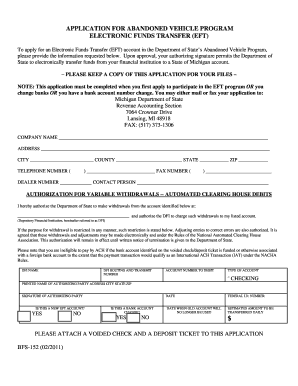
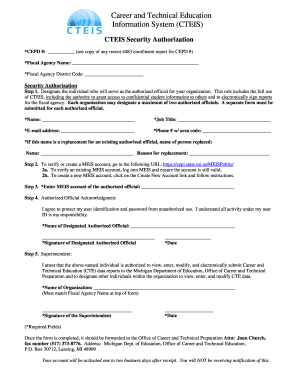




I hereby authorize the initiation of a deduction from my account and the financial institution named below to debit such account. I understand I will be
Direct Debit form Google Docs Google Drive Download [pdf]. File Info : application/pdf, 2 Pages, 94.37KB. Document Document


