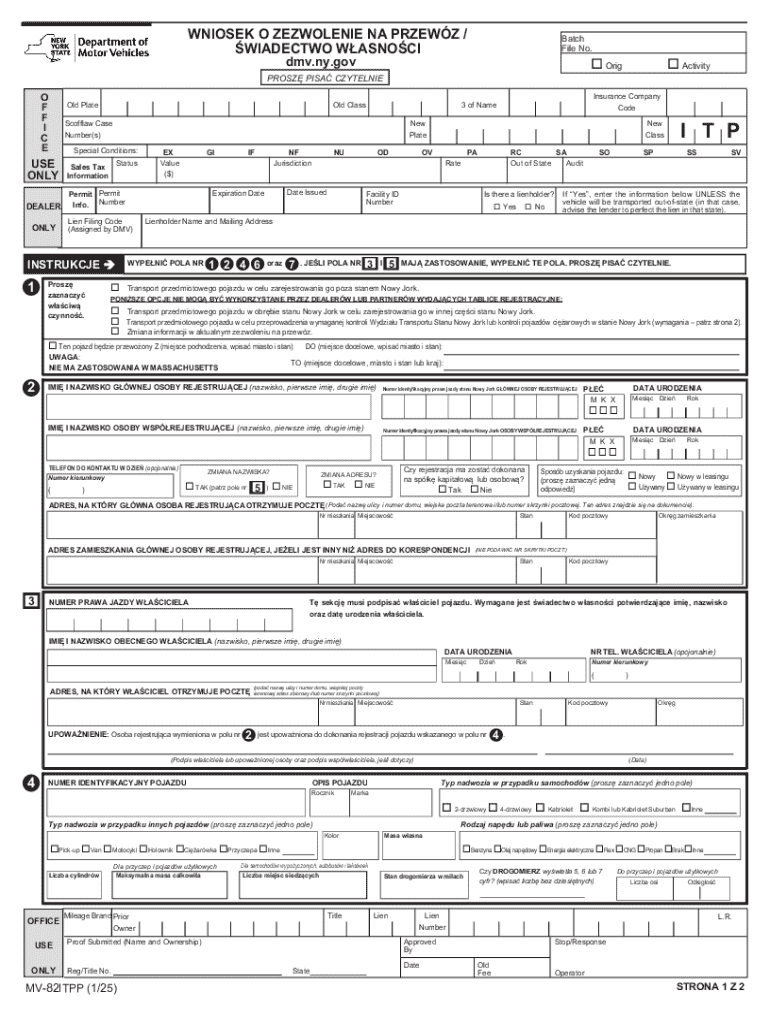







Definition and Purpose of the Certificate of Title - tytuy wasnoci aut w USA
A Certificate of Title, known as "tytuy wasnoci aut w USA," is a legal document that serves as proof of ownership for a vehicle. This document contains vital information such as the vehicle's make, model, year, and Vehicle Identification Number (VIN). It also specifies the owner's name and any lienholders—the entities that hold a financial interest in the car until its loan is paid off. In the United States, the title must accompany the sale or transfer of a vehicle to legally complete the transaction.
Steps to Obtain the Certificate of Title - tytuy wasnoci aut w USA
- Purchase a Vehicle: Upon purchasing a vehicle, the seller must transfer the title to your name. This often requires filling out the back of the existing title with buyer and seller information.
- Visit the Department of Motor Vehicles (DMV): Submit the vehicle title transfer request at your local DMV. Each state has varying requirements, so verify if additional forms or inspections are necessary.
- Provide Identification and Proof of Insurance: Present a valid driver's license and proof of current auto insurance.
- Pay Applicable Fees: Be prepared to pay title transfer and registration fees, which vary by state.
- Receive Your Title: Once processed, the DMV will issue a new Certificate of Title in your name.
How to Use the Certificate of Title - tytuy wasnoci aut w USA
The Certificate of Title is essential for various transactions:
- Selling a Vehicle: You must endorse the title to the buyer to officially transfer ownership.
- Registering Your Vehicle: Required when registering your car, whether for the first time or when moving to a new state.
- Insuring Your Vehicle: Insurance companies often need title proof for policy issuance.
- Applying for a Loan: Used by financial institutions as collateral verification.
Key Elements of the Certificate of Title - tytuy wasnoci aut w USA
- Owner Information: Lists the legal owner(s) of the vehicle.
- Vehicle Details: Includes make, model, year, and VIN.
- Lienholder Information: Identifies any financial institutions holding an interest in the vehicle.
- Odometer Reading: Required in many states to confirm mileage at the time of transfer or sale.
State-Specific Rules for the Certificate of Title - tytuy wasnoci aut w USA
Each state in the U.S. has unique regulations regarding vehicle titling:
- California: Requires a smog check certification at the time of title transfer for vehicles older than six years.
- Florida: Allows electronic title management via Florida's E-Titling System, facilitating online transfers.
- New York: Mandates completion of specific forms, such as MV-103, for vehicles owned jointly or with liens.
Legal Use of the Certificate of Title - tytuy wasnoci aut w USA
Legally, the Certificate of Title serves as:
- Proof of Ownership: Necessary to assert one's rights to use, sell, or destroy the vehicle.
- Lienholder Rights: Protects financial institutions' interests in collateral against the vehicle.
Important Terms Related to the Certificate of Title - tytuy wasnoci aut w USA
- Lien: Legal claim on the vehicle until the loan is fully paid.
- VIN (Vehicle Identification Number): A unique code assigned to each vehicle for identification.
- Odometer Disclosure: A declaration of the vehicle's mileage on the title transfer.
Who Typically Uses the Certificate of Title - tytuy wasnoci aut w USA
Individuals and entities involved in vehicle transactions, insurance, and financing:
- Private Sellers and Buyers: Most commonly associated with the title during private sales or registration.
- Dealerships: Manage titles to transfer ownership when selling new and used vehicles.
- Financial Institutions: Use titles for record-keeping when vehicles are used as loan collateral.


Required Documents for the Certificate of Title - tytuy wasnoci aut w USA
To apply or transfer a Certificate of Title, you typically need:
- A Completed Application Form: This varies by state but is usually a standardized DMV form.
- Bill of Sale: Documents the transaction between buyer and seller.
- Proof of Insurance: Valid insurance policy or card.
- Identification: Government-issued ID such as a driver's license.
Form Submission Methods
- Online: Some states offer online services for title transfers and applications.
- Mail: Submit forms and necessary documentation to the DMV by postal service.
- In-Person: Visit local DMV offices; useful for immediate processing or when adding lienholders.
These details ensure you are well-equipped to navigate the title acquisition and utilization process for vehicles in the United States, adapting to the specific requirements of your location.