




01. Edit your form online
Type text, add images, blackout confidential details, add comments, highlights and more.

Type text, add images, blackout confidential details, add comments, highlights and more.

Draw your signature, type it, upload its image, or use your mobile device as a signature pad.

Send it via email, link, or fax. You can also download it, export it or print it out.
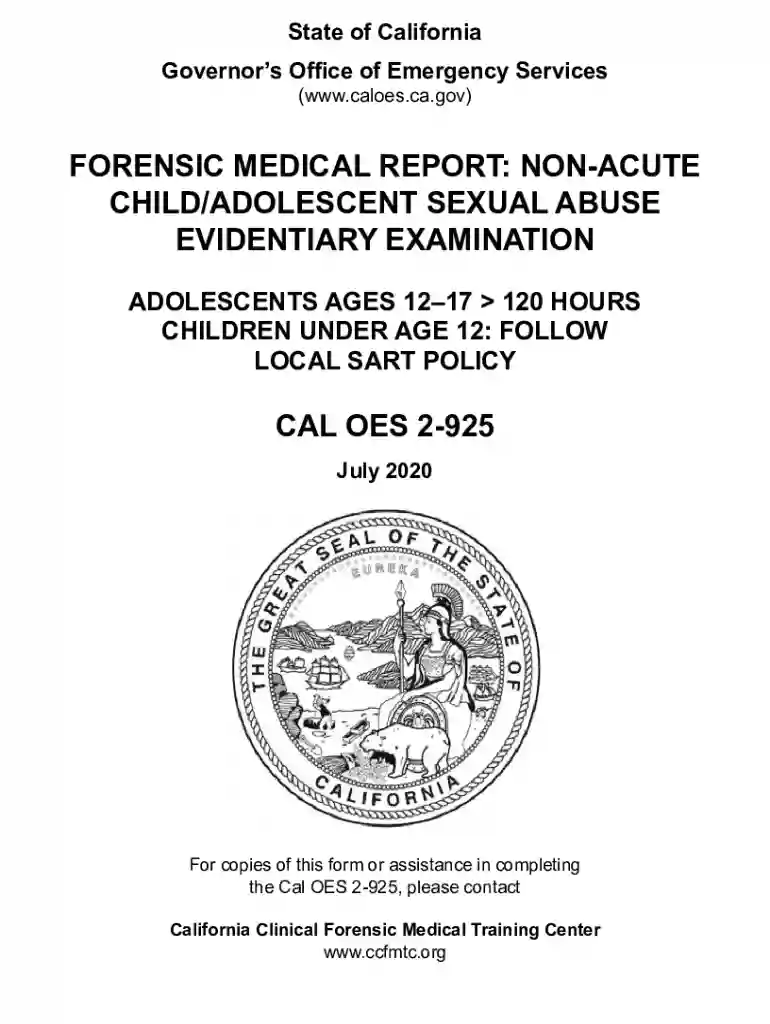
The Forensic Medical Report for the non-acute child and adolescent sexual abuse examination is a specialized document used primarily in California, often referenced as form Cal OES 2-925. This report is meticulously designed to document the medical and forensic examination of children and adolescents who are suspected victims of sexual abuse. Unlike acute examinations that occur shortly after an incident, non-acute exams are conducted when there is no immediate medical emergency, often days or weeks after the event.
A comprehensive forensic medical report is critical in building a legal case as it includes crucial evidence and findings. The document covers several areas, including the child's medical history, a complete physical examination, and the collection of forensic evidence to establish facts and support child welfare investigations.
The forensic medical report incorporates various vital components which ensure thorough examination and documentation:
Patient Identification and Consent: This section collects personal information about the child or adolescent and ensures that consent for examination is obtained from a parent or legal guardian.
Medical History: Detailed medical history to understand the child's past health, including previous treatments, injuries, or other relevant medical information.
Physical Examination Protocol: A structured protocol guides examiners in conducting a thorough physical examination. It includes steps to inspect any signs or suspicions of abuse.
Evidence Collection: Employing standardized methods to gather physical evidence, such as clothing, swabs, and detailed photos, which are crucial in legal proceedings.
Findings and Report: This part of the document records the examiner's observations, including any physical injuries noted during the examination and relevant notes regarding the condition of the child.
The forensic medical report, Cal OES 2-925, is utilized by certified medical professionals within California who have specialized training in handling sensitive cases involving child abuse allegations. The step-by-step process involves:
Obtaining Consent: Ensuring proper consent is completed before proceeding with any part of the examination.
Medical Examination: Conducting a detailed examination following the outlined protocols in the report form to ensure all necessary evidence is recorded.
Documenting Findings: Accurately recording findings in the specified sections, including any physical evidence and examiner observations.
Submitting the Report: After the examination, submitting the report to appropriate authorities for further legal action or child protection involvement.
Completing the forensic medical report is a structured process that demands accuracy and sensitivity:
Review Guidelines: Understand the specific guidelines and requirements detailed within the form to ensure compliance with legal and medical standards.
Patient Interview: Carefully conduct a patient and guardian interview, ensuring that details are collected with empathy and professionalism.
Detailed Examination: Follow the examination protocol exactly, ensuring that all relevant information and evidence are collected.
Accurate Documentation: Ensure precise completion of each section, as small errors can have significant implications in legal proceedings.
Final Review and Submission: Before submission, review the entire document for completeness and accuracy with a peer or supervisor to confirm all findings and notes are well-documented.
The forensic medical report serves as a crucial document within legal settings, providing substantiated evidence in cases of suspected child abuse:
Evidence for Legal Proceedings: Acts as an expert document, often presented in court to support evidence-based decisions in legal proceedings involving child welfare.
Compliance with Legal Standards: Ensures that all practices and documentation meet the required legal standards, offering protection both for the victim and the examiner.
Supporting Protective Measures: Facilitates the protection of children through accurate and detailed documentation, aiding law enforcement and child protection agencies.
The principal users of the forensic medical report are professionals involved in child welfare and protection:
Forensic Examiners: Medical practitioners specially trained in dealing with sensitive cases of child abuse who conduct examinations and compile the report.
Legal Professionals: Attorneys and judges may utilize the report to guide decisions in cases involving child welfare and protection.
Child Protective Services: Agencies dedicated to child welfare use the report to assess situations and act in the best interest of child safety.


Understanding the forensic medical report requires familiarity with specific terms:
Non-acute Exam: Refers to examinations conducted days or weeks after an incident, as opposed to immediate or acute examinations.
Forensic Evidence: Physical evidence collected during the examination that may include samples or images used to support findings.
Consent: Legal permission obtained from guardians or parents before an examination, safeguarding both the child and professionals involved.
Protocol: A set of procedures that guide examiners in conducting a thorough and legally compliant medical examination.
In California, the Cal OES 2-925 form is issued for use by the California Governor's Office of Emergency Services (Cal OES), reflecting state-specific procedures for documenting and processing child and adolescent non-acute sexual abuse cases. This standardization ensures consistency and compliance with both medical and legal expectations across the state.
At DocHub, your data security is our priority. We follow HIPAA, SOC2, GDPR, and other standards, so you can work on your documents with confidence.





Keep the focus of the examination on the entire child. The medical forensic examination in a prepubescent child sexual abuse case includes a physical
by W Nussbaum 2015 Cited by 7 Some research finds that girls are more likely to be reported for assault with minor injury and boys more likely to be reported for criminal damage to property
Just as critical is performing sexual assault medical forensic examinations in a sensitive, dignified, and patient- centered manner. For individuals who


