







Definition and Meaning
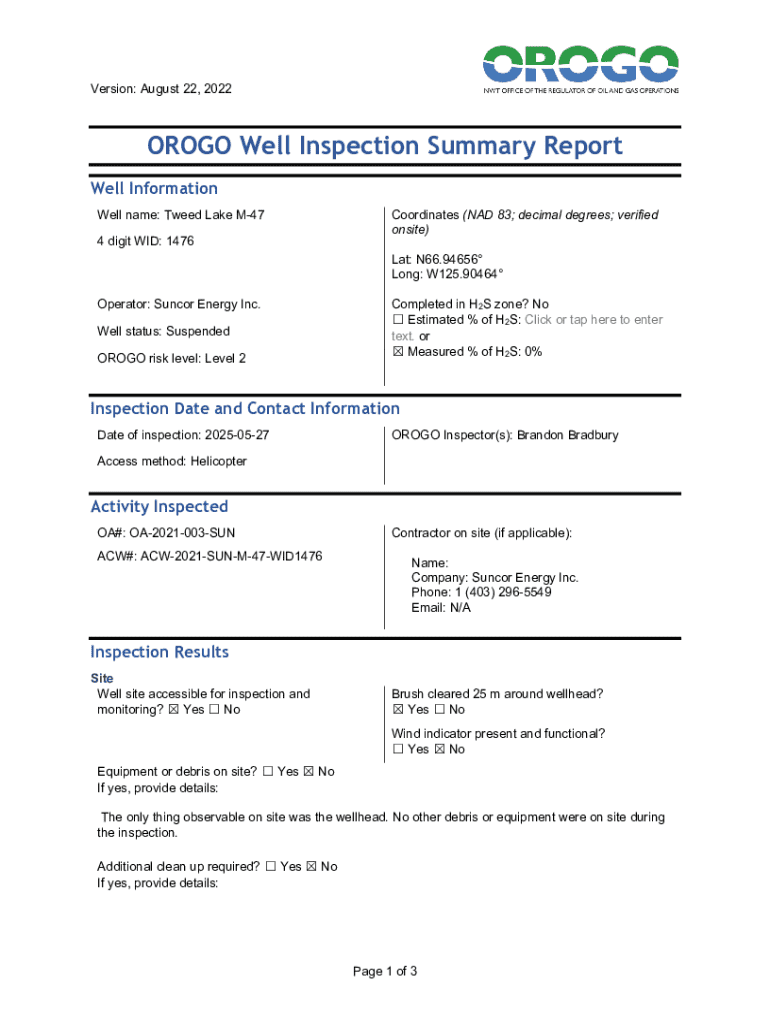
The Orogo Well Inspection Summary Report is a documented evaluation conducted to assess the condition, safety, and compliance status of oil and gas wells. These reports are crucial for ensuring that wells, like the Tweed Lake M-47 operated by Suncor Energy Inc., adhere to safety and environmental standards. Such inspections help identify potential risks, maintain operational integrity, and ensure that the well's infrastructure is safe for continued use or appropriate for abandonment.
Steps to Complete the Orogo Well Inspection Summary Report
-
Pre-Inspection Preparation
- Gather historical data of the well, including previous inspection reports and maintenance records.
- Coordinate with relevant personnel to arrange site access and ensure that the required equipment is available.
-
Conducting the Inspection
- Begin with a visual examination of the well site for any physical anomalies.
- Check crucial components like the wellhead for accessibility and signs of deterioration.
- Note any presence of gas, particularly H2S, to mitigate potential hazards.
-
Documentation and Reporting
- Record all observations and measures taken during the inspection in the report.
- Include photographs of key elements for visual documentation.
- Complete the summary section to highlight any concerns or compliance reminders.
Key Elements of the Orogo Well Inspection Summary Report
- Inspection Date and Operator Information: Details about who conducted the inspection and when it took place.
- Well Status: Information about the operational state of the well, such as whether it is active, inactive, or abandoned.
- Site Accessibility: Evaluation of whether the physical location of the well is accessible for monitoring and maintenance.
- Safety Conditions: Assessment of potential hazards like toxic gases or structural weaknesses at the well site.
- Compliance Reminders: Notes on adherence to regulatory requirements and any necessary actions for maintaining compliance.
Who Typically Uses the Orogo Well Inspection Summary Report
The report is primarily used by:
- Oil and Gas Companies: To ensure the integrity and safety of their wells.
- Regulatory Agencies: For compliance monitoring and environmental protection.
- Engineering and Safety Consultants: To provide expert analysis and recommendations based on inspection findings.
- Legal Experts: To ensure that operations align with applicable laws and regulations.


Legal Use of the Orogo Well Inspection Summary Report
- Regulatory Compliance: The report serves as a formal record that a well inspection has been undertaken in accordance with legal requirements.
- Safety Protocols: It provides proof that safety protocols are being followed, thereby reducing liability in case of incidents.
- Environmental Audits: Used during environmental assessments to verify that wells meet necessary environmental standards.
Important Terms Related to Orogo Well Inspection Summary Report
- Wellhead: The surface equipment at the top of a well, crucial for monitoring and maintenance.
- H2S (Hydrogen Sulfide): A hazardous gas that must be monitored to prevent safety risks.
- Suspended Well: A well that has been temporarily shut down but is not permanently abandoned.
- Compliance Requirements: Regulations that dictate what actions must be taken for a well to be considered in compliance.
Examples of Using the Orogo Well Inspection Summary Report
- Routine Safety Checks: Used by Suncor Energy Inc. to assess the Tweed Lake M-47 well, the report confirmed the absence of H2S and site accessibility, ensuring operational safety.
- Regulatory Audits: Regulatory bodies may request these reports as part of broader environmental and safety audits of regional oil and gas operations.
State-Specific Rules for the Orogo Well Inspection Summary Report
While general guidelines for well inspections are consistent, specific states may impose additional regulations:
- Texas: Focus on frequent inspections due to a high density of wells and stringent environmental laws.
- California: Special attention to environmental protections in ecologically sensitive areas.
- Pennsylvania: Emphasis on shale gas wells, with stricter oversight of hydraulic fracturing methods.
Software Compatibility
- Digital Editing: The incompatibility with software like DocHub ensures seamless digital inspection report creation, annotation, and secure sharing with relevant stakeholders.
- Cloud Integration: Reports can be stored and shared via cloud services such as Google Drive or Dropbox, allowing access from anywhere.




