
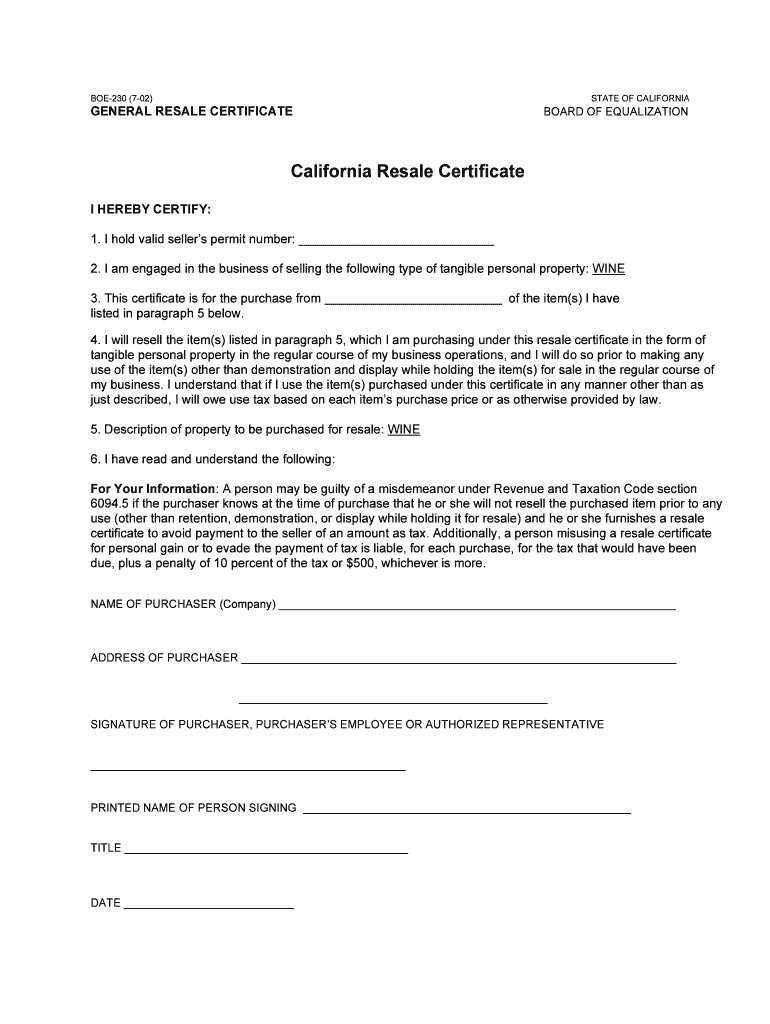







Definition & Meaning
A resale certificate is a legal document that allows businesses to purchase goods tax-free when they intend to resell those goods. The "Resale Certificate Blank" typically refers to a generic, fillable template that businesses use to input specific information related to their tax-exempt purchases. By providing this certificate to a supplier, businesses affirm their intention to resell the purchased items, thus avoiding the payment of sales tax at the point of purchase. This process is rooted in the U.S. taxation system, where sales tax is designed to be applied to the final consumer of goods and services.
The resale certificate acts as a formal declaration, certifying that the purchase is for resale, not for personal or business use. Such certificates are crucial in establishing a business’s tax-exempt status for specific transactions. It's important for businesses to understand the specific requirements and implications of using a resale certificate blank to stay compliant with state tax laws.
How to Use the Resale Certificate Blank
To use a resale certificate blank effectively, businesses must first ensure that they possess a valid state-issued seller's permit or sales tax license. This authority allows them to issue resale certificates to suppliers. The process for using the certificate is largely straightforward:
- Acquire the Form: Obtain a blank resale certificate from your state’s tax agency or use a template that complies with state regulations.
- Complete the Certificate: Fill out the form with accurate information, including your business name, address, seller’s permit number, and a detailed description of the goods being purchased for resale.
- Provide Documentation: Submit the completed resale certificate to your supplier at the time of purchase. This exempts you from paying sales tax on that transaction.
- Maintain Records: Keep copies of all resale certificates issued to suppliers. These records are essential for tax reporting and audits.
It's essential to verify that each certificate contains all required information per your state's tax laws. Incomplete or incorrect certificates may lead to tax liabilities.
How to Obtain the Resale Certificate Blank
Business owners can obtain a resale certificate blank through several channels:
- State Tax Authorities: Most state tax agencies provide downloadable templates of resale certificates on their official websites.
- Professional Software Solutions: Platforms like DocHub offer tools to create, edit, and manage fillable forms, which can include customization for state-specific resale certificates.
- Business Associations: Local chambers of commerce or business associations may also offer templates or guidance on acquiring resale certificates.
When acquiring a resale certificate, ensure the template aligns with your state’s specific requirements, as not all forms are universally applicable.
Steps to Complete the Resale Certificate Blank
Completing a resale certificate involves several key steps:
- Identify Your Business Information: Enter the legal name of your business, business address, and contact details.
- Include Tax ID Information: Add your business’s seller’s permit number or tax ID number as required by your state.
- Describe the Goods: Clearly specify the type of goods you intend to purchase for resale. This helps delineate tax-exempt items from taxable personal or non-resale purchases.
- Sign the Document: An authorized representative from your business must sign the certificate, thereby validating its authenticity.
Ensure that all entries are accurate and reflect the true nature of the purchase. Any discrepancies can result in retraction of the tax exemption or potential penalties during audits.
Legal Use of the Resale Certificate Blank
Using a resale certificate blank correctly is crucial for legal compliance:
- Purpose Compliance: The certificate should be used exclusively for transactions involving goods for resale. Using it for personal purchases is considered tax evasion and is penalized severely.
- State-Specific Regulations: Each state has distinct rules regarding resale certificates. Ensure adherence to your state’s laws to avoid legal issues.
- Updating and Validity: Keep your resale certificate current. Any changes in your business status or tax ID require updates to your certificate to remain compliant.
Misuse or fraudulent use of resale certificates can result in fines, penalties, and revocation of your seller’s permit.
Key Elements of the Resale Certificate Blank
A comprehensive resale certificate blank should include the following elements:
- Purchaser’s Details: Business name, address, and contact information.
- Supplier’s Details: Information of the entity supplying the goods.
- Tax ID/Seller’s Permit Number: This is critical to claim tax exemption.
- Description of Goods: Items intended for resale must be accurately described.
- Certification Statement: A declaration that the purchases are intended for resale and not for personal or operational use.
- Authorized Signature: The purchaser must sign the document to confirm its legitimacy.
Each of these components should be carefully reviewed to ensure compliance and validity.
State-Specific Rules for the Resale Certificate Blank
State-specific rules for resale certificates can significantly vary:
- Validity Period: Some states require periodic renewal or updates to resale certificates.
- Specified Purchaser Information: States may mandate detailed information on the form, specific to their regulations.
- Specific Use Cases: Certain states have more defined regulations on what constitutes resale, with different rules for services and tangible goods.
Understanding and adhering to your state’s specific rules is essential to maintaining compliance and ensuring the validity of your resale certificate.
Examples of Using the Resale Certificate Blank
Consider the following scenarios to illustrate practical use:
- Retail Businesses: A clothing retailer buys inventory from a wholesaler. By providing a resale certificate, they purchase clothing without paying sales tax, as they will sell it to consumers.
- Event Planners: An event planning company purchases bulk decorations and party supplies for resale in event packages. A resale certificate allows them to acquire items without upfront taxes.
- Online Vendors: Businesses that operate exclusively online may use resale certificates for tax-free purchases of stock intended for eCommerce sales.
These examples highlight the versatility and necessity of understanding and correctly using resale certificates in various business contexts.




