






Definition & Meaning
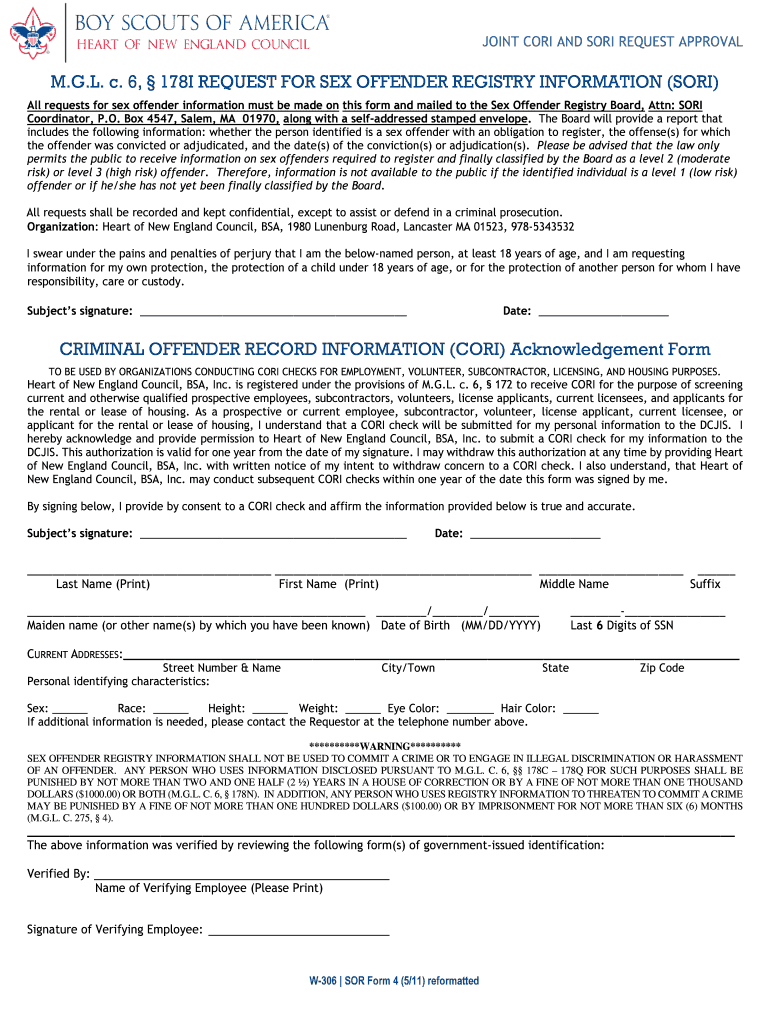
The "CORI and SORI Forms" used in Natick, MA, are essential legal documents designed for background checks within the state. These forms serve two primary purposes. CORI, or Criminal Offender Record Information, is utilized to gather detailed criminal history records for individuals, often required for employment or volunteer purposes. SORI, or Sex Offender Registry Information, is used to access records pertaining to registered sex offenders, providing public safety and awareness. Both forms are critical for organizations and employers to ensure they are informed about the backgrounds of individuals before making hiring or volunteering decisions.
How to Obtain the CORI and SORI Forms
To obtain the CORI and SORI forms in Natick, MA, individuals or organizations must contact the appropriate state department responsible for criminal records. Typically, the forms can be requested through the Massachusetts Department of Criminal Justice Information Services (DCJIS) website. Here is a step-by-step process for obtaining these forms:
- Visit the DCJIS website - Start by accessing the official website of the Department of Criminal Justice Information Services.
- Navigate to the forms section - Locate the section dedicated to CORI and SORI forms.
- Download the forms - Choose the relevant forms based on whether you require a CORI check or SORI information and download them.
- Complete the application - Fill in the necessary information as directed.
- Submit the forms - Send the completed forms via mail or through the online submission portal, if available.
Steps to Complete the CORI and SORI Forms
When completing the CORI and SORI forms, accuracy and completeness are vital. The following steps can guide you through the process:
- Read the instructions - Carefully review all provided guidelines to ensure correct completion.
- Provide personal details - Enter accurate personal information, including full name, current address, and identification information.
- Specify purpose - Clearly state the purpose of the request (e.g., employment, volunteering).
- Provide consent - Ensure all required consent signatures are included.
- Verify information - Double-check all entered information for accuracy before submission.
- Include payment - If applicable, include the required processing fee with the forms.
Who Typically Uses the CORI and SORI Forms
The CORI and SORI forms are utilized by a range of entities within Natick, MA:
- Employers - To conduct background checks on potential employees, especially for positions involving vulnerable populations.
- Volunteer organizations - Non-profit organizations use these forms to vet volunteers.
- Landlords - Property owners may check criminal backgrounds of prospective tenants.
- Schools and childcare centers - These institutions require background checks for individuals working with children.
- Law enforcement agencies - Used in investigations and legal proceedings.


Legal Use of the CORI and SORI Forms
In Natick, MA, the legal use of CORI and SORI forms is governed by state laws to ensure they are only used for legitimate purposes:
- Employment screening - Employers can legally access CORI records as part of their hiring process, complying with non-discrimination laws.
- Compliance with state regulations - Certain industries may be required by law to conduct these background checks.
- Protection of vulnerable groups - SORI data helps protect children and vulnerable adults by making informed decisions about who interacts with them.
Misuse of these forms can result in legal consequences, including fines or other penalties.
Key Elements of the CORI and SORI Forms
Understanding the key components of these forms is crucial for proper completion:
- Personal Identifiers - Fields for entering names, aliases, addresses, and Social Security numbers.
- Purpose of Request - Sections specifying why the check is being conducted.
- Consent Requirement - Areas for obtaining and acknowledging consent from the individual being checked.
- Signature Fields - Designated spots for both applicant and requester signatures to authenticate the document.
State-Specific Rules for the CORI and SORI Forms
Massachusetts has specific regulations regarding the use and distribution of CORI and SORI information:
- Eligibility to access - Only authorized entities can request access to CORI and SORI reports, ensuring the protection of individuals' privacy.
- Restricted Information - Certain details, such as juvenile records or sealed cases, may not be disclosed.
- Public availability - SORI level two and three offender information is available to the public, whereas CORI requires legitimate interest for access.
Important Terms Related to the CORI and SORI Forms
Familiarity with terminology is crucial when dealing with these forms:
- Level 2 and 3 Offenders - Designations indicating the severity and public accessibility of offender information.
- Consent to Check - A required written approval from the individual for whom the check is conducted.
- Sealed Records - Legal designation that restricts access to specific criminal records.
Understanding these terms ensures proper use and application of the forms in accordance with Massachusetts law.