







Definition and Overview
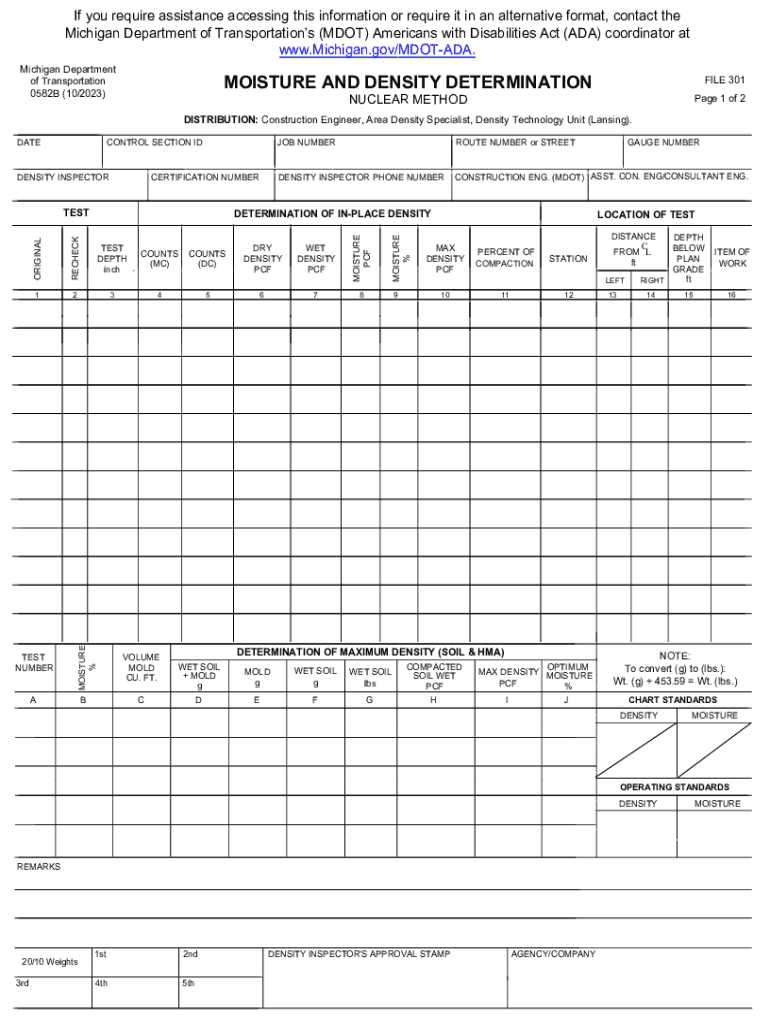
Moisture and density determination, a crucial process in civil engineering and construction, involves measuring the moisture content and density of materials such as soil or aggregate bases. This procedure ensures that construction materials meet specific compaction and stability standards necessary for structural integrity. The process uses the nuclear method outlined by the Michigan Department of Transportation, which is considered precise and effective in providing reliable data for construction projects.
Importance in Construction
- Structural Integrity: Proper moisture and density levels are vital to prevent structural failures. Buildings, roads, and bridges require well-compacted materials to support the load.
- Quality Control: Ensures materials meet the required specifications, crucial for project longevity and safety.
- Compliance: Adheres to standards set by state and federal regulations, reducing liabilities related to structural failures.
How to Use the Form
Engineers and inspectors utilize the moisture and density determination form to record test results following a standardized procedure. The form guides users on essential data fields such as the date of testing, location, and material type, ensuring consistency and thorough documentation throughout the testing process.
Procedure Steps
- Collect Samples: Gather material samples from various site sections using appropriate tools to ensure a representative sample.
- Field Testing: Conduct nuclear method tests using a gauge, recording initial moisture and density readings onsite.
- Document Results: Enter data accurately into the form, noting any unique site conditions that might affect results.
Steps to Complete the Form
Completing the moisture and density determination form involves a standardized approach to ensure accuracy and conformity with industry standards.
Detailed Instructions
- Fill Out Identifying Information: Enter project name, location, and date of testing.
- Record Test Data: Include entries for each test, such as material type, method used, and results.
- Review and Validate: Ensure all data is correct and legible. Include any relevant notes or observations.
Key Elements of the Form
Understanding the structure of the form enhances accurate completion and data interpretation. The following key elements are often present on the form:
- Header Section: Contains basic project information and references.
- Testing Details: Capture specific data related to each test performed.
- Result Analysis: Allows for input of computed densities and moisture content, including any deviations from standard values.
Importance of Moisture and Density Determination
Understanding the significance of moisture and density determination is essential for anyone involved in construction and material testing.
Benefits
- Enhanced Durability: Properly compacted materials extend the lifespan of the construction project.
- Cost Savings: Reduces future repair and maintenance costs by preventing premature wear or failure.
- Environmental Protection: By ensuring stable and compact layers, erosion and material displacement are minimized.
Who Typically Uses the Form
This form is primarily used by professionals within the construction and engineering sectors.


Typical Users
- Construction Managers: Oversee the entire project to ensure compliance with design specifications.
- Civil Engineers: Use the data to ensure structural design specifications are met.
- Quality Assurance Inspectors: Validate that test results meet industry standards and regulations.
Required Tools and Equipment
Successful execution of the testing and proper form completion necessitates certain equipment and tools.
Essential Tools
- Nuclear Density Gauge: For measuring soil density onsite.
- Moisture Content Reader: To determine the water content of materials accurately.
- Protective Gear: Ensures safety during onsite testing.
Compliance and Legal Considerations
Legal compliance plays a crucial role in moisture and density determination. Ensuring the work aligns with regulations helps avoid legal issues and penalties.
Legal Requirements
- Certification: Ensure inspectors are certified to use the nuclear gauge method.
- Documentation: Maintain records as required by state and federal laws for potential audits.
Examples of Using the Form in Real-World Scenarios
Practical applications of moisture and density determination demonstrate its critical role in construction.
Case Studies
- Highway Construction: Used extensively to verify the compaction of asphalt and base materials.
- Foundation Work: Ensures soil compaction meets load-bearing requirements for new structures.
- Land Development: Aids in the preparation of sites for residential or commercial projects.




