







Definition & Meaning
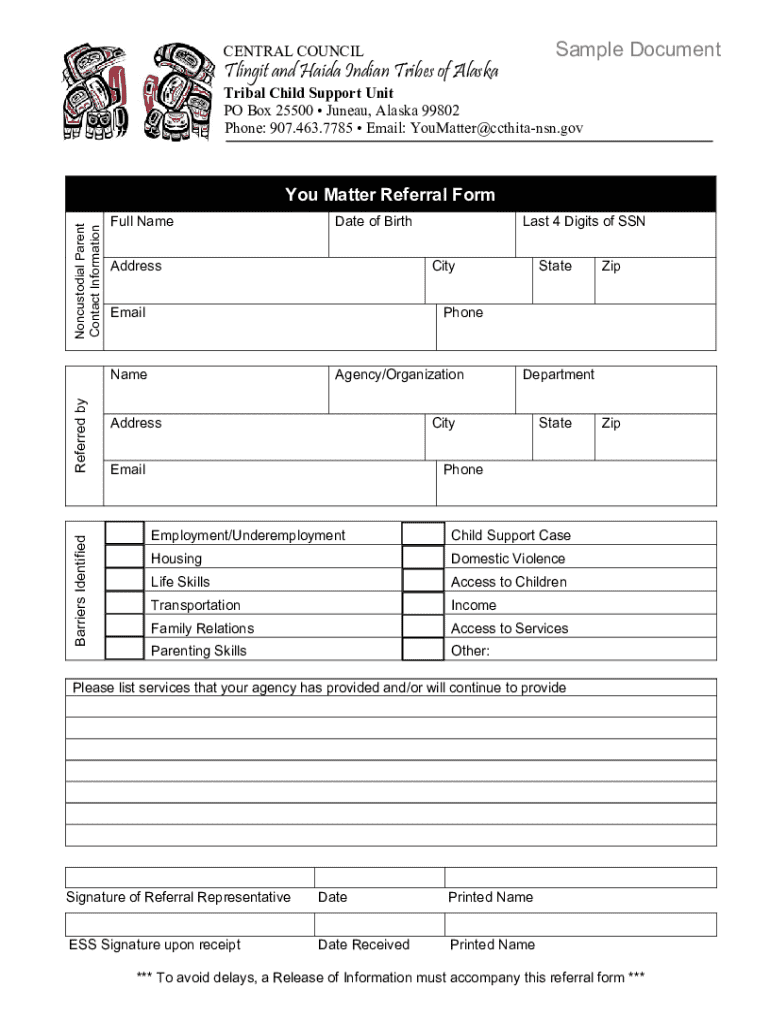
The "State v Cent Council of Tlingit and Haida Indian Tribes" is a legal form related to the release of confidential information for handling child support cases involving the Tlingit and Haida Indian Tribes of Alaska. This form ensures that consent is obtained for disclosing sensitive information between parties, particularly for legal proceedings or communication necessary for the effective management of child support enforcement. Its primary function is to formalize the sharing of information while maintaining compliance with privacy laws.
Key Features of the Form
- Confidential Information: The form outlines the types of confidential data that can be shared.
- Purpose of Disclosure: Clearly defines the specific reasons for which information can be released.
- Duration of Consent: Specifies the length of time for which the consent remains valid.
How to Use the Form
Using the "State v Cent Council of Tlingit and Haida Indian Tribes" form involves a few straightforward steps to ensure legal compliance and accurate data collection.
- Understand the Purpose: Before filling out the form, it's essential to clearly comprehend its purpose, which is primarily to allow the sharing of confidential information related to child support matters.
- Fill in Required Fields: Complete all mandatory sections, ensuring accurate information, especially concerning personal details and contact information.
- Specify Barriers and Services: Document any identified barriers and services provided, as these are crucial for understanding the context of the case.
Detailed Steps
- Start by reviewing the form to understand which sections apply to your situation.
- Clearly print or type information to avoid confusion or misinterpretation.
- Review and double-check entries before submission.
Steps to Complete the Form
Completing the form demands attention to specific details and a methodical approach to ensure all parts are accurately filled.
Detailed Procedures
- Gather Information: Have all necessary personal and case-related information ready.
- Complete Identification Sections: Fill out sections regarding noncustodial parent contact information.
- Edit and Review: Use tools like DocHub to edit the form for clarity and completeness, ensuring no sections are left blank unless not applicable.
Who Typically Uses the Form
The users of this form primarily include tribal child support units and related legal entities involved in managing child support cases.

Key Stakeholders
- Tribal Child Support Units: Manage and oversee child support cases.
- Legal Practitioners: Handle cases requiring child support information disclosure.
- Government Agencies: Involved in the regulation and enforcement of child support.
Legal Use of the Form
The legal use of the "State v Cent Council of Tlingit and Haida Indian Tribes" form is fundamental in complying with both federal and state laws concerning child support information.
Legal Requirements
- Consent to Release Information: Legally binds parties to the consented disclosure.
- Compliance with Privacy Acts: Ensures adherence to privacy regulations.
- Valid Authorization: It serves as a legal document providing valid authorization for information release.
Key Elements of the Form
Understanding the main components of this form is crucial for its correct and effective use.
Core Sections
- Consent and Authorization: Details the scope of consent for information release.
- Identified Barriers: Lists any obstacles impacting case resolution.
- Communicated Services: Outlines services already provided or required.
State-Specific Rules
The "State v Cent Council of Tlingit and Haida Indian Tribes" form must comply with specific state regulations related to child support and confidentiality.
Alaska-Specific Guidelines
- Jurisdiction: Only affects cases under the jurisdiction of Alaska.
- State Laws’ Compliance: Must align with Alaska child support enforcement laws and privacy statutes.
Examples of Using the Form
Practical examples of how this form is used can illustrate its importance in real-world scenarios.
Sample Scenarios
- Case 1: A noncustodial parent moving to a new state requires updated contact information to ensure continued compliance with child support agreements.
- Case 2: Legal action necessitating the disclosure of barriers affecting payment compliance and coordination of supportive services.
By following these guidelines and steps, you will ensure a comprehensive understanding and use of the "State v Cent Council of Tlingit and Haida Indian Tribes" form in managing child support cases effectively.




