
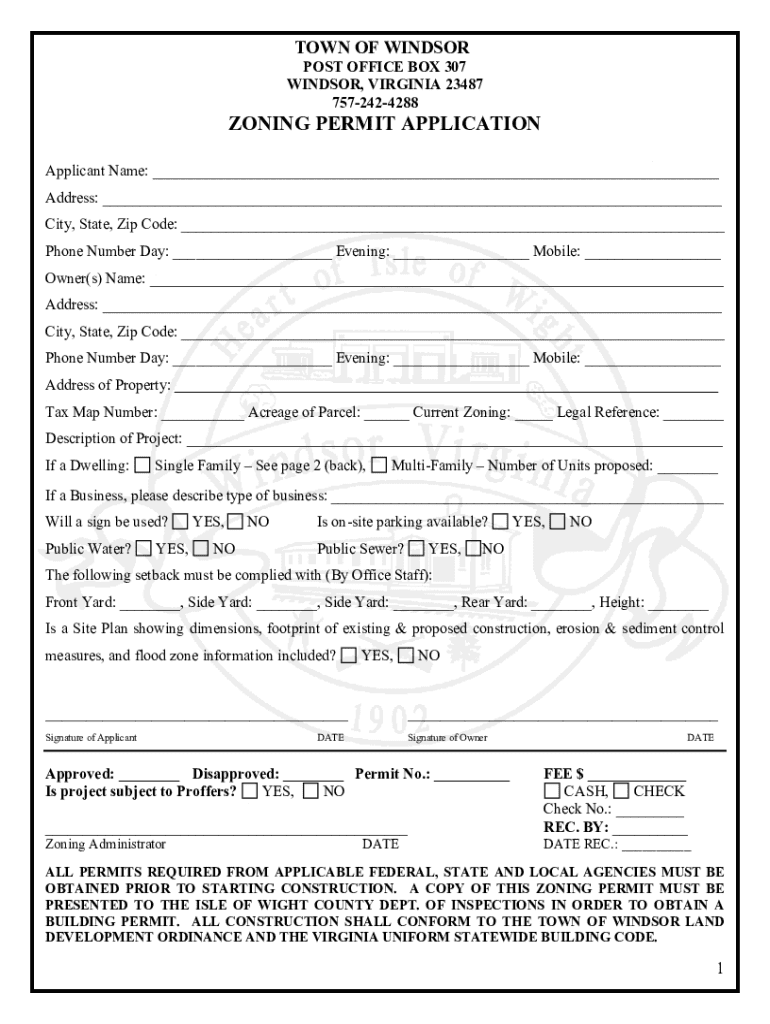







Definition and Purpose of Zoning Permit Application
A Zoning Permit Application is an official document required by local governments in the United States to ensure that any property development, alteration, or usage complies with local zoning ordinances. These applications are integral to urban planning, helping to ensure orderly development and the preservation of community standards. By regulating land use, zoning permits help maintain property values, prevent conflicts between different land uses, and implement comprehensive urban development plans. This form typically includes applicant information, project details, and descriptions of intended land use changes, enabling municipalities to assess and approve proposed developments based on zoning codes.
Steps to Complete the Zoning Permit Application
-
Gather Required Information: Before starting the application, collect all necessary information related to the project. This includes details about the property owner, the development site, existing zoning classification, and intended modifications or usage changes.
-
Project Description and Plans: Prepare a comprehensive project description. Clearly outline the proposed construction, redevelopment, or usage change, including any relevant diagrams or sketches. Ensure these descriptions align with local zoning codes and emphasize adherence to ordinances.
-
Supporting Documents: Assemble all necessary documents, such as site plans, architectural drawings, and any previous approvals or amendments. Depending on the project, additional documents related to environmental impact studies or neighborhood consultations might be required.
-
Complete the Application Form: Fill out the Zoning Permit Application diligently, ensuring all sections are completed accurately. Double-check fields like applicant details, property information, and project specifics to avoid common errors.
-
Submission and Fees: Submit the application to the appropriate municipal office, either online, by mail, or in person. Be sure to pay any required fees, which can vary based on the complexity of the project and the local jurisdiction's regulations.
-
Review and Approval Process: After submission, the application undergoes a review process by local zoning officials, and additional clarifications or modifications may be required. Be prepared to engage with zoning boards or committees for possible hearings or meetings.
Required Documents for Zoning Permit Application
- Site Plan: A detailed map of the property, showing existing structures, proposed changes, lot dimensions, and any significant landscape features.
- Project Description: Detailed narrative or report describing the intended development, construction, or use alterations.
- Architectural Plans: Blueprints or technical drawings, if applicable, illustrating the design and layout of new constructions or modifications.
- Environmental Impact Assessments: Depending on regulations, this document assesses potential effects on local ecosystems and includes mitigation strategies.
- Compliance Proof: Evidence of adherence to local zoning laws and ordinances, such as citations from municipal codes.
- Previous Permits or Approvals: Copies of any former permits or approvals related to the property that may influence the new application.
Important Terms Related to Zoning Permit Application
- Zoning Ordinance: Local law defining how property in certain geographic zones can be used, including the types of structures permitted.
- Variance: A legal authorization to deviate from strict zoning codes, usually granted when specific criteria are met and no other feasible alternatives exist.
- Conditional Use Permit: Allows property use that is not automatically permitted under the current zoning classification but is permitted under certain conditions.
- Easement: A legal right to use another's land for a specific purpose, such as utilities or access roads; relevant in zoning for ensuring rightful land use.
- Setback: The distance a building must be from the property line, street, or other structures, often stipulating the boundaries for construction.
Legal Use and Compliance with Zoning Permit
Compliance with zoning regulations ensures legal use of property and aids in community development goals. A zoning permit legally authorizes development activities, preventing unauthorized constructions and safeguarding against future disputes or penalties. Obtaining a zoning permit is crucial for ensuring that any land alterations adhere to local ordinances, thereby maintaining legal integrity and reducing liability risks associated with non-compliance. Non-compliance can result in fines, forced deconstruction, or revocation of use rights, underscoring the importance of securing the necessary approvals before commencing projects.
State-Specific Rules for Zoning Permit Applications
Zoning permit requirements can vary significantly across different states and even municipalities within the United States. Each jurisdiction has specific zoning ordinances reflective of local priorities and urban planning goals. For instance, urban areas may have stricter height restrictions, while rural areas might prioritize agricultural land use. Therefore, it's essential for applicants to familiarize themselves with local zoning laws, which can be accessed via municipal planning departments or official government websites. Some states may have additional regulations pertaining to environmental conservation or historic preservation, impacting the approval of certain projects.
Who Typically Uses the Zoning Permit Application
The primary users of zoning permit applications include property developers, homeowners, architects, and land use planners. Homeowners typically apply for zoning permits when planning extensions, renovations, or changing property use, such as converting residential spaces into commercial units. Developers and builders use zoning permits when undertaking new construction projects or major renovations, ensuring compliance with local land use laws. Architects and planners utilize zoning permits to design projects aligning with community design standards and regulatory frameworks.


Penalties for Non-Compliance with Zoning Permits
Failure to comply with zoning regulations can result in a range of penalties, emphasizing the importance of obtaining and adhering to zoning permits. Common penalties include fines or citations issued by the municipal authority, often increasing with the severity of the infraction. In some cases, municipalities may issue stop-work orders, halting ongoing construction until compliance is achieved. Non-compliant structures might face mandatory alterations or deconstruction to meet zoning standards. Additionally, non-compliance could lead to legal battles or adversely affect property resale values, making compliance a critical factor in property management and development.




