






Definition and Meaning
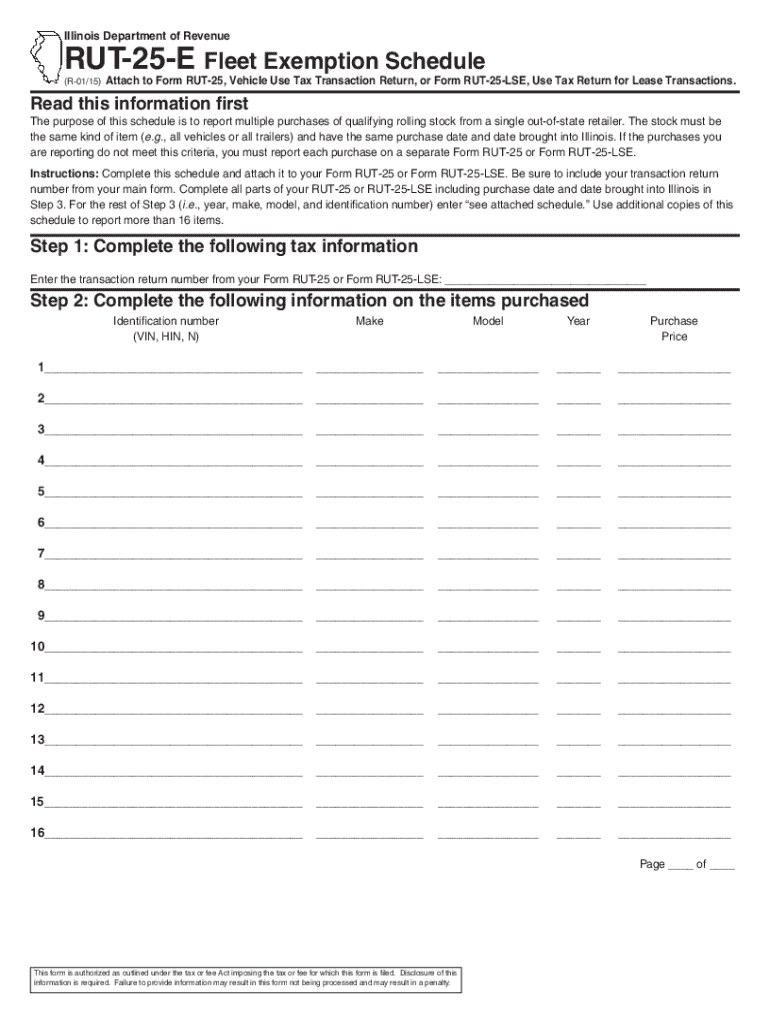
The RUT-25-E Fleet Exemption Schedule is a document issued by the Illinois Department of Revenue. It is specifically designed for reporting multiple purchases of qualifying rolling stock from a single out-of-state retailer. This form is essential for businesses that acquire various items, such as vehicles or trailers, which need to be of the same type and purchased on the same date. The primary purpose of this form is to outline the details and criteria necessary to achieve exemptions on these transactions.
How to Use the RUT-25-E Fleet Exemption Schedule
When utilizing the RUT-25-E Fleet Exemption Schedule, businesses must ensure that all qualifying items are properly listed. Each vehicle or trailer acquired should be meticulously documented according to the instructions provided in the schedule. It is crucial to attach this form to either Form RUT-25 or Form RUT-25-LSE to ensure comprehensive reporting. Following these procedures allows businesses to navigate the exemption process efficiently.
Steps to Complete the RUT-25-E Fleet Exemption Schedule
- Gather Required Details: Obtain all necessary information about the purchased rolling stock, including purchase dates and item types.
- Complete Purchaser Information: Fill in the business's name, contact details, and any relevant identification numbers.
- List Purchased Vehicles: Enter each qualifying vehicle or trailer’s description, type, and purchase date.
- Attach Necessary Documentation: Ensure all relevant purchase receipts and documents are attached.
- Submit with Complementary Forms: Attach the completed RUT-25-E to Form RUT-25 or Form RUT-25-LSE before submission.
Why Use the RUT-25-E Fleet Exemption Schedule
The RUT-25-E Fleet Exemption Schedule is crucial for businesses seeking tax exemptions on specific purchases. By reporting multi-item acquisitions accurately, companies can potentially save significant costs associated with sales tax on these purchases. Utilizing this form ensures compliance with Illinois tax regulations and streamlines the exemption process for fleet purchases.
Key Elements of the RUT-25-E Fleet Exemption Schedule
- Qualifying Items: Only rolling stock meeting specific criteria, such as type and purchase date, can be listed.
- Comprehensive Information: Detailed descriptions and purchase details for each item must be included.
- Required Attachments: Supporting documents and receipts need to accompany the form to validate the exemption claim.
Legal Use of the RUT-25-E Fleet Exemption Schedule
This schedule is a legal document used to claim tax exemptions on qualifying fleet purchases. Its proper use ensures alignment with state tax laws and regulations, protecting businesses from legal repercussions. It is vital for businesses to adhere to the defined guidelines strictly to maintain compliance and avoid penalties.
Important Terms Related to the RUT-25-E Fleet Exemption Schedule
- Rolling Stock: Refers to vehicles or trailers in the context of tax exemption eligibility.
- Out-of-State Retailer: A seller located outside of Illinois from whom purchases are made, relevant for exemption claims.
- Exemption Criteria: Specific requirements that items must meet to qualify for tax exemption under the RUT-25-E.
State-Specific Rules for the RUT-25-E Fleet Exemption Schedule
Illinois has specific rules governing the use and submission of the RUT-25-E. Companies must adhere to these state-specific guidelines to ensure that all filings are valid. It is important to keep current with any changes in Illinois tax law that may affect how these forms are completed and submitted.
Eligibility Criteria
To utilize the RUT-25-E Fleet Exemption Schedule, businesses must satisfy the following eligibility criteria:
- Type of Purchase: The items should be rolling stock acquired from an out-of-state retailer.
- Uniform Purchase Date: All items must share the same purchase date to qualify under the schedule.
- Uniform Item Type: Items included must be similar, falling under the same category as defined by the Illinois Department of Revenue.