
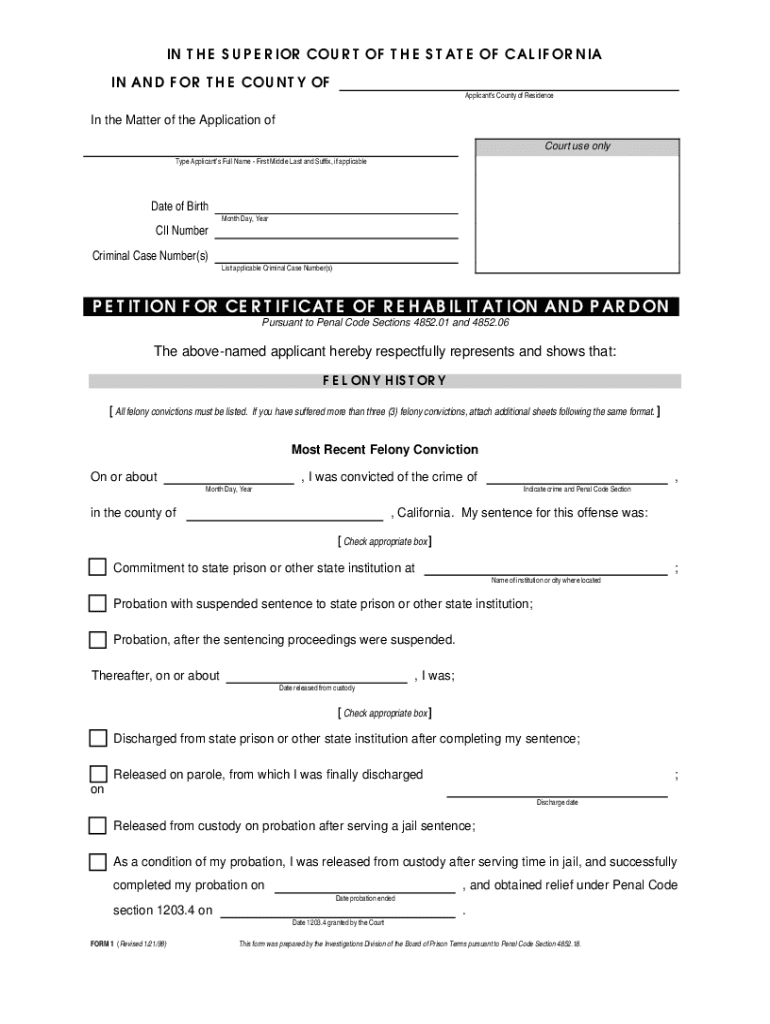







Definition and Purpose of the Notice of Filing Petition for Certificate of Rehabilitation and Pardon
The Notice of Filing Petition for Certificate of Rehabilitation and Pardon serves as an official application in California for individuals seeking a pardon for felony convictions. This legal document initiates the process for obtaining a Certificate of Rehabilitation, which can be used as evidence in petitions for a pardon to the governor. It aims to demonstrate that a former convict has been rehabilitated, thus warranting relief from certain penalties or disabilities associated with their conviction.
A Certificate of Rehabilitation does not automatically expunge the record, but it can enhance opportunities for pardon consideration and demonstrate a commitment to personal reform and societal reintegration. Understanding the roles and limitations of this document is essential for applicants aiming to restore certain rights, such as professional licenses or employment opportunities.
Eligibility Criteria for Filing the Notice
Eligibility to file the Notice of Filing Petition for Certificate of Rehabilitation and Pardon is a critical first step. Applicants must meet specific residency and post-conviction behavior requirements set by California state law.
- Residency Requirements: The petitioner must currently reside in California and have done so for a minimum period specified by law, typically ranging from five to seven years.
- Post-Conviction Behavior: The applicant must not have reoffended since the completion of their sentence, which includes probation or parole. Demonstrating consistent good behavior and community engagement is vital.
Individuals with specific types of convictions, such as certain sexual offenses, may not be eligible for this petition. Understanding these criteria helps potential applicants assess their readiness to engage with this process.


Steps to Complete the Notice of Filing Petition
Completing the Notice of Filing Petition for Certificate of Rehabilitation and Pardon involves a detailed process that must be followed meticulously. The application process can be broken down as follows:
- Prepare Necessary Documents: Gather all relevant documents, including court records and proof of residency.
- Complete the Petition: Fill out the petition form accurately, ensuring all personal and conviction information is correct.
- Submit to the Correct Court: File the notice with the Superior Court in the county where you reside. This filing must occur in person or by mail, depending on the county's specific process.
- Attend the Hearing: Appear in court on the scheduled date to present your case for rehabilitation.
- Court Decision: Await the court's decision. A granted certificate will be automatically forwarded to the governor as part of the pardon application.
Key Elements Required in the Petition
Several essential elements must be included in the petition to ensure it meets legal standards:
- Full Name and Personal Details: Correct identification particulars.
- Detailed Conviction Information: All relevant details about the conviction, including case number and dates.
- Proof of Rehabilitation: Documentation showing rehabilitation efforts, such as completion of programs or community service involvement.
- Statements from Character References: Letters or testimonials from credible sources attesting to the applicant’s good character and rehabilitation.
Providing comprehensive and accurate information increases the likelihood of a successful application.
Implications and Importance of Receiving a Certificate of Rehabilitation
Receiving a Certificate of Rehabilitation can have significant implications, such as:
- Improving Employment Opportunities: The certificate serves as an endorsement of rehabilitation, enhancing trust with potential employers.
- Restoring Civil Rights: Some civil rights, like the right to vote or hold public office, may be reinstated following a pardon.
- Professional Licenses: For professionals, obtaining this certificate may be necessary to regain suspended or revoked licenses.
The certificate is a powerful component in advocating for a pardon but does not guarantee one, nor does it erase the original conviction.
State-Specific Rules and Guidelines
California has distinct regulations governing the Notice of Filing Petition for Certificate of Rehabilitation and Pardon. It is crucial to:
- Consult with Legal Experts: Engage an attorney experienced in California’s legal pardon process.
- Understand Varied County Requirements: Different counties may have unique filing processes or additional requirements for hearings.
Familiarity with these rules ensures compliance and maximizes the chances of a favorable outcome.
Examples and Case Studies of Successful Applications
Real-world examples underscore the benefit of the notice:
- Case Study 1: An individual, convicted of a felony in 2002, demonstrated ten years of rehabilitative activities, including community service, and successfully obtained both a certificate and subsequent pardon.
- Case Study 2: A healthcare professional whose license was suspended due to a felony conviction obtained a certificate and regained her professional standing after proving her worth and commitment to rehabilitation.
These cases illustrate the transformative potential of pursuing a Certificate of Rehabilitation as a pathway to personal and professional redemption.




