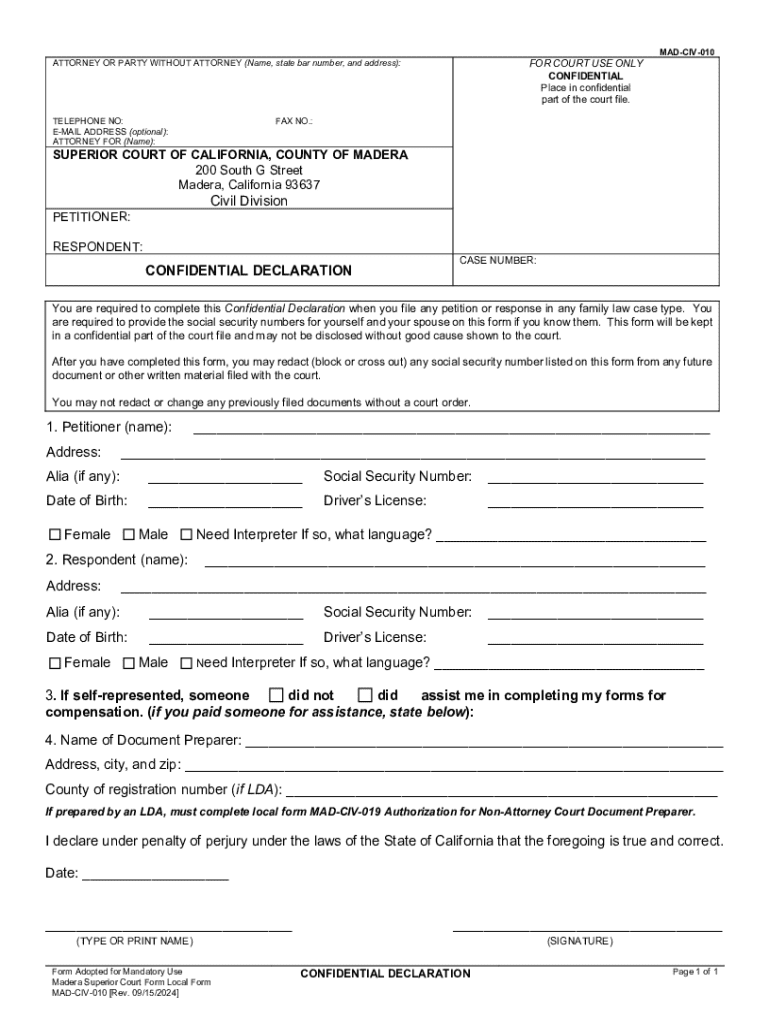







Definition and Meaning of Petition to Determine Parental Relationship
The "Petition to Determine Parental Relationship", often referred to in common parlance as a "paternity case", is a legal document used to establish parentage. This process is crucial when determining legal responsibilities such as custody, visitation rights, and child support. It formally identifies the parent(s) of a child when parentage is not presumed or needs confirmation. Establishing parentage through this petition ensures that both the child and parents have their rights and responsibilities clearly defined, contributing to the child's welfare and stability.
How to Use the Petition to Determine Parental Relationship
To utilize the petition effectively, individuals must understand both the legal implications and the procedural steps involved. The document must be filled out with accurate details regarding the parents and the child in question. In some jurisdictions, additional affidavits or acknowledgments may be required to support the case. The petition should be filed with the appropriate court, generally in the county where the child resides, and must be accompanied by any necessary fees.
Filing Steps
- Obtain the Form: Acquire the petition from the local family court or its online portal.
- Complete the Form: Fill in all required sections with precise information, including the names, addresses, and relationships of the parties involved.
- Attach Supporting Documents: Gather necessary evidence such as birth certificates and any existing legal determinations about parentage.
- Submit the Petition: File the completed document with the court, following local rules about service to other parties involved.
- Attend the Hearing: Participate in any scheduled court proceedings to present the case for determining parental relationships.
Required Supporting Documents
Supporting documentation is critical when filing the Petition to Determine Parental Relationship. These documents substantiate the claims made in the petition and help the court make informed decisions.
- Birth Certificates: Required to establish the child's and involved parties' identities.
- Affidavits or Declarations: Statements from the petitioner or witnesses supporting the claim of parentage.
- Previous Court Orders: Related orders regarding custody or child support may need to be included.
- Evidence of DNA Testing: Optional but can highly influence the court's decision-making process.
Legal Use of the Petition to Determine Parental Relationship
In the U.S., the legal use of this petition extends beyond establishing biological parentage; it underpins several other legal determinations.
- Custody Orders: Upon establishing parentage, the court can issue orders defining custody arrangements.
- Visitation Rights: The petition enables non-custodial parents to obtain structured visitation schedules.
- Child Support Obligations: Determines financial responsibilities towards the child's upbringing and welfare.
Who Typically Uses the Petition to Determine Parental Relationship
Individuals who find themselves in situations where parentage needs legal confirmation typically use this petition. Common users include:
- Unmarried Parents: Seeking to establish legal parentage for the child's benefits.
- Alleged Fathers: Men wanting to confirm or challenge parentage assertions.
- Mothers: Needing official acknowledgment of paternity for child support or custody purposes.
- Guardians or State Agencies: In cases where the child's welfare is a concern, agencies might petition to clarify parental responsibilities.


Key Elements of the Petition to Determine Parental Relationship
The petition comprises several crucial sections that must be accurately completed to avoid delays or denials.
- Petitioner Information: Identification information of the individual initiating the petition.
- Child’s Information: Full legal name, date of birth, and current residence of the child.
- Respondent Details: Information on the alleged or presumed parent.
- Legal Basis for Petition: Justification, such as lack of prior acknowledgment or disputes over existing assertions.
- Requested Relief: Specific outcomes the petitioner seeks, including custody or support.
Examples of Using the Petition to Determine Parental Relationship
Real-world scenarios help illustrate when and how this petition might be used.
- Unmarried Couple with Dispute: A mother files a petition when the purported father disputes paternity to formalize custody and support.
- Post-Relationship Maternal Claim: A father initiates the petition after separation to gain visitation rights, following the inability to establish a voluntary custodial agreement.
- Service Members: Military personnel using the petition to ensure legal protection and recognition of their relationship with a child prior to deployment.
Important Terms Related to Petition to Determine Parental Relationship
Understanding these terms ensures clearer comprehension and better legal navigation.
- Presumed Parent: A person recognized as the parent unless proven otherwise due to existing marital or cohabitation circumstances.
- Acknowledgment of Paternity (AOP): A legal document where a man accepts paternity, often used in hospitals at childbirth.
- Genetic Testing: Biological testing used to scientifically establish or refute parentage.
State-Specific Rules for the Petition to Determine Parental Relationship
While the petition is a legal standard across the U.S., states may have variations in their application.
- California: Offers streamlined forms through its court websites, focusing on simplifying the process for self-representing parties.
- Texas: Has provisions allowing presumed parents to challenge paternity within a specific timeframe after the child's birth.
- New York: Requires a family court judge's involvement in most parentage petitions to confirm procedural fairness and accuracy.