







Definition & Meaning
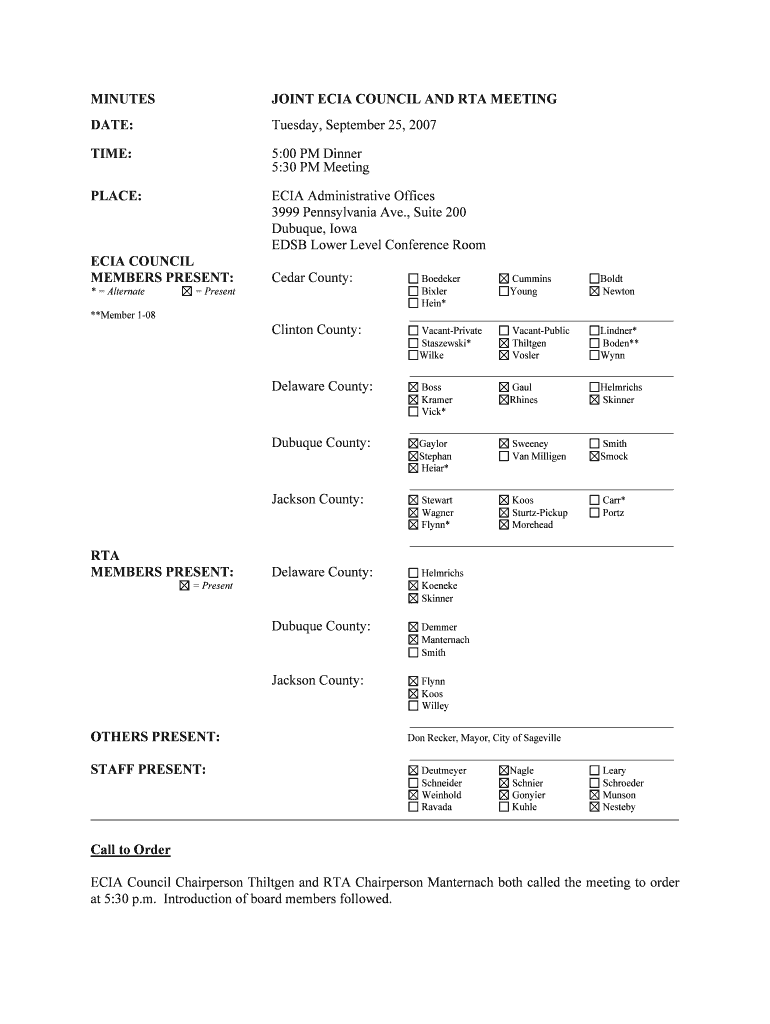
The "Minutes Joint ECIA Council and RTA Meeting Date bb - ecia" document captures the official records of discussions and decisions made during a joint meeting between the ECIA Council and the RTA. This form serves as a comprehensive record, detailing attendance, discussions on financial matters, contract negotiations, and strategic decisions. It plays a critical role in ensuring transparency, accountability, and a historical reference for future consultations. A clear understanding of this document's contents is crucial for stakeholders involved in ECIA and RTA activities.
Key Elements of the Document
This form includes several essential components that provide a thorough account of the meeting's proceedings:
- Attendance Records: Lists all members and participants present during the meeting, offering a complete overview of involved parties.
- Financial Discussions: Details discussions around financial reports, including approval of financial status and potential budget allocations.
- Contractual Agreements: Covers any negotiations or decisions regarding contracts that might impact the organizations.
- Facilities Proposal: Includes plans for new facilities or improvements to existing ones, highlighting the strategic directions taken.
- Federal Funding Updates: Provides information on federal funding statuses that affect both ECIA and RTA.
- Future Meetings: Schedules and agendas for upcoming meetings, ensuring continuity and planning.
These elements are pivotal for maintaining an organized and actionable record of the meeting.
Steps to Complete the Form
Completing the "Minutes Joint ECIA Council and RTA Meeting Date bb - ecia" involves several straightforward steps:
- Gather Information: Collect all necessary details from the meeting, such as attendance, agenda, and key points discussed.
- Draft the Minutes: Begin with a draft based on notes taken during the meeting.
- Verify Accuracy: Ensure that all recorded items accurately reflect the meeting discussions, financial approvals, and decisions.
- Formatting & Structure: Organize the draft in a clear, structured format, typically starting with a header including the meeting date and location.
- Review: Have the draft reviewed by key participants for verification before finalizing.
- Approval: Seek approval and signatures from authorized personnel to authenticate the minutes.
- Distribution & Filing: Distribute the finalized document to involved parties and ensure it is filed appropriately for future reference.
Legal Use and Compliance
The minutes serve several legal and formal functions:
- Official Record: Acts as a legal document that can be referred to for future meetings or any legal inquiries about the past decisions.
- Compliance and Accountability: Ensures organizational compliance with governance and procedural norms while fostering accountability among decision-makers.
- Evidence of Decisions: Provides an official record of deliberations and resolutions, which can be crucial during audits or legal proceedings.
The document should be handled with care to maintain its legal integrity and relevance.
Who Typically Uses This Document
This document is typically utilized by:
- Governance Bodies: ECIA Council and RTA officials who are involved in decision-making.
- Financial Departments: Teams responsible for financial planning and oversight.
- Legal and Compliance Teams: Groups ensuring adherence to regulatory requirements and documenting official proceedings.
- Strategic Planners: Individuals involved in long-term organizational planning and execution.
These users rely on the minutes to facilitate informed decisions and ensure transparency.
Versions or Alternatives
While the "Minutes Joint ECIA Council and RTA Meeting Date bb - ecia" is a highly specific document, alternative records may include:
- Summary Reports: More concise versions focusing on key decisions and actions required, often used for briefings.
- Executive Summaries: Primarily aimed at executive members, summarizing critical points for high-level decisions.
- Project Specific Minutes: Tailored documents for project-based meetings, emphasizing project outcomes and directives.
Understanding these variations helps tailor documentation to specific organizational needs.
State-Specific Rules
Given the U.S. context, compliance with state-specific regulations is essential. Understanding:
- State Governance Laws: Each state may have unique requirements for documenting official meetings, particularly for public entities.
- Public Access Regulations: Some states might require that minutes be made publicly accessible, emphasizing transparency.
- Filing and Archiving Standards: Different states may have diverse rules regarding the archiving and retention of official records.
Familiarity with these variations ensures that the document remains compliant regardless of geographical location.
Digital vs. Paper Version
The transition from paper to digital documentation offers several benefits:
- Efficiency: Digital formats allow faster processing, distribution, and storage.
- Security: Digital versions can be encrypted and access-controlled more effectively than paper copies.
- Eco-Friendliness: Reducing paper usage aligns with sustainable practices.
- Accessibility: Online storage solutions offer access to documents anywhere with internet connectivity.
The choice between digital and paper should align with organizational capabilities and strategic goals.




