






Definition & Meaning
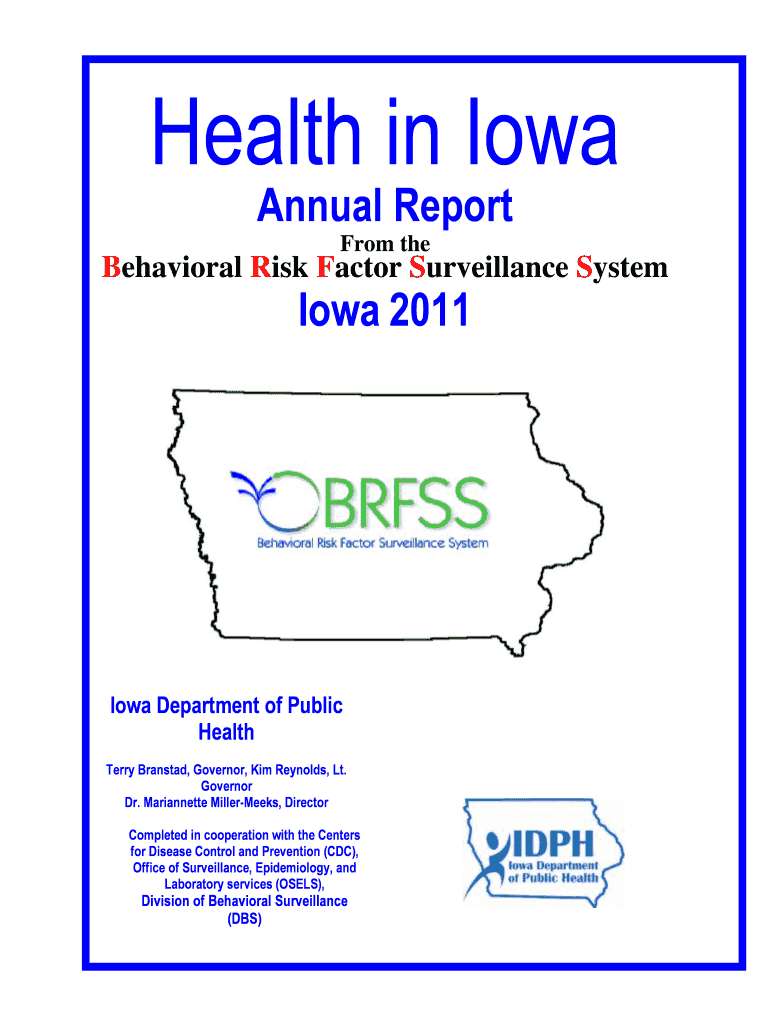
The "Annual Report Iowa 2011 - Iowa Department of Public Health - idph state ia" is a comprehensive document produced by the Iowa Department of Public Health. It encapsulates health data collected through the Behavioral Risk Factor Surveillance System (BRFSS), offering insights into the general health status of the population in Iowa during 2011. The report addresses various health-related themes, including chronic diseases, insurance coverage, healthcare access, and lifestyle factors like diet and exercise. By comparing state findings with national health objectives, the report aims to guide public health policies and initiatives in the region.
How to Use the Annual Report
The report is a vital resource for public health officials, policymakers, and researchers looking to understand health trends within Iowa. It can be used to:
- Identify priority health issues in the state.
- Plan and implement targeted public health programs.
- Evaluate the effectiveness of existing health policies.
- Support grant and funding applications for health-related projects.
Users should analyze the data sections relevant to their interests or responsibilities, such as chronic disease prevalence or health disparities based on demographic factors.
Key Elements of the Annual Report
The 2011 Iowa Annual Report by the Iowa Department of Public Health includes several critical components:
- Health Statistics: Data on chronic conditions like diabetes and hypertension, vaccination rates, and general health indicators.
- Demographic Disparities: Detailed analysis of health outcomes and behaviors across different population groups.
- Comparative Analysis: Insights into how Iowa’s health metrics align with national health objectives.
- Policy Recommendations: Guidance for health policymakers based on the report's findings.
These elements provide a comprehensive overview of the state's health landscape, enabling informed decision-making.
Steps to Complete the Annual Report
The completion of the annual report involves several steps:
- Data Collection: Gathering information using surveys like the BRFSS.
- Data Analysis: Analyzing collected data to identify trends and disparities.
- Report Drafting: Writing detailed sections of the report based on analyzed data.
- Review and Validation: Ensuring accuracy and reliability of the findings.
- Publication: Finalizing and distributing the report to stakeholders.
These steps ensure that the report is thorough, accurate, and useful for public health interventions.
Who Typically Uses the Annual Report
The primary users of the report include:
- Public Health Officials: For designing and evaluating health programs.
- Policymakers: To aid in developing health policies and legislative frameworks.
- Researchers and Academics: For conducting studies related to public health trends.
- Non-Profit Organizations: To support initiatives and seek funding for health projects.
These users rely on the report for evidence-based decision-making and strategy development.


Legal Use of the Annual Report
The annual report may be used legally in a variety of contexts:
- Supporting public health initiatives and funding proposals.
- Formulating state health policies and legislative actions.
- Academic research and educational purposes.
It should be cited properly when used as a reference in publications or policy documents to acknowledge the source.
Important Terms Related to the Annual Report
Understanding the report involves familiarizing oneself with key technical terms:
- BRFSS: Behavioral Risk Factor Surveillance System, a tool for collecting health-related data.
- Chronic Diseases: Long-term health conditions like diabetes, hypertension, and arthritis.
- Demographic Disparities: Differences in health outcomes among population subgroups.
These terms are integral to comprehending the nuances and findings presented in the report.
State-Specific Rules for the Annual Report
The report also adheres to specific rules relevant to Iowa:
- Data Reporting Standards: Follows guidelines for accuracy and confidentiality in reporting state health data.
- Health Prioritization: Aligns with Iowa's specific health priorities and initiatives.
- Collaboration with Local Authorities: Involves coordination with county health departments and agencies.
These state-specific rules ensure the report's applicability and usefulness in the local context.