







Definition and Meaning
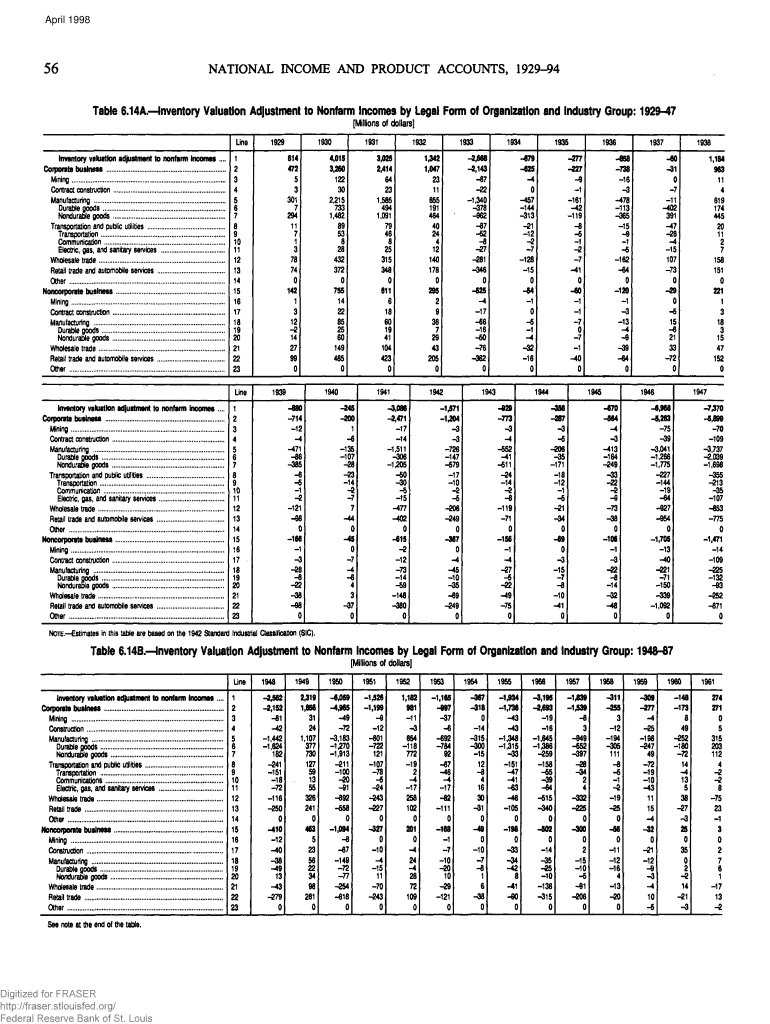
The Inventory Valuation Adjustment to Nonfarm Incomes by Legal Form of Organization and Industry Group N is a financial evaluation tool used to assess changes in inventory valuation that affect nonfarm income across various legal forms of organization, like corporations and partnerships, and different sectors, such as mining and manufacturing. This adjustment accounts for the fluctuations in inventory prices, impacting reported income during specific periods. Understanding this adjustment is crucial for businesses and analysts looking to comprehend fully the financial health and performance of different industries over time.
Understanding How to Use the Inventory Valuation Adjustment
To effectively utilize the Inventory Valuation Adjustment to Nonfarm Incomes, users must first identify the relevant legal form of the organization and industry group they belong to. This adjustment is applicable primarily in accounting practices, where it ensures that the income reported accurately reflects the inventory value changes. Key steps include:
-
Identify the legal form and industry group: Determine if you are operating as a sole proprietorship, partnership, or corporation, and within which industry you operate.
-
Gather historical inventory data: Collect inventory valuation data from previous accounting periods.
-
Apply the inventory valuation principles: Adjust the income figures to reflect the changes in inventory valuations, using standardized accounting practices.
-
Analyze the adjusted figures: Evaluate the impact of these adjustments on overall income for a clear picture of financial performance.
Steps to Complete the Inventory Valuation Adjustment
Executing the Inventory Valuation Adjustment involves a systematic approach:
-
Document Review: Gather all necessary financial documents, including inventory records, sales data, and previous valuation adjustments.
-
Determine Base Year Inventory Values: Establish a base year or period from which changes will be measured.
-
Calculate Valuation Changes: Using accepted accounting methods such as lower of cost or market value, compute the changes in inventory valuation.
-
Adjust Income Records: Reflect these calculations in income statements to present a revised picture post-adjustment. This may involve detailed accounting entries.
-
Review and Verify Adjustments: Ensure calculations are accurate and that all relevant data has been included to maintain compliance with accounting norms.
-
Documentation and Reporting: Record the adjustments meticulously for transparency and future reference.
Key Elements of the Inventory Valuation Adjustment
A comprehensive understanding of the key elements involved in the Inventory Valuation Adjustment process includes:
-
Inventory Costing Methods: Techniques like FIFO (First-In-First-Out) and LIFO (Last-In-First-Out) that determine how inventory costs are calculated.
-
Valuation Standards: Adhering to Generally Accepted Accounting Principles (GAAP) or International Financial Reporting Standards (IFRS) to legitimize the adjustment process.
-
Industry-Specific Regulations: Recognize sector-specific rules that might influence inventory valuation methods, such as environmental impacts on mining operations.
Who Typically Uses the Inventory Valuation Adjustment?
This adjustment is predominantly used by:
-
Accountants and Bookkeepers: Professionals involved in the preparation of financial statements for businesses across various industries.
-
Financial Analysts: Analysts use these adjustments to better project future financial performance by accounting for historical inventory changes.
-
Corporate Management Teams: Managers who need to understand the true earning potential of their business segments.
-
Tax Authorities: Governing bodies reviewing company tax liability influenced by inventory valuations.

IRS Guidelines and Compliance
In line with IRS guidelines, businesses must ensure that their inventory valuation adjustments comply with tax codes. This ensures that the calculated income reflects an accurate understanding of business performance for tax purposes. Adherence to these guidelines is mandatory to avoid penalties related to misstatement of income.
Required Documentation for Inventory Valuation Adjustment
A thorough and complete documentation process includes:
-
Inventory Records: Comprehensive records from the last fiscal period.
-
Income Statements: To reflect adjusted figures.
-
Tax Returns and Past Adjustments: To ensure alignment with previous practices and compliance.
-
Processing Framework: A standardized approach to handling data and adjustments.
State-Specific Rules and Differences
Each state in the U.S. may have slight variations in how inventory valuations are treated for tax purposes. It is essential for businesses to familiarize themselves with state-specific regulations to maintain compliance. Understanding these differences can help businesses avoid unnecessary legal complications and optimize their financial strategies appropriate to state law.
Business Entity Types and Their Impact
The effect of Inventory Valuation Adjustment can differ based on business type:
-
Corporations: May see a significant impact on shareholder reports and dividends.
-
Partnerships: Where income allocation among partners needs precise adjustment.
-
Sole Proprietorships: Influences personal income tax calculations and financial planning.
Familiarity with how these adjustments apply based on the business entity helps in making informed strategic decisions.
With these comprehensive insights, users can better understand the full scope and application of Inventory Valuation Adjustment to Nonfarm Incomes by Legal Form of Organization and Industry Group N.




