







Definition & Meaning
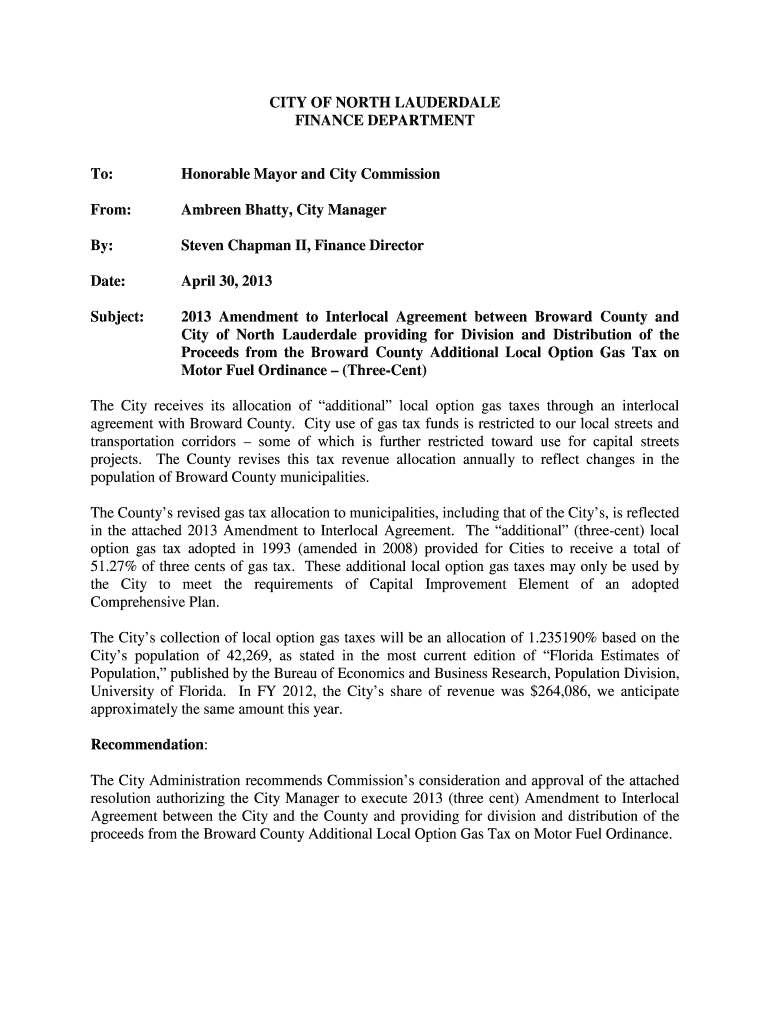
The 2013 Amendment to the Interlocal Agreement refers to modifications made to a pre-existing contract between Broward County and the City of North Lauderdale. This amendment specifically addresses the allocation and distribution of proceeds from the Additional Local Option Gas Tax on Motor Fuel. The adjustment in the agreement ensures that funds generated from this tax are allocated based on population metrics and are earmarked for local infrastructure improvements, including streets and transportation projects. By updating the proportion of gas tax revenue designated for North Lauderdale, the amendment aims to align with current demographic and infrastructural needs.
Key Elements of the 2013 Amendment to Interlocal Agreement
Several components make up the 2013 Amendment, and understanding these key elements provides insight into its purpose and function:
- Allocation Percentage: Specifically, the amendment assigns 1.235190% of the gas tax revenue to North Lauderdale, reflecting its needs within the broader county context.
- Flexibility for Infrastructure: Funds are intended for transportation-related improvements, which can include road maintenance, public transit upgrades, or new construction projects.
- Authority and Recommendation: The City Manager is tasked with executing the agreement, ensuring that local leadership is aligned with fiscal redistribution.
Example Scenarios
- Infrastructure Enhancement: Suppose North Lauderdale identifies a need to upgrade local traffic signals with advanced technology suitable for reducing congestion. The allocated funds from the amendment can be used to finance such projects.
- Public Transport Improvements: Funds could also help introduce new bus routes, promoting alternative transportation means within the city.
Steps to Complete the 2013 Amendment to Interlocal Agreement
Completing the 2013 Amendment involves several administrative steps designed to ensure accuracy and compliance with existing regulations:
- Review of Amendment: Both Broward County and North Lauderdale leadership need to scrutinize the contents of the amendment, confirming its alignment with local governmental objectives.
- Approval by City Council: Before the City Manager executes the amendment, the City Council must approve it. This step usually involves public meetings, discussions, and a formal vote.
- Execution by City Manager: Post-approval, the amendment is executed by the City Manager, formalizing its effect.
- Fund Allocation Implementation: County financial officials, alongside city counterparts, coordinate the effective allocation of funds as stipulated in the agreement.
Important Terms Related to the 2013 Amendment to Interlocal Agreement
Understanding specific terminology within the amendment context is crucial:
- Interlocal Agreement: A formal arrangement between two or more local governments that allows cooperation on various projects and services.
- Local Option Gas Tax: A tax imposed by a local government to finance transportation projects, often calculated based on fuel consumption.
- Allocation Percentage: Refers to the predetermined proportion of funds designated to a specific party or purpose.
Legal Use of the 2013 Amendment to Interlocal Agreement
The legal implications of the 2013 Amendment are essential for ensuring proper governance. The following points address its legal framework:
- Conformance with State and Federal Laws: Each element of the amendment has been evaluated to ensure it aligns with existing statutory guidelines, particularly those affecting local taxation and inter-governmental agreements.
- Binding Contractual Obligations: Once executed, both parties are legally obligated to adhere to the agreed terms.
Who Typically Uses the 2013 Amendment to Interlocal Agreement
The primary users of this amendment include:
- Local Government Officials: Those involved in budget allocation and city planning rely on the amendment to effectively distribute resources.
- City Finance Departments: These departments manage the monetary flows resulting from the amendment's execution, allocating funds to appropriate projects.
- Community Planners: Professionals engaged in designing and recommending infrastructure projects will reference the amendment to identify available funding streams.

Example Application
A planning official from North Lauderdale might use the amendment's guidelines to propose enhancements for pedestrian pathways, ensuring safer community transport options.
State-Specific Rules for the 2013 Amendment to Interlocal Agreement
While the amendment primarily affects Broward County and North Lauderdale, it reflects a unique compliance with Florida’s rules regarding local government taxation and expenditure:
- State Compliance: Oregon's rules provide a framework for how local taxes are imposed and managed, with adherence required for all interlocal financial agreements.
- Population-Based Distribution: The amendment utilizes state-sanctioned population statistics to guide fund distribution, ensuring it is equitable and justifiable.
Examples of Using the 2013 Amendment to Interlocal Agreement
Real-world applications of the amendment show tangible impacts:
- Road Resurfacing Projects: Funds from the amendment might be used to improve the durability and quality of North Lauderdale's roads, reducing maintenance costs in the long run.
- Expansion of Public Transit Options: The addition of bus shelters or route expansions can be financed, improving the city's public transportation network and increasing rider comfort.
By understanding the full scope of the 2013 Amendment to the Interlocal Agreement, stakeholders can effectively utilize the resources to achieve strategic objectives in infrastructure development and community planning.




