






Definition & Meaning
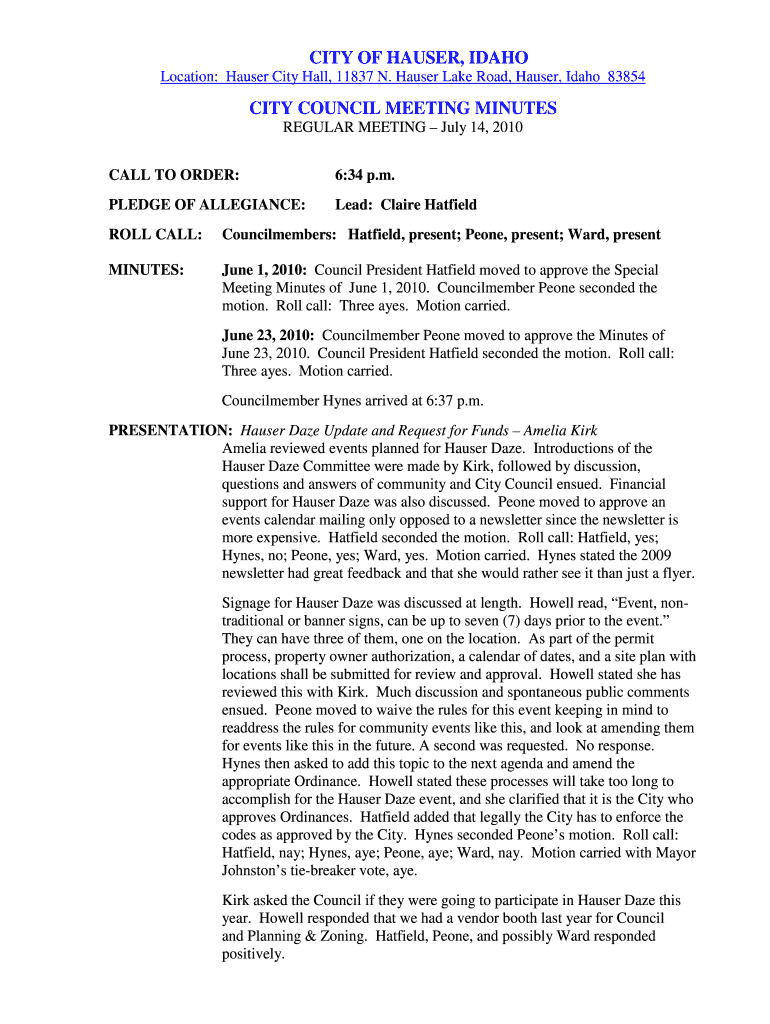
The term "Councilmembers: Hatfield, present; Peone, present; Ward, present" refers to the attendance record of specific council members in a governmental meeting, specifically those from Hauser, Idaho. This line indicates that council members Hatfield, Peone, and Ward were all present during a particular city council meeting. This type of documentation is crucial for official records, ensuring transparency and accountability in governmental proceedings. Such attendance records form part of the minutes, which document discussions, decisions, and relevant updates discussed in the meetings.
Steps to Process Meeting Attendance
-
Record the Meeting Date:
- Always begin by noting the specific date of the council meeting. This provides context and aligns with official records.
-
List Councilmembers Present:
- Clearly state which council members are present by name, as demonstrated by “Hatfield, present; Peone, present; Ward, present.” This confirms their participation and holds them accountable for the decisions made.
-
Note Absentees:
- If any members are absent, their names should also be noted along with the reason for their absence, if provided. This ensures that the record is thorough.
-
Verify and Confirm Information:
- Double-check the attendance with a roll call during the meeting for accuracy. This helps to avoid discrepancies in minutes.
-
Document in Minutes:
- Include the attendance in the official meeting minutes, along with discussions and decisions made during the meeting. This is the final step to ensure accurate record-keeping.
Key Elements of Meeting Minutes
-
Agenda Items:
- List all topics discussed, including financial updates, events like Hauser Daze, and public comments.
-
Decisions Made:
- Highlight any approvals, such as fee waivers or budget scheduling, detailing the voting outcomes.
-
Action Items:
- Document any follow-up actions required from the meeting, with deadlines and responsible parties.
-
Public Participation:
- Note any public comments that were made, focusing on concerns like signage issues or community projects.
Who Typically Uses Meeting Attendance Records
Meeting attendance records are generally used by government officials, including city clerks and council members themselves, to ensure all official proceedings are transparent and well-documented. These records may also be referred to by local citizens who take interest in the proceedings of their local governance and need a historical account of council decisions and participation for community planning and development purposes.
Important Terminology Related to Meeting Records
- Roll Call: The process of calling out names to record presence.
- Quorum: The minimum number of council members required to make the proceedings of the meeting valid.
- Minutes: Written record of everything that was discussed or decided during the meeting.
- Agenda: A list of items to be discussed during the meeting.
Why Maintain Detailed Attendance Records?
Accurate attendance records at council meetings are critical for several reasons:
- Accountability: Council members are elected to represent their constituents, and attendance records hold them accountable.
- Logistical Planning: Ensures that meetings are properly scheduled when maximum participation can be guaranteed.
- Legal Compliance: Many regions require formal records be kept as part of open meetings laws or for audit purposes.
- Public Trust: Transparency in government actions fosters trust with the community.
Examples of Effective Meeting Documentation
To illustrate, consider a scenario where council decisions significantly impact local events, such as approving budgets for community festivities. Detailed attendance records ensure all members are present during these key discussions, which underscores the importance of their decisions. For instance, the approval for funding Hauser Daze might require unanimous consent, making the presence of every member vital.
Legal Implications of Attendance Records
Failure to accurately document council attendance can lead to legal issues, such as challenges to the legitimacy of the decisions made if the quorum is not met. Legal actions may also arise if transparency laws regarding public meetings are not followed, making accurate record-keeping a legal requirement.
Form Submission Methods for Meeting Minutes
Meeting minutes, including attendance records, need to be officially submitted and archived. This can vary by jurisdiction but typically includes:
- Uploading to a Government Portal: Many local governments allow electronic submissions.
- Submissions via Email: When digital records are maintained, email is a common method.
- Paper Documentation: Physical copies often remain a requirement for legal records.
By thoroughly documenting council attendance and meeting details, officials ensure adherence to legal and procedural standards, while providing an accurate historical record for future reference.