
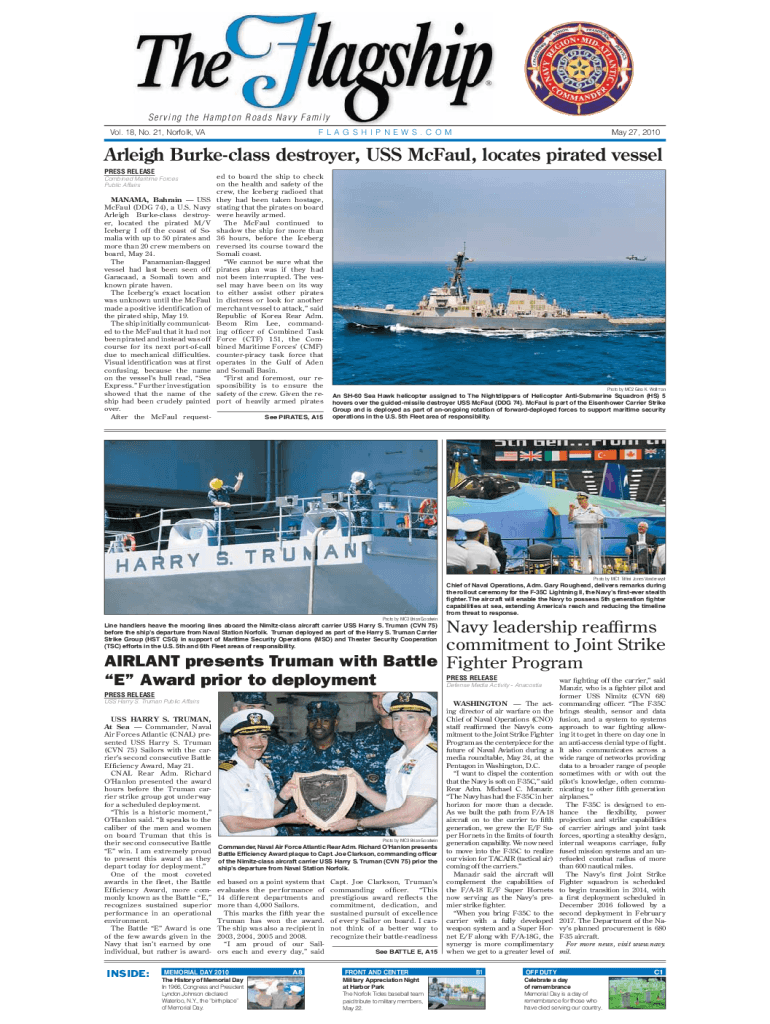







Definition and Purpose of the Arleigh Burke-class Destroyer, USS McFaul
The Arleigh Burke-class destroyer is a class of guided missile destroyers in the U.S. Navy. Named after Admiral Arleigh Burke, these vessels are multifunctional warships designed for a variety of missions, including air, surface, and subsurface warfare. The USS McFaul is one such destroyer, noteworthy for its recent involvement in locating a pirated vessel. This operation showcases the ship's capabilities in global maritime security and anti-piracy efforts.
How the USS McFaul Operates in Anti-Piracy Missions
The USS McFaul operates as part of international naval coalitions or independently in regions prone to piracy, such as the Gulf of Aden. Equipped with advanced radar and sonar systems, the vessel can effectively track and intercept hijacked ships. The destroyer utilizes helicopters and small boats to assess and approach the pirated vessels, ensuring the safety of crew and hostages while neutralizing pirate threats. Through seamless coordination with allied forces and maritime agencies, the USS McFaul exemplifies modern naval strategy in combating piracy.
Steps in the USS McFaul's Pirate Vessel Location Process
- Intelligence Gathering: The process begins with the acquisition of intelligence from various naval and intelligence agencies detailing suspected pirate activities.
- Deployment: The USS McFaul is deployed to the suspected area with specific orders to engage any illicit activities.
- Detection: Using its advanced radar systems, the destroyer identifies potential targets.
- Interception: The destroyer approaches the suspected vessel with caution, backed up by aerial support if necessary.
- Engagement: Boarding teams are dispatched to secure the vessel, assess the threats, and provide relief to captives.
- Resolution: The pirates are detained, and the ship is returned to its rightful crew or owners.
Why the USS McFaul Is Essential in Maritime Security
The USS McFaul is integral to maintaining maritime security due to its technological capabilities and strategic importance in deterrence. Its presence in international waters aids in the prevention of illegal activities, such as piracy, which can threaten global trade routes and economic stability. By ensuring safe passage for commercial vessels, the destroyer plays a critical role in preserving global economic interests.
Typical Users and Beneficiaries of USS McFaul's Missions
Primarily, the beneficiaries of USS McFaul's missions include:
- International Shipping Companies: The protection provided ensures the smooth operation of global supply chains.
- Maritime Insurance Firms: A decline in piracy-related incidents results in reduced insurance costs and liabilities.
- National and International Security Agencies: Enhanced security and cooperation through shared anti-piracy efforts.
- Crew Members of Merchant Vessels: Protection and safety in one of the world's most vulnerable regions for shipping.
Key Elements of Anti-Piracy Operations
- Advanced Technology: Deployment of cutting-edge radar and sonar systems for surveillance and tracking.
- Tactical Expertise: Trained boarding teams execute swift and safe vessel engagements.
- International Cooperation: Collaboration with naval forces from other nations and NGOs for information sharing and operational support.
- Legal Frameworks: Operations are conducted under international maritime law to ensure lawful detention and prosecution of pirates.
Legal Framework and Compliance in Naval Operations
The USS McFaul operates under strict international maritime laws and conventions set by the United Nations. These stipulate engagement protocols, rules of engagement, and the treatment of captured pirates, ensuring all actions are legally authorized. This legal foundation supports collaborative naval operations and establishes consistent operational standards across participating nations.
Examples Demonstrating USS McFaul's Impact
- Case Study 1: In a recent operation, the USS McFaul successfully intercepted a pirate vessel off the coast of Somalia, rescuing hostages and restoring the ship to its crew.
- Case Study 2: The destroyer's coordinated efforts with NATO naval forces in previous missions have significantly reduced pirate activity in the region.
Versions and Alternatives to the USS McFaul
While the USS McFaul is an Arleigh Burke-class destroyer, other vessels in this class, such as the USS Arleigh Burke and USS John Finn, offer similar capabilities. Each ship has its unique operational history and is part of a larger fleet strategy focused on global maritime security and offering varied deployment options depending on the mission's specific requirements and geopolitical context.




