
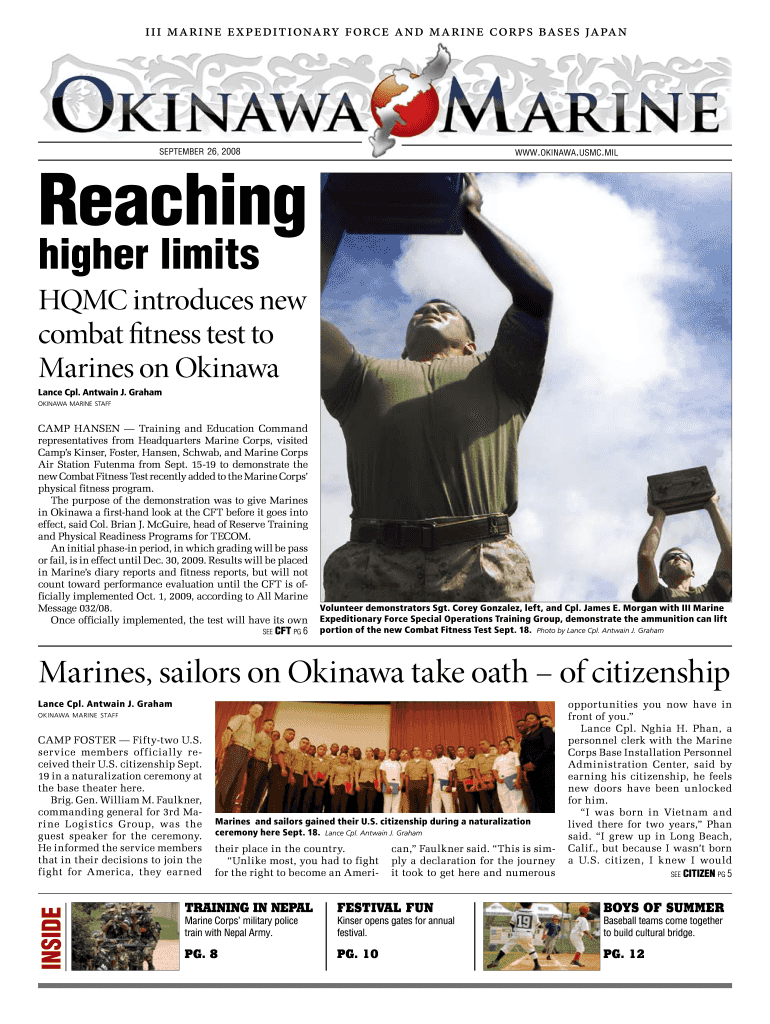







Definition and Meaning
The form "Five reasons the solution for Okinawa is years offMcClatchy" refers to an in-depth analysis addressing the complex factors contributing to the ongoing challenges in Okinawa. This form outlines the multidimensional aspects—political, social, economic, military, and environmental—that collectively hinder the swift resolution of issues in the region. Its intent is to provide a comprehensive understanding of why a prompt solution is unlikely and to shed light on the intricacies involved in addressing the issues at hand.
Key Elements of the Form
Understanding the critical elements of the "Five reasons the solution for Okinawa is years offMcClatchy" form is essential. It covers several components:
-
Historical Context: Provides background on the long-standing issues in Okinawa, including post-WWII military presence and the impact on local communities.
-
Stakeholder Analysis: Identifies key parties involved—such as local governments, the US military, and Japanese national agencies—and their interests.
-
Geopolitical Dynamics: Explores international relationships and obligations that influence the decision-making process.
-
Environmental Considerations: Discusses the environmental challenges, including impacts from military bases and local activism.
-
Socio-Economic Factors: Examines the economic dependencies and societal impacts stemming from ongoing military agreements.
How to Use the Form
Utilizing the "Five reasons the solution for Okinawa is years offMcClatchy" effectively requires understanding its structure:
-
Background Research: Begin by exploring historical and current data related to Okinawan issues.
-
In-Depth Analysis: Use each section to delve into specific facets—political, social, environmental—that impede swift resolutions.
-
Integration of Perspectives: Consider diverse viewpoints from all stakeholders affected by the presence of military bases.
-
Scenario Planning: Apply insights to predict potential future developments and implications.
Steps to Complete the Form
Filling out the form involves a structured approach:
-
Gather Information: Collect relevant data and historical background.
-
Identify Stakeholders: List and understand all parties involved or affected by the issues.
-
Analyze Each Section: Break down the form into its key components, addressing each factor in depth.
-
Synthesize Findings: Compile an integrated perspective on why solutions are not imminent.
-
Document Insights: Record observations and conclusions, noting any potential barriers to resolution.
Who Typically Uses the Form
Various professionals and interested parties might seek to utilize this form:
-
Policy Analysts: To evaluate and propose policy changes based on the current situation.
-
Academic Researchers: For studies related to geopolitical or socio-economic issues in international relations.
-
Military Strategists: To assess the impact of ongoing military presence.
-
Environmental Activists: For understanding environmental impacts and advocating for change.


Legal Use of the Form
The legal application of the "Five reasons the solution for Okinawa is years offMcClatchy" form involves:
-
Adherence to International Laws: Understanding obligations under international treaties and agreements.
-
Compliance with National Policies: Aligning actions and proposals with Japanese and US regulations.
-
Environmental Legislation: Considering legal frameworks regarding environmental protection and conservation.
Important Terms Related to the Form
A clear understanding of the terminology used in the form can enhance comprehension:
-
SOFA (Status of Forces Agreement): Describes the legal framework for US military personnel stationed in Japan.
-
Futenma Relocation: Refers to the controversial plan to relocate the Marine Corps Air Station Futenma.
-
Henoko: A site in Okinawa involved in the base relocation controversy.
-
Okinawan Autonomy: The concept of self-determination for Okinawa, politically and economically.
Examples of Using the Form
Practical scenarios of utilizing the form include:
-
Case Studies: Analyzing historical precedents of military base negotiations and outcomes.
-
Comparative Analysis: Comparing the Okinawa situation with similar geopolitical situations, such as US bases in South Korea or Germany.
-
Simulation Exercises: Creating hypothetical scenarios to explore the outcomes of different strategies and policies.
By understanding these components, users can effectively engage with the "Five reasons the solution for Okinawa is years offMcClatchy," gaining deeper insight into the multifaceted issues surrounding the region and informed perspectives on potential solutions.




