
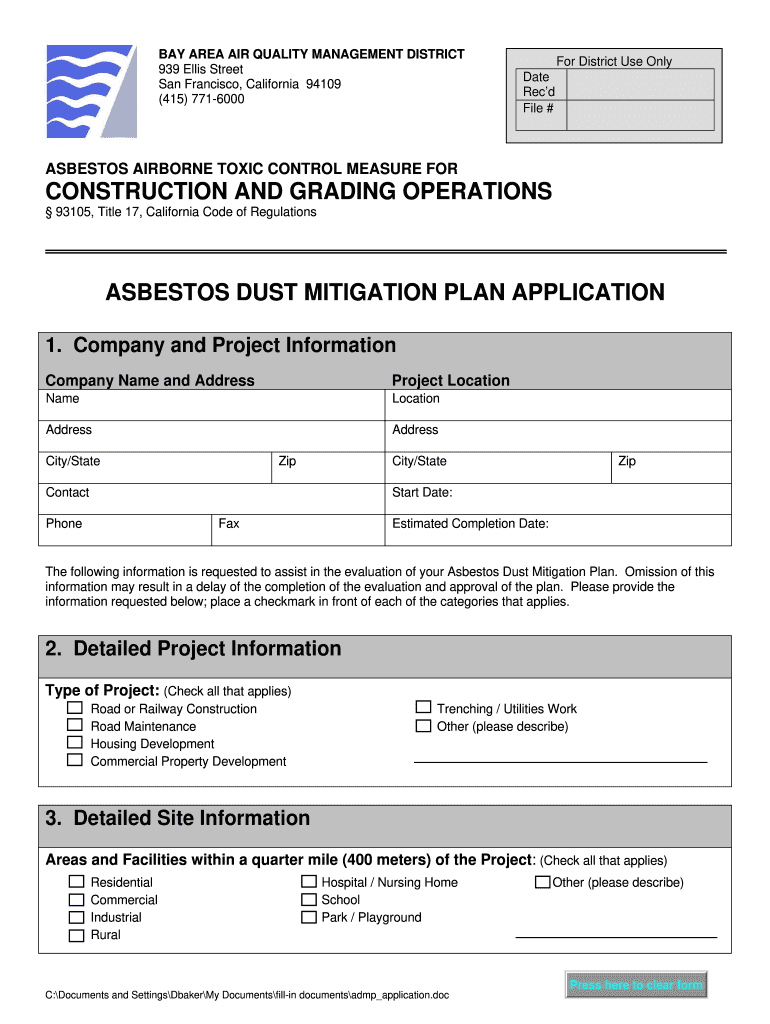







Definition and Meaning
A Naturally Occurring Asbestos Dust Mitigation Plan (NADMP) is a strategic document designed to manage and control the release of asbestos fibers from naturally occurring sources during construction or land-disturbing activities. Asbestos, a naturally occurring mineral, can pose significant health risks if its fibers become airborne and inhaled. The NADMP outlines measures to prevent such exposure, ensuring the safety of workers and the public.
Key Components of a NADMP
- Assessment of Asbestos Risk: Initial identification and assessment of areas with natural asbestos deposits.
- Control Measures: Implementation of dust suppression techniques, such as wetting down work areas.
- Air Monitoring Protocols: Continuous air quality monitoring to detect asbestos fiber levels.
- Workforce Training: Education for employees on safe handling procedures and potential health impacts of asbestos exposure.
- Compliance with Regulations: Ensuring all activities conform to federal, state, and local asbestos management regulations.
How to Use the Naturally Occurring Asbestos Dust Mitigation Plan
Utilizing a NADMP involves a series of steps aimed at minimizing asbestos disturbance. The plan acts as a guide for safely conducting activities in areas with known asbestos deposits.
Implementation Steps
- Review the Plan: Understand the scope and objectives to ensure all measures are appropriately applied.
- Perform Risk Assessments: Identify specific areas of concern that require monitoring and intervention.
- Establish Control Techniques: Use recommended methods to limit dust generation, such as water suppression or covered work areas.
- Conduct Monitoring: Regularly evaluate air quality using specified protocols to ensure asbestos levels remain safe.
- Engage with Regulators: Communicate with relevant authorities to demonstrate compliance and address any concerns.
Steps to Complete the Naturally Occurring Asbestos Dust Mitigation Plan
Completing a NADMP requires a collaborative approach, involving various stakeholders and technical experts. Following a structured process ensures all aspects of the plan are adequately addressed.
Detailed Steps
- Gather Data: Collect geological and environmental information to understand asbestos distribution.
- Draft Initial Plan: Develop a preliminary version of the NADMP, incorporating input from experts in environmental science and occupational health.
- Stakeholder Review: Share the draft with relevant parties, including construction managers, regulatory bodies, and community groups for feedback.
- Finalize the Plan: Revise based on feedback to ensure the document is comprehensive and practical.
- Obtain Approval: Submit the plan to the necessary authorities for review and approval before commencing work.
Key Elements of the Naturally Occurring Asbestos Dust Mitigation Plan
A robust NADMP must include specific elements to be effective. These components ensure the plan meets regulatory requirements and adequately protects public health.
Essential Elements
- Site Characterization: Detailed analysis of the geographic area, including mapping of asbestos deposits.
- Risk Mitigation Strategies: Specific procedures to control asbestos release during various phases of construction.
- Monitoring Framework: Outlines of the techniques and equipment used for air sampling and analysis.
- Training Programs: Required educational initiatives for staff involved in asbestos-related activities.
- Emergency Protocols: Clear instructions for responding to accidental asbestos release incidents.
Legal Use of the Naturally Occurring Asbestos Dust Mitigation Plan
The legal aspects surrounding the use of a NADMP are pivotal, as non-compliance can lead to fines or legal action. Adhering to specific regulations protects both public health and legal standing.
Legal Considerations
- Regulatory Compliance: Ensure the plan aligns with asbestos management laws as outlined by agencies such as the Environmental Protection Agency (EPA).
- Documentation Requirements: Maintain thorough records of all activities and compliance measures undertaken.
- Liability Implications: Understand potential liabilities related to asbestos exposure and how the NADMP mitigates these risks.
State-Specific Rules for the Naturally Occurring Asbestos Dust Mitigation Plan
Different states may have unique regulatory requirements regarding asbestos management. It's important to tailor the NADMP to meet these state-specific needs.
Recognizing Variations
- California Regulations: California is known for its stringent asbestos management laws, requiring detailed plans and frequent monitoring.
- New York Guidelines: New York mandates specific training for those involved in asbestos handling and mitigation.
- Texas Requirements: Work in Texas may involve specific considerations for arid conditions affecting dust suppression techniques.
Examples of Using the Naturally Occurring Asbestos Dust Mitigation Plan
Real-world applications of the NADMP highlight its importance and effectiveness in managing asbestos risks.
Case Studies
- San Francisco Redevelopment: During redevelopment projects, a NADMP was implemented to manage asbestos exposure, successfully preventing health risks.
- Rural Highway Expansion: A project in Nevada incorporated a NADMP to address asbestos exposure risks from naturally occurring deposits along the proposed route.
Penalties for Non-Compliance
Non-compliance with NADMP and associated regulations can result in significant consequences. Understanding these penalties emphasizes the importance of adherence.
Potential Sanctions
- Fines: Companies may face hefty financial penalties for failing to implement a compliant NADMP.
- Work Stoppages: Regulatory authorities might halt operations until compliance is achieved, leading to project delays.
- Legal Proceedings: Severe breaches can result in legal action, impacting both company reputation and financial stability.




