







Definition & Meaning
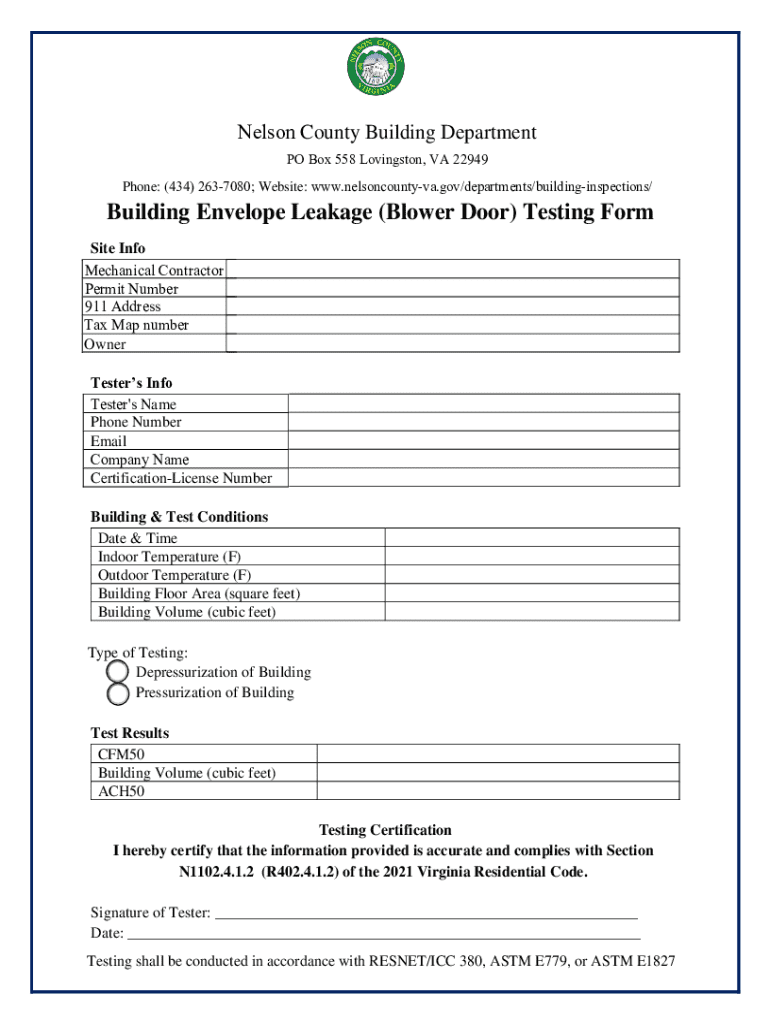
The Building Envelope Leakage Testing Form is a specialized document used to record details related to the process of blower door testing in buildings. This form captures vital information such as site details, tester data, building conditions, and results of the test. In essence, it serves as a compliance tool ensuring that buildings meet the required standards of the Virginia Residential Code. The form is comprehensive in nature, addressing various aspects of leakage testing to provide a complete picture of the building's energy efficiency and airtightness.
Key Elements of the Building Envelope Leakage Testing Form
The Building Envelope Leakage Testing Form encompasses several critical sections to ensure a thorough evaluation of the building's envelope. These include:
- Site Information: Details about the building location, ownership, and specific site identifiers.
- Tester’s Details: Information about the qualified professional conducting the test, including certification and contact details.
- Building Conditions: Description of the building, including size, type, and any specific conditions present during testing.
- Test Results: Quantitative data reflecting the results of the leakage test, often expressed in air changes per hour at a specific pressure.
- Certification of Compliance: A section where the tester certifies the results, confirming compliance with regulatory standards.
Each section is designed to capture necessary data in a structured manner, facilitating accurate assessment and reporting.
Steps to Complete the Building Envelope Leakage Testing Form
Filling out the Building Envelope Leakage Testing Form requires careful attention to detail. Here's a step-by-step guide:
- Gather Documentation: Compile all necessary documents related to the building and testing equipment.
- Site Information: Begin by entering precise details about the building location and ownership.
- Completion of Tester’s Details: Include information about the tester, ensuring all certifications are up-to-date.
- Document Building Conditions: Note the physical attributes of the building and any external factors affecting the test.
- Conduct the Test: Perform the blower door test following industry standards and protocols.
- Record Test Results: Accurately input the data from the testing process into the form.
- Review and Certify: Go through all sections to ensure accuracy, then complete the certification section to acknowledge compliance.
Important Terms Related to the Building Envelope Leakage Testing Form
Understanding the terminology associated with the Building Envelope Leakage Testing Form is essential for accurate completion:
- Blower Door Test: A diagnostic tool used to measure the airtightness of buildings.
- Air Changes per Hour (ACH): A metric indicating the volume of air replaced in an hour relative to the building's volume.
- Airtightness: The resistance of a building envelope to air infiltration and exfiltration.
- Virginia Residential Code: A set of regulations governing residential construction standards in Virginia.
These terms provide the foundational knowledge required to interpret the form correctly.
Who Typically Uses the Building Envelope Leakage Testing Form
The Building Envelope Leakage Testing Form is primarily utilized by professionals in the construction and energy assessment fields, such as:
- Energy Auditors: Experts engaged in evaluating a building's energy efficiency.
- Construction Managers: Professionals overseeing building projects to ensure regulatory compliance.
- Building Inspectors: Officials responsible for enforcing building codes and standards.
- Homeowners: Individuals seeking to improve their property's energy performance.
These stakeholders rely on the form to verify compliance and improve building efficiency.


State-Specific Rules for the Building Envelope Leakage Testing Form
In Virginia, the Building Envelope Leakage Testing Form follows state-specific regulations that align with the Virginia Residential Code. These rules dictate:
- Testing Requirements: Specific thresholds for air changes per hour required to pass the test.
- Certification Criteria: Stipulations for who can conduct and certify the results.
- Documentation Protocols: Guidelines on maintaining records for compliance audits.
The adherence to state-specific rules is crucial for the form's validity and legality.
Why Should You Use the Building Envelope Leakage Testing Form
The utilization of the Building Envelope Leakage Testing Form brings multiple advantages:
- Ensures Compliance: Helps meet regulatory standards for building efficiency.
- Enhances Energy Efficiency: Identifies areas of air leakage to improve insulation and reduce energy losses.
- Increases Property Value: Enhances building marketability by proving compliance and efficiency.
- Improves Indoor Comfort: Leads to better temperature control and air quality within the building.
These benefits demonstrate the form's integral role in maintaining high standards in building construction and maintenance.
Digital vs. Paper Version
The Building Envelope Leakage Testing Form is available in both digital and paper formats, each with unique advantages:
- Digital Version: Offers ease of access, electronic completion, and streamlined sharing capabilities. Utilizes platforms like DocHub for seamless editing, signing, and more.
- Paper Version: Preferred for face-to-face interactions or in situations lacking digital access.
The choice between versions depends on user preference and the specific requirements of the testing scenario.
Form Submission Methods (Online / Mail / In-Person)
There are several ways to submit the completed Building Envelope Leakage Testing Form:
- Online Submission: Easily upload the form through designated portals or email it to the relevant authority.
- Mail: Send the hard copy of the completed form to the concerned department.
- In-Person: Deliver the form directly to local building or code enforcement offices.
The method of submission should ensure receipt confirmation and retention of proof for future reference.




