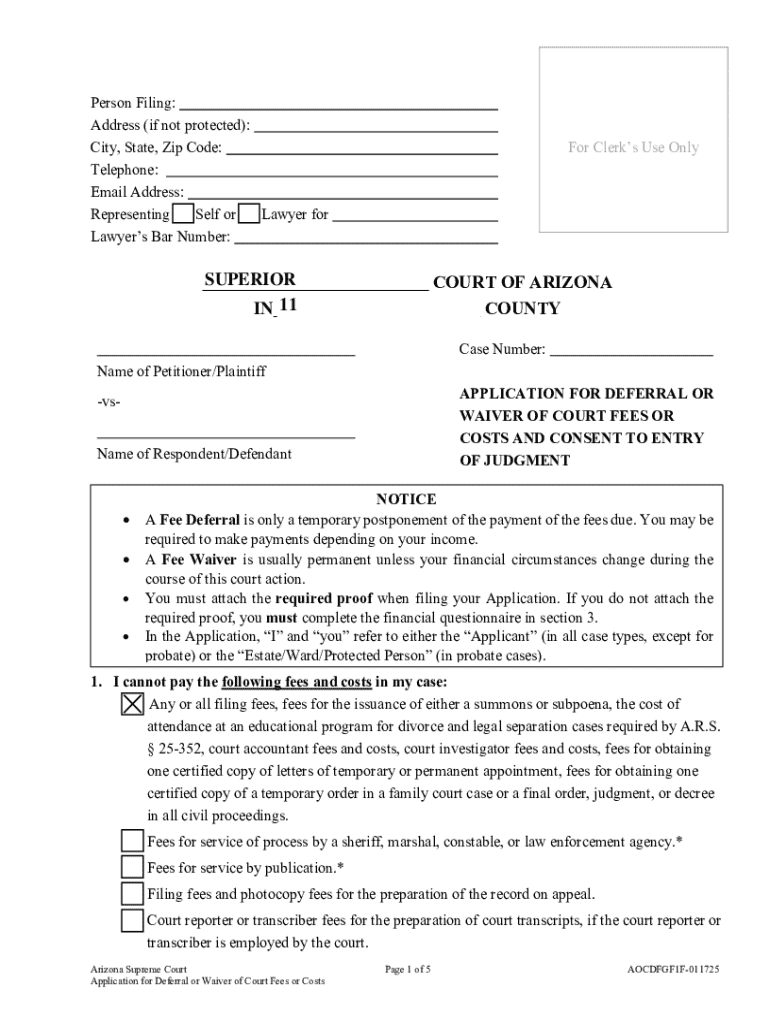







Definition and Purpose of the Application for Deferral or Waiver of Court Fees or Costs
The Application for Deferral or Waiver of Court Fees or Costs is a legal form used to request the postponement or elimination of specific court-related fees for individuals unable to afford them. This application is an essential tool for ensuring access to justice for low-income individuals, allowing them to pursue or defend legal actions without the burden of prohibitive costs. Applicants must demonstrate financial need and meet certain eligibility criteria to qualify for either deferral or waiver. The form ensures equal legal representation opportunities by removing financial barriers.
Steps to Complete the Application
-
Gather Required Financial Information: Start by collecting documentation that proves your financial status, such as proof of income, tax returns, and bank statements. Accurate information is crucial for demonstrating eligibility.
-
Complete Personal Information: Fill in personal details, including your name, address, and contact information. Ensure all information is current to avoid processing delays.
-
Detail Financial Hardship: Explain your financial situation comprehensively. Attach supporting documents to substantiate claims of financial hardships, like loss of income or unexpected medical expenses.
-
Specify Court Case Details: Include specific information about the court case for which the deferral or waiver is sought, such as case numbers and court locations.
-
Review and Sign the Form: Carefully review all entries for accuracy before signing the form. Misstatements can lead to application denial or legal consequences.
-
Submit the Application: Follow local guidelines for submitting the application, which may include mail, in-person delivery, or online submissions depending on the court's processes.
Eligibility Criteria
Eligibility for a fee deferral or waiver typically hinges on financial need. Applicants usually need to:
- Meet Income Thresholds: Most courts require proof that your household income is below a specific percentage of the federal poverty level.
- Provide Financial Disclosure: Full disclosure of assets, liabilities, and monthly expenses is necessary to assess financial need.
- Demonstrate Inability to Pay: Justify why paying fees would result in financial hardship, taking into account dependents or substantial medical expenses.


Required Documents
Applicants need to submit various documents that corroborate their financial status. Generally required documents include:
- Proof of Income: Pay stubs, Social Security statements, or other proof of earnings.
- Bank Statements: Recent statements from all financial accounts to verify available funds.
- Tax Returns: Copies of recent federal and state tax filings.
- Additional Evidence: Any other documentation that supports claims of financial hardship.
Who Typically Uses This Application
The application is commonly filed by:
- Low-Income Individuals: Those who fall beneath federal poverty guidelines.
- Pensioners and Disabled Persons: Applicants living on fixed or reduced incomes due to age or disability.
- Unemployed Individuals: Those who are unemployed or underemployed and unable to cover court fees.
State-Specific Rules and Variations
Different states may have unique regulations and procedures about court fee deferrals or waivers. It is crucial to consult local court rules or legal aid services for guidance specific to your jurisdiction. Variations can include different income thresholds and eligibility tests tailored to state economic conditions.
Legal Implications and Compliance
Applicants must provide truthful and accurate information. Falsifying details on the application can lead to penalties, including dismissal of the waiver request, contempt of court charges, or fines. It is imperative to comply with all legal requirements and ensure the integrity of the submitted information.
Form Submission Methods
Submission methods can vary, often allowing for multiple channels:
- Online Portals: Many courts offer electronic submission through online systems, which is efficient and fast.
- Mail-In Applications: Paper applications can be mailed to the court address provided on the form instructions.
- In-Person Submission: Physical drop-off at the court clerk’s office provides a chance for immediate verification and feedback.
By detailing these elements, applicants are better equipped to navigate the complexities of applying for a deferral or waiver of court fees, ensuring they provide necessary information in compliance with jurisdictional requirements.