Definition & Meaning
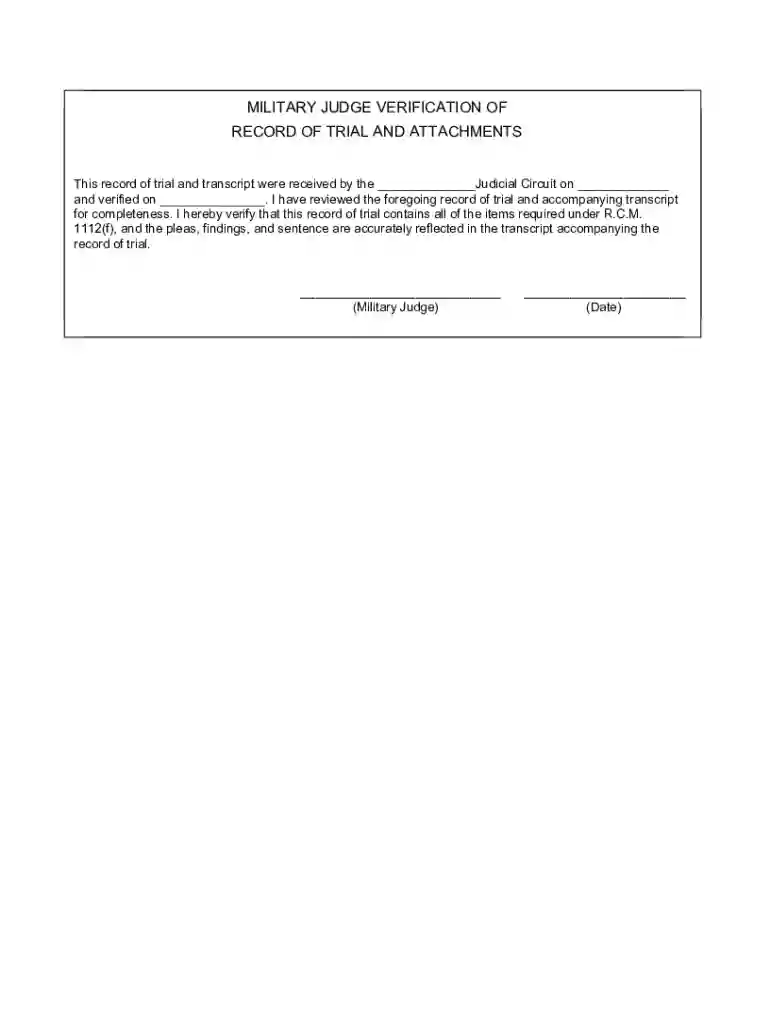
The "Military Judge Verification of Record of Trial" is an essential document in the military justice system, confirming the accuracy and completeness of the trial records. This verification is crucial to ensure that the proceedings are correctly documented, serving as a formal affirmation by the military judge, court reporter, and transcriptionist. It guarantees that the trial records adhere to the standards outlined in R.C.M. 1112(f), providing a reliable account of the trial for future reference. Accurate verification is vital for upholding the integrity of the military justice process, ensuring all parties involved have an authoritative record of the proceedings.
Key Elements of the Military Judge Verification of Record of Trial
The key elements of this verification form include several integral components that ensure the document's comprehensive nature. These elements typically consist of:
- Military Judge's Certification: An affirmation that the trial proceedings are accurately recorded.
- Court Reporter's Endorsement: Confirmation of the transcription's accuracy, highlighting any edits or clarifications needed.
- Signature Fields: Spaces for each participant to authenticate their role and responsibility in the verification process.
- Date of Verification: Specific details of when the verification took place, essential for maintaining precise records.
- Record Completeness: Assessment of whether the trial document includes all necessary components, from opening to verdict.
Every element plays a significant role, affirming the document's validity and making it a dependable record of military trials.
How to Use the Military Judge Verification of Record of Trial
To effectively utilize the Military Judge Verification of Record of Trial, a clear understanding of the process and purpose is essential. Here's a detailed procedure on how to use this form:
- Preparation: Gather all trial materials and relevant documentation to ensure comprehensive coverage during the verification process.
- Review: Thoroughly review the trial record with the court reporter to confirm that all parts of the proceeding are documented accurately.
- Verification by Military Judge: The presiding military judge examines the trial record to affirm its correctness and completeness.
- Endorsement by Court Reporter: The court reporter verifies the transcription, making necessary corrections or annotations.
- Final Signatures: All parties, including the transcriptionist, sign the form to authenticate its accuracy.
- Submission: Once completed, the form and verified record are submitted to the appropriate authorities for official record-keeping.
This step-by-step usage ensures the integrity and accuracy of military trial documentation.
Steps to Complete the Military Judge Verification of Record of Trial
Completing this verification form requires attention to detail and adherence to the correct procedure. Here’s a breakdown of the necessary steps:
- Initiate Review: Begin by gathering all trial-related documents. Ensure completeness before initiating the verification.
- Document Assessment: Carefully examine each section of the trial record for accuracy and completeness.
- Collaboration with Court Personnel: Work closely with the court reporter and transcriptionist to identify and correct any transcription errors.
- Verification and Amendments: Highlight any discrepancies and make necessary amendments to ensure accuracy.
- Signatory Confirmation: Obtain signatures from the military judge, court reporter, and transcriptionist to validate the document.
- Final Validation: Perform a final check to ensure the verification and trial record meet the required standards before submission.
This structured process helps maintain accuracy and trustworthiness in military trial documentation.
Legal Use of the Military Judge Verification of Record of Trial
This form plays a pivotal role in the legal environment of military trials, ensuring procedural accountability and accuracy. Its primary legal uses include:
- Formal Record Keeping: Serves as an official document in military archives, preserving trial integrity.
- Appeals and Reviews: Provides an accurate basis for judicial reviews or appeals, ensuring all legal parties reference the same information.
- Verification of Proceedings: Offers legal proof that trial proceedings were recorded and reviewed in compliance with established protocols.
The form acts as a critical legal instrument, underscoring the necessity for precise record-keeping within the military justice framework.
Examples of Using the Military Judge Verification of Record of Trial
Utilization of this form can vary depending on the context and complexity of the trial. Here are examples showcasing its application:
- Routine Verification: In a standard trial, the verification form is used to confirm the routine logging of trial proceedings without notable discrepancies.
- Post-Trial Appeals: For cases under appeal, the document verifies the accuracy of the records used in appellate reviews.
- Complex Cases: In multifaceted cases with substantial documentation, the form ensures that intricate details are meticulously recorded and verified.
These examples illustrate the flexibility and importance of this verification document across different trial scenarios.
Penalties for Non-Compliance
Failure to properly complete or submit the Military Judge Verification of Record of Trial can result in significant repercussions:
- Legal Challenges: Incomplete verification may lead to challenges in court, affecting the legitimacy of trial outcomes.
- Proceedings Delays: Non-compliance can delay trial proceedings or appeals, causing administrative inefficiencies.
- Disciplinary Action: Personnel responsible for verification may face disciplinary measures if procedural failures are noted.
Adhering to the form's requirements is essential to maintain the efficacy and reliability of military justice processes.
Digital vs. Paper Version
The availability of the verification form in both digital and paper formats accommodates varying preferences and logistical needs:
Digital Version:
- Efficient: Allows for quicker completion and submission.
- Secure: Facilitates encrypted storage and easy access for authorized personnel.
- Environmentally Friendly: Reduces the need for physical storage and paper use.
Paper Version:
- Traditional: Appeals to those who prefer physical documentation.
- Tangible: Easier for hands-on review and annotations during verification.
Both versions serve specific needs, offering flexibility in how military personnel manage verification processes.