







Definition & Meaning
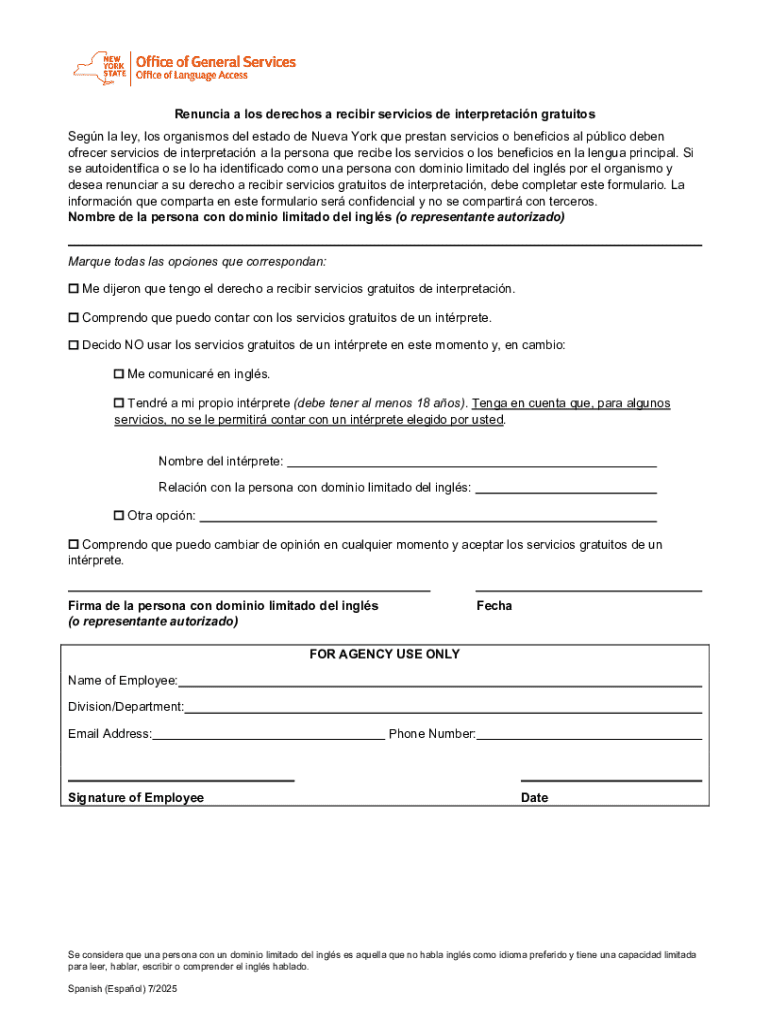
The "Renuncia a Los Derechos a Recibir Servicios De Interpretación Gratuitos" is a legal document intended for individuals with limited English proficiency in the United States who choose to waive their right to free interpretation services. This form acknowledges that recipients are informed of their rights to such services and have the option to decline them. By signing this form, individuals affirm their preference to either communicate in English or use a personal interpreter. This waiver is particularly relevant in states like New York, where free interpretation services are mandated by law for various public services and legal interactions.
How to Use the Renuncia a Los Derechos a Recibir Servicios De Interpretación Gratuitos
To effectively use the form, follow these steps:
- Read the Form Carefully: Ensure you understand the implications of waiving your rights to interpretation services.
- Provide Personal Information: Enter your full name, contact information, and any relevant identification details.
- State Your Decision: Clearly indicate your choice to waive the right to free interpretation services. This could involve initialing a specific section or checking a box.
- Signature: Sign the form to confirm your decision, and, if needed, have a witness or legal advisor present during the signing.
- Submit the Form: Depending on the context, submit the form to the relevant agency, service provider, or legal entity.
Properly completing this form ensures that your preference for language services is legally recognized and documented.
Steps to Complete the Renuncia a Los Derechos a Recibir Servicios De Interpretación Gratuitos
- Gather Necessary Information: Have your personal information and any relevant identification documents ready.
- Identify the Organization: Determine the agency or service requiring the waiver form.
- Fill Out the Form:
- Enter your personal details accurately.
- Specify your decision regarding interpretation services.
- Legal Advice (Optional): If uncertain, consult with a legal professional to understand potential implications.
- Sign the Document: Ensure your signature is legible and dated.
- Submit the Form: Deliver your completed form to the appropriate office or upload it online if available.
Why You Might Waive Interpretation Rights
Waiving these rights might be beneficial if:
- Proficiency in English: You have strong English language skills and do not require additional interpretation.
- Use of a Personal Interpreter: You prefer using someone familiar to you for interpretation, such as family or friends, who may better understand your nuances and preferences.
- Prompt Service: Choosing to waive services might expedite interactions by eliminating the need for third-party involvement.
Consider your comfort and comprehension levels before proceeding with this decision.
Key Elements of the Renuncia a Los Derechos a Recibir Servicios De Interpretación Gratuitos
- Personal Information Section: Collects your name, address, and other identifying information.
- Waiver Statement: Explicit language acknowledging your waiver of free interpretation rights.
- Signature Line: Confirms your understanding and acceptance of terms.
- Witness or Notary (if required): Some versions may need a third-party signature for validation.
Important Terms Related to the Waiver
- Interpretation Services: The act of orally translating spoken words from one language to another during interactions.
- Waiver: Legal act of voluntarily relinquishing a known right.
- Confidentiality: Assurance that the information provided will remain private and used solely for its intended purpose.
Legal Use of the Renuncia a Los Derechos a Recibir Servicios De Interpretación Gratuitos
This form ensures that organizations comply with legal obligations to provide interpretation services while respecting an individual's choice to waive such rights. It protects both the service provider and the recipient by documenting the informed choice not to receive these services. Legal entities may require this form in settings like court sessions, medical appointments, and other public service encounters.
State-Specific Rules for the Waiver
While the waiver form is used broadly across the United States, details can vary by state, particularly in areas like New York with strong language service mandates. Each state has distinct regulations concerning interpretation services—in terms of scope, eligibility, and documentation. It is crucial to consult local laws or seek legal guidance to ensure compliance with state-specific rules when executing this waiver document.
Who Typically Uses This Waiver Form
The primary users of this waiver form include:
- Individuals with Restricted English Proficiency: Those needing to communicate effectively in settings where English is the primary language.
- Healthcare Facilities: Ensuring that patients waive interpretation services knowingly.
- Legal Entities and Government Agencies: To document the decision of individuals opting out of language assistance services during official transactions.




