







Definition and Purpose of the Homeless Veterans Research Engagement Panel
The Homeless Veterans Research Engagement Panel serves as a collaborative platform for veterans who have experienced homelessness to contribute to research efforts aimed at improving services and outcomes for homeless veterans. This panel allows veterans to share firsthand experiences and insights, ensuring that research remains grounded in real-world needs and contexts. Participation is a meaningful way for veterans to influence policies and programs that address homelessness within the veteran community.
Understanding the Panel's Objectives
- Ensuring veteran voices are central to research processes.
- Identifying gaps in current services and policy frameworks.
- Offering suggestions for practical, impactful improvements.
- Bridging communication between veterans, researchers, and policymakers.
How to Use the Homeless Veterans Research Engagement Panel
Leveraging the panel effectively involves understanding its role and purpose within the veteran support ecosystem. Participants are not only contributors but partners in shaping research agendas.
Engaging Productively
- Share personal experiences and insights with honesty and detail.
- Provide feedback on current research proposals or findings.
- Collaborate with researchers to ensure studies address genuine needs.
- Advocate for broader changes and improvements in veteran services.
Participation Guidelines
- Maintain respectful and constructive communication.
- Commit to attending scheduled meetings and discussions.
- Contribute to both group discussions and individual interviews.
Steps to Complete the Homeless Veterans Research Engagement Panel Application
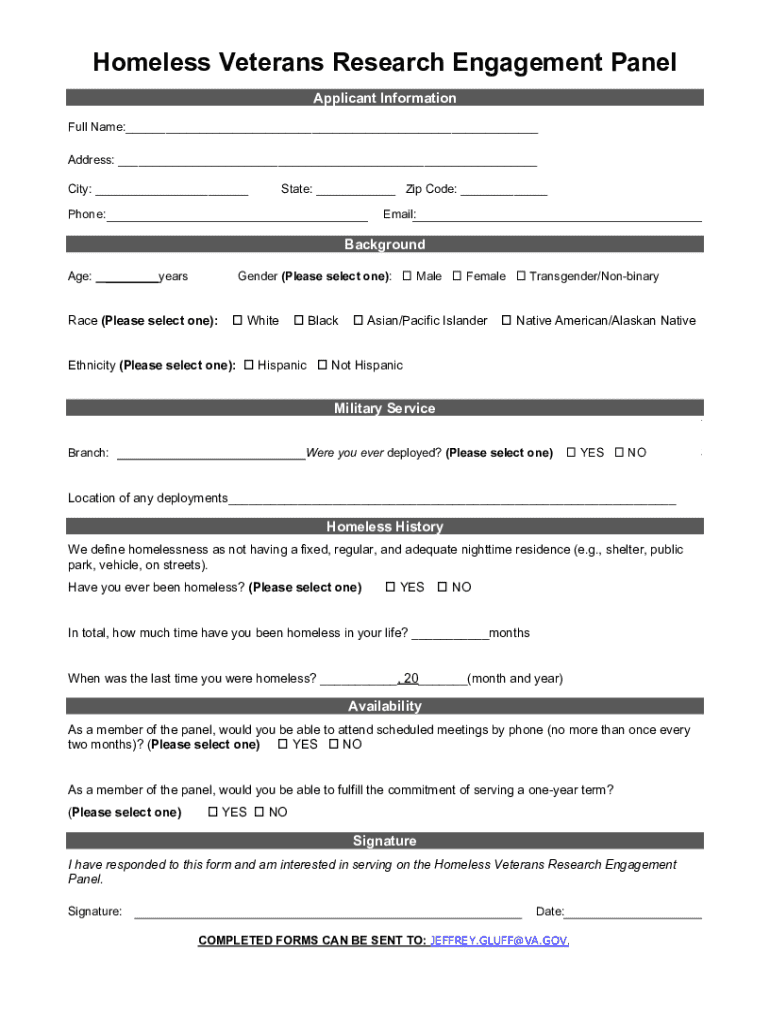
Applying to join the panel requires careful attention to detail and a complete understanding of what the application process entails.
-
Gather Required Information:
- Personal details, including contact information.
- Historical details of military service.
- Personal experience related to homelessness.
-
Complete the Form:
- Fill in each section with accuracy and honesty.
- Ensure all mandatory fields are filled to prevent application delays.
-
Review and Sign:
- Double-check all entries for correctness.
- Sign the form to confirm your interest and commitment to the panel.
-
Submit the Application:
- Depending on instructions, submit via email or mail.
- Retain a copy for personal records and future reference.
Key Elements of the Homeless Veterans Research Engagement Panel Form
The form captures a range of critical elements that inform the selection process and enrich the panel's overall diversity and efficacy.
Essential Sections
- Personal Information: Basic details for identification and contact.
- Military History: Record of military service, including branch and service dates.
- Homelessness Experience: Duration, circumstances, and impacts of homelessness.
- Availability: Willingness and ability to participate in panel activities.
Significance of Each Section
- Personal Information ensures the right demographic mix.
- Military History helps identify patterns and needs common among veteran subgroups.
- Homelessness Experience provides context and depth to personal insights.
- Availability ensures the panel functions smoothly with reliable contributors.
Who Typically Uses the Homeless Veterans Research Engagement Panel
The panel is designed for veterans who have faced homelessness and wish to contribute their experiences to shape supportive policies and programs.

Common Profiles
- Recently homeless veterans who have accessed support services.
- Veterans in transitional housing programs.
- Individuals engaged with veteran advocacy groups or organizations.
Institutional Users
- Researchers specializing in veteran affairs and homelessness.
- Policy advisors and program designers within veteran support systems.
- Nonprofit organizations focused on veteran welfare.
Legal Use of the Homeless Veterans Research Engagement Panel
Participation in the panel aligns with legal and ethical guidelines, ensuring that all data and experiences shared are handled with utmost confidentiality and respect.
Key Legal Considerations
- Confidentiality: Ensuring participant data is protected and used appropriately.
- Informed Consent: Participants are fully briefed on how their information will be used.
- Voluntary Participation: Joining the panel is entirely voluntary and can be ceased at any time.
Ethical Framework
- Upholding dignity and respect for all panel members.
- Transparent communication regarding research objectives and outcomes.
Software Compatibility and Digital Submission
Participating in the Homeless Veterans Research Engagement Panel is facilitated by modern digital platforms, ensuring ease of access and submission.
Digital Tools Supported
- Compatibility with common file formats like PDF and DOCX ensures easy sharing and review.
- Integration with cloud services like Google Drive supports document management and submission.
Advantages of Digital Submissions
- Streamlined, paperless process that enhances efficiency and accessibility.
- Environmentally friendly choice supporting sustainable practices.
Examples of Using the Homeless Veterans Research Engagement Panel
The panel's impact is evident in various research projects and policy changes prompted by the insights shared by veteran participants.
Case Study: Policy Reform
- A recent study on veteran healthcare access was significantly influenced by panel member insights, leading to tailored mental health services.
Research Development
- Input from the panel contributed to a comprehensive report on housing needs, which guided funding allocation for housing programs.




