







Understanding the Collaborative Court Participant Packet
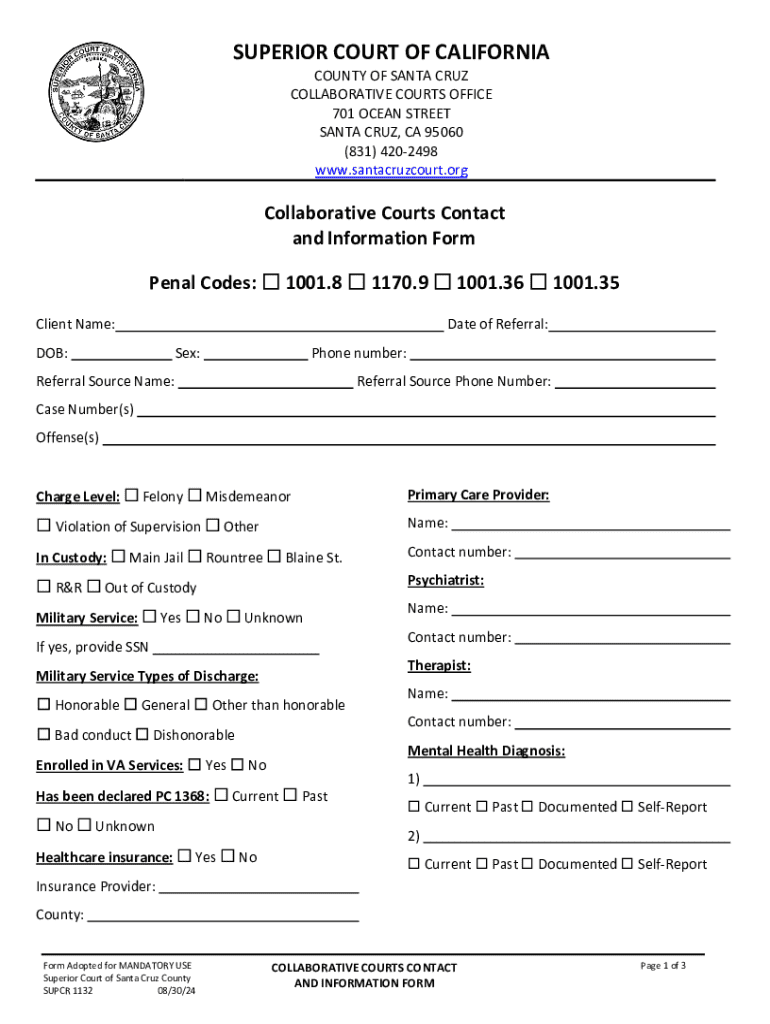
The Collaborative Court Participant Packet is a critical document designed for individuals seeking participation in various collaborative court programs in California, such as Mental Health Diversion, Behavioral Health Court, and Veteran Court. These programs aim to address underlying issues related to mental health and substance use, offering an alternative to conventional court procedures. The packet includes forms and instructions necessary for the application process, ensuring that participants meet eligibility criteria and comply with procedural requirements. This guide provides a comprehensive overview to help you understand and navigate this packet effectively.
How to Use the Collaborative Court Participant Packet
When approaching the Collaborative Court Participant Packet, it's essential to thoroughly review the forms and instructions provided. This packet guides you through the steps needed to apply for admission into collaborative court programs. Begin by identifying the specific program you are interested in, as each may have unique requirements. Carefully read through the eligibility criteria and gather the required supporting documents, such as medical records or court documents. Following the packet's instructions accurately is crucial to ensure a smooth application process and prevent delays.
Steps to Complete the Packet
- Review Program Descriptions: Each court program may target specific needs, such as mental health or veterans' issues. Understand the focus of each to determine your suitability.
- Verify Eligibility Criteria: Ensure you meet all specified criteria. This often includes residency requirements and certain legal or medical conditions.
- Complete All Required Forms: Fill out each form in the packet accurately. Pay particular attention to fields marked as mandatory.
- Gather Necessary Authorizations: Some programs may require consent for the release of confidential information related to mental health or treatment.
- Submit Application Properly: Follow the instructions for submission, which may include mailing or delivering the packet to a specific court location.
Obtaining the Collaborative Court Participant Packet
To participate in a collaborative court program, you must first obtain the Collaborative Court Participant Packet. This packet is typically available from the Superior Court of California in your county, such as Santa Cruz County. You can request the packet in person from the courthouse, or check if it's available online through the court's website. In some cases, legal aid organizations or your attorney may also provide you with the necessary documentation.
Important Terms Related to the Packet
Understanding specific terminology contained within the packet is vital to avoid misunderstandings. Here are some key terms:
- Eligibility Criteria: Conditions that determine whether you qualify for a particular program.
- Exclusionary Factors: Circumstances or legal history that may disqualify you from participating.
- Referral Process: How you are recommended or directed to the program, often involving legal or medical professionals.
- Confidential Information: Sensitive personal data, particularly related to mental health and substance use, protected under privacy laws.
Legal Use of the Collaborative Court Participant Packet
The Collaborative Court Participant Packet is designed for legal proceedings and should be used with the utmost integrity and accuracy. It serves the purpose of ensuring that applicants qualify for specialized court programs tailored to address addiction or mental health issues within a legal framework. Misrepresenting information within this packet can lead to legal consequences, denial of entry into programs, or further legal complications. Always consult with a legal professional or court representative if you have questions regarding the appropriate completion and use of the packet.
Eligibility Criteria for Court Programs
Eligibility for collaborative court programs hinges on meeting specific criteria set forth by the issuing court. Generally, these criteria include a genuine willingness to participate in treatment, residency in the county offering the program, and an absence of violent criminal history. Additionally, participants may need a diagnosis of a mental health disorder or substance use issue that the program aims to address. It's crucial to review the packet thoroughly to ensure compliance with these requirements before submission.


Application Process and Approval Timeline
After submitting the completed Collaborative Court Participant Packet, there is a series of steps involved in the application process:
- Initial Assessment: Once received, court officers will review the packet to verify eligibility.
- Interview or Court Hearing: Applicants may need to attend an interview or a preliminary hearing.
- Decision Notification: Applicants are informed of the panel's decision, typically within four to six weeks. This timeframe may vary based on the court's schedule and caseload.
Key Elements of the Collaborative Court Participant Packet
The packet comprises several essential elements designed to capture comprehensive information about the applicant:
- Personal and Contact Information: Basic identification details to ensure accurate record-keeping.
- Program-Specific Forms: These may include applications, waivers, and questionnaires relevant to the court program.
- Authorization of Release: Consent forms permitting the court to access medical or legal information necessary for evaluation.
- Confidentiality Agreements: Documents that outline how personal information will be used and protected throughout the program process.
By following the guidance and steps outlined in the Collaborative Court Participant Packet, applicants can effectively navigate the admission process into innovative court programs aimed at rehabilitation and positive legal outcomes.




