




01. Edit your form online
Type text, add images, blackout confidential details, add comments, highlights and more.

Type text, add images, blackout confidential details, add comments, highlights and more.

Draw your signature, type it, upload its image, or use your mobile device as a signature pad.

Send it via email, link, or fax. You can also download it, export it or print it out.
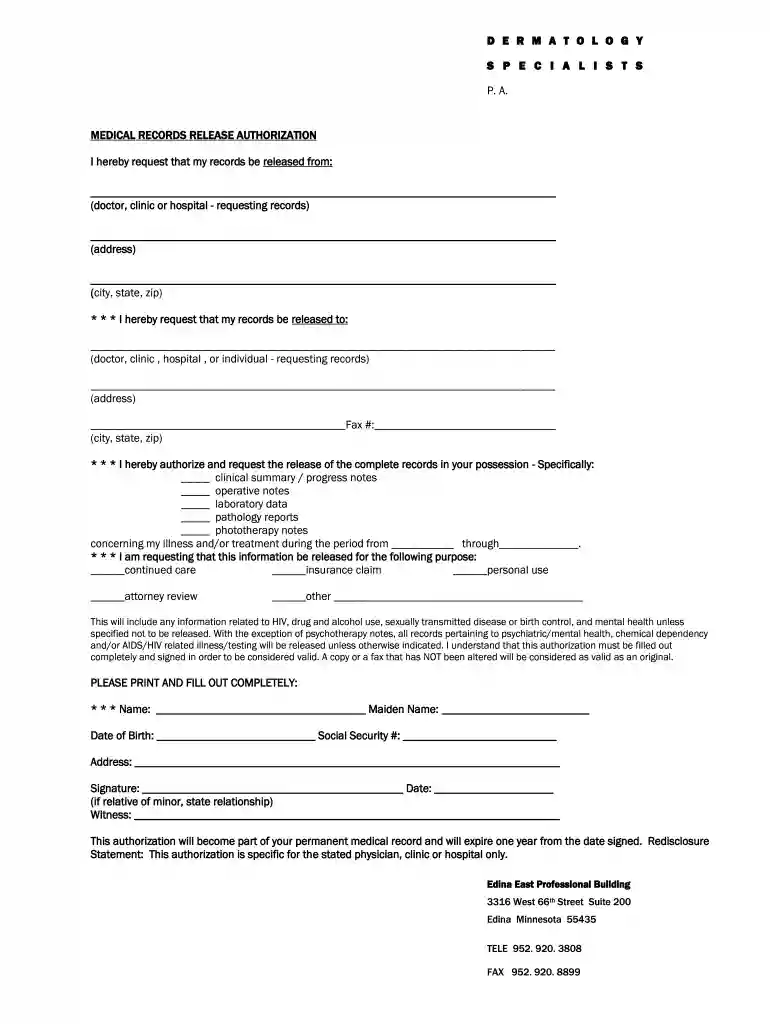
The Medical Records Release Form - Dermatology Specialists PA is a document that allows patients to authorize the transfer of their medical records from Dermatology Specialists P.A. to another specified recipient. This process is crucial for the continuity of care, as it enables medical professionals to have comprehensive access to a patient's health history. The form is also applicable for situations such as insurance claims, personal use, or legal review by an attorney. Understanding the purpose of this form ensures that all parties involved in the patient's care are adequately informed and able to provide optimal treatment.
To obtain the Medical Records Release Form from Dermatology Specialists P.A., patients typically have several options. This form may be available for download on the clinic’s official website in a PDF format, allowing patients to fill it out digitally. Alternatively, patients can visit the clinic’s physical location to request a paper version. For those who prefer a direct approach, contacting the clinic via phone or email to ask for the form is another viable method. These multiple avenues ensure accessibility for patients, regardless of their preference for digital or physical media.
Completing the Medical Records Release Form involves several key steps:
Patient Information: Begin by entering your personal information, including your full name, date of birth, and contact details. This ensures that the clinic identifies the correct patient records.
Recipient Details: Specify who should receive your medical records. This includes providing the full name, address, and contact information of another doctor, clinic, or organization.
Specific Records Requested: Indicate which specific records or types of information you wish to be released. This section should be filled precisely to ensure no unwanted information is disclosed.
Authorization and Signature: Carefully read the authorization section, which outlines your consent for the records release. Sign and date the form to validate your authorization.
Additional Instructions: Fill in any additional instructions if you have preferences for how the records should be sent, such as via mail or email.
Following these steps thoroughly helps prevent unnecessary delays in processing your request.
Using the Medical Records Release Form is essential for ensuring proper communication and information sharing between healthcare providers. This form is particularly useful for:
By utilizing this form, patients exercise control over their medical records, ensuring they are shared responsibly and in accordance with their needs.
Understanding key terms in the context of the Medical Records Release Form is essential:
Familiarity with these terms ensures accurate completion of the form and proper handling of medical records.
The Medical Records Release Form contains several critical sections:
These elements ensure that the form is comprehensive and meets all legal and medical criteria for the release of records.
The legal aspect of using the Medical Records Release Form ensures that all medical records transferred are compliant with relevant laws, like the Health Insurance Portability and Accountability Act (HIPAA). This act sets standards for protecting sensitive patient information, and the release form must adhere to those guidelines by obtaining explicit consent before releasing any records. The form must also outline the ability of the patient to revoke consent before the expiration period, ensuring their ongoing control over personal health information.
Various scenarios illustrate the practical applications of this form. For instance, a patient transferring to a new dermatologist may need their previous records to ensure the new provider is aware of ongoing treatments and medical history. Another example involves a patient needing to submit medical documentation to their insurance company for a claim involving dermatological treatment. In legal settings, attorneys might require access to health records to support cases related to medical malpractice or personal injury claims.
These examples highlight the form’s importance in facilitating seamless healthcare processes and protecting patient rights.
At DocHub, your data security is our priority. We follow HIPAA, SOC2, GDPR, and other standards, so you can work on your documents with confidence.


Summary. Licensed pharmacist in Indiana qualified by over 35 successful years of experience in several areas of pharmacy, participation as an advanced.
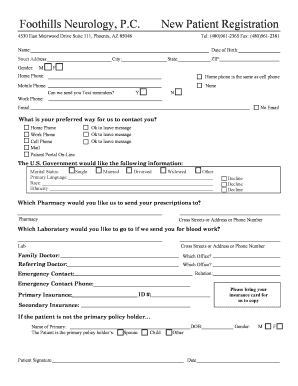
Feb 24, 2014 Enclosed in this packet of information is a checklist of what to bring to your appointment, a map to our office, a new patient questionnaire


