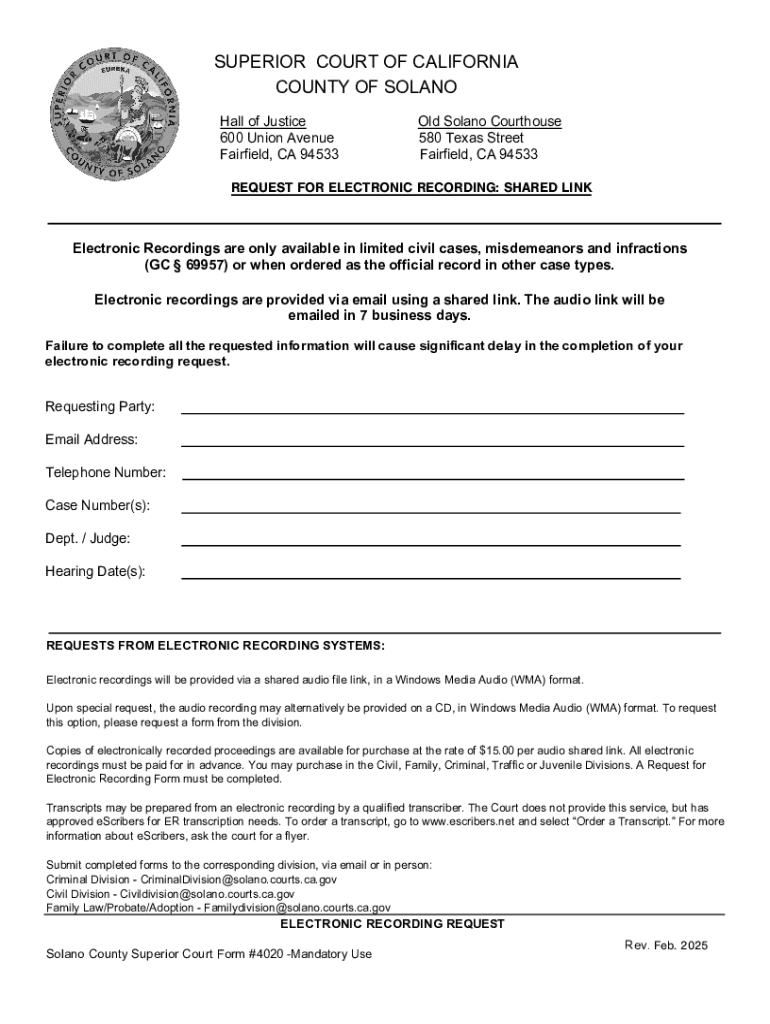







Definition and Meaning of Request for Electronic Recording: Shared Link
The "Request for Electronic Recording: Shared Link" form is a structured document designed to facilitate the electronic recording of court proceedings, specifically in Solano County Superior Court, California. This form is crucial for individuals or entities requiring access to audio recordings of court sessions. The recordings are provided through a shared link, making it an efficient method for retrieving needed court information without the logistical challenges associated with physical recordings.
This process serves those who need precise documentation of what transpired in a legal proceeding, typically for legal review, record-keeping, or case study purposes. The term "shared link" implies that the recordings are delivered digitally, which supports ease of access and eliminates the need for tangible media like CDs unless specifically requested.
How to Obtain the Request for Electronic Recording: Shared Link
To obtain this form, visit the official website of the Solano County Superior Court, where it is likely available for download. Alternatively, you can inquire at the court for a physical copy or access other judicial platforms that host court forms relevant to California’s legal processes.
Once the form is acquired, ensure to read it thoroughly. It is critical to understand every section and the requirements for successful completion. Proper understanding guarantees that you provide all necessary details accurately, which helps avoid delays in processing your request.
Steps to Complete the Request for Electronic Recording: Shared Link
-
Personal Information: Start by entering your full name, contact information, and any other relevant personal details as required by the form.
-
Case Details: Include specific information about the case for which you need the recording. This typically involves the case number, case type, and hearing date. Providing accurate details is crucial for locating the correct recording.
-
Preferred Delivery Method: Indicate if you prefer receiving the audio files through a shared link via email or physically on a CD. Although electronic delivery is the standard, the option for a CD remains for those with different preferences or internet accessibility issues.
-
Authorization and Signature: Sign the form where required to authorize the request. This step might also include the need for notarization, depending on the specific requirements outlined by the court.
-
Submission of Form: Submit the completed form through one of the accepted methods: online submission, mail, or in-person delivery at the court premises.
Key Elements of the Request for Electronic Recording: Shared Link
- Case Identification: Accurate case identifiers, such as the case number and specific hearing date, are pivotal.
- Requestor Information: Ensures that the court can verify who is requesting the recording.
- Delivery Preferences: Options include digital via shared link or physical on a CD.
- Signatures and Authorization: Confirm the legitimacy and approval of the request.
- Submission Instructions: Clearly defined paths for delivering the form to the court.
Legal Use of the Request for Electronic Recording: Shared Link
The use of this form is governed by legal guidelines to ensure the privacy and integrity of court proceedings. The intent behind requesting the recording should align with legal uses, such as evidence preparation, legal reviews, or educational purposes.
Misuse of court recordings can lead to legal ramifications, including penalties for breach of privacy or misuse of legal material. Always consult with a legal advisor if uncertain about the regulations surrounding the use of judicial recordings to prevent inadvertent violations.
Who Typically Uses the Request for Electronic Recording: Shared Link
This form is commonly used by legal professionals, such as attorneys and paralegals, requiring documentation of court proceedings for case preparation or review. Self-represented litigants might also utilize the form to keep track of their case history. Legal researchers and scholars can also request recordings for academic purposes, ensuring adherence to all legal constraints.


State-Specific Rules for the Request for Electronic Recording: Shared Link
In California, and specifically at the Solano County Superior Court, certain protocols must be observed. These rules include adherence to the court's specific submission procedures and the understanding that not all cases or proceedings may be available for recording. Familiarity with state laws regarding court recordings is vital. Different states may have varying guidelines and processes, so always verify and comply with local statutes when requesting court documents.
Important Terms Related to Request for Electronic Recording: Shared Link
- Shared Link: A digital method of providing access to recordings, enhancing accessibility and convenience.
- Case Number: A unique identifier essential for accessing specific court proceedings.
- Notarization: A process that verifies the authenticity of signatures, sometimes required for legal documents.
- Authentication Protocols: Measures like OAuth 2.0 employed by platforms to ensure secure access during digital transactions.