







Definition & Meaning
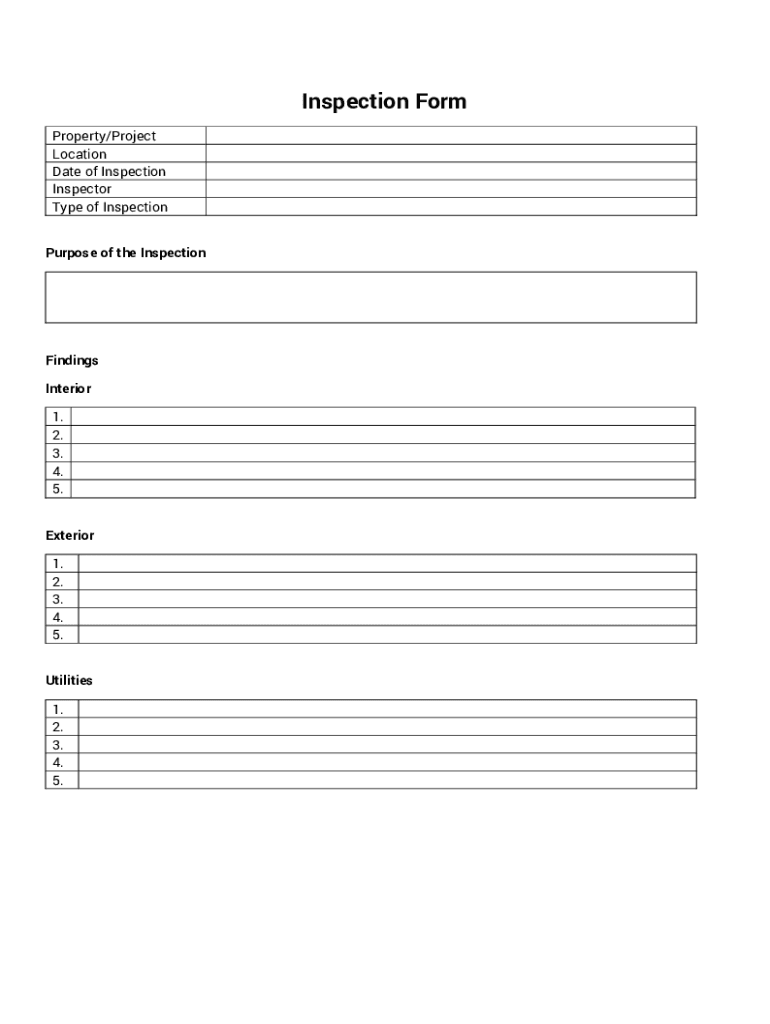
An inspection form template is a standardized document used to record and evaluate the condition and compliance of various elements during an inspection. It serves as a guide to ensure consistent and comprehensive assessments across different inspections, be they of buildings, machinery, or processes. Within the template, you can find sections that categorize observations and evaluate them based on predefined criteria.
Inspection forms are essential for maintaining safety standards, adhering to regulations, and identifying any areas of concern that need attention. They help inspectors systematically examine a property, process, or equipment, documenting their findings in detail. The primary objective is to ensure accuracy and completeness, which can be critical in legal contexts or when addressing safety issues.
Importance
An inspection form template helps mitigate risks by enabling systematic documentation of findings. This is crucial for maintaining operational safety, ensuring regulatory compliance, and facilitating corrective measures. With standardized fields, these forms help inspectors collect information uniformly, reducing the likelihood of oversight. The template also acts as an official record, useful in audits or legal proceedings.
Key Elements of the Inspection Form Template
Identification Information
- Date and Time: Records when the inspection occurred, establishing a timeline.
- Inspector Name: Includes the identity of the inspector performing the evaluation, which adds accountability.
- Location: Specifies where the inspection takes place, crucial for context and follow-up visits.
Inspection Categories
The inspection form template often segments findings into key categories such as:
- Interior Facilities: Assesses elements inside a structure such as walls, ceilings, floors, and installed equipment.
- Exterior Structures: Evaluates the external part of a property, including roofs, facades, and landscaping.
- Utilities and Systems: Inspects electrical, plumbing, and HVAC systems, ensuring they meet safety and operational standards.
Recommendations and Findings
- Current Condition: Offers insights into the present state, noting any immediate concerns.
- Recommended Actions: Suggests corrective measures to address identified issues.
- Signatures: Sections for signatures, providing legal backing and acknowledgment from all parties involved.
How to Use the Inspection Form Template
Preparation
- Review Template Sections: Familiarize yourself with each segment before conducting an inspection.
- Gather Tools: Ensure you have any necessary measuring instruments or devices for the inspection.
During the Inspection
- Systematic Approach: Use a consistent method, inspecting from top to bottom or inside to outside to ensure all areas are covered.
- Thorough Documentation: Note every detail, even if it seems minor, as it may hold significance later.
Post-Inspection
- Compile Results: Organize and review your notes to complete the template accurately.
- Report Submission: Submit the finalized inspection form to relevant stakeholders, maintaining a copy for records.
Who Typically Uses the Inspection Form Template


Industry Professionals
- Building Inspectors: Use templates to assess safety and compliance of structures.
- Facility Managers: Regularly conduct in-house inspections to ensure ongoing maintenance.
Legal and Regulatory Bodies
- Government Agencies: Perform inspections to enforce local codes and standards.
- Insurance Adjusters: Use inspections to determine claim validity and assess damage.
Broader Applications
Inspection form templates also find utility in other fields, such as quality control in manufacturing, environmental assessments, and occupational health and safety reviews.
Steps to Complete the Inspection Form Template
- Review Guidelines: Before beginning, understand the inspection objectives and applicable regulations.
- Conduct Initial Survey: Start by identifying key areas of focus based on the type of inspection.
- Detailed Documentation: Use the template to systematically record observations, findings, and recommendations.
- Review & Sign-Off: Verify all entries for accuracy. Obtain signatures from involved parties to finalize the report.
State-Specific Rules for the Inspection Form Template
Inspections may vary greatly depending on the geographic location due to differing state laws and regulations in the United States. Each state may have specific codes or standards related to property safety, electrical work, or plumbing that an inspection must adhere to. For instance, a building inspection in California might focus more on seismic safety related to earthquake preparedness than one in another part of the country.
Understanding and integrating state-specific guidelines into the inspection form template ensures that inspections remain compliant with local laws. Inspectors should stay informed on these details, consulting relevant state regulatory resources when necessary.
Digital vs. Paper Version
Advantages of Digital Inspection Forms
- Efficiency: Digital forms can be filled out on a tablet or smartphone, speeding up the inspection process.
- Data Integrity: Prevents loss of data compared to paper forms and allows for easy retrieval and archiving.
- Real-Time Updates: Inspectors can instantly update other team members and stakeholders about findings.
Considerations for Paper Forms
While digital forms present many advantages, paper forms might be preferred in regions with limited technology access or where digital use is restricted by regulation or client preference.
Examples of Using the Inspection Form Template
Property Management
A property manager might use an inspection form before leasing a building to document conditions and ensure any existing issues are addressed. Regular use of the form aids in maintaining property standards and tenant satisfaction.
Safety Inspections
In manufacturing, an inspection form helps ensure machinery operates correctly and safely, minimizing the risk of accidents and preserving worker well-being. Regular safety checks contribute to a safe work environment and regulatory compliance.
Case Studies
A case study examining the use of inspection templates in schools reveals how regular inspections of facilities help maintain high safety standards and timely repairs of any infrastructure issues. These inspections ensure that the learning environment remains safe and conducive to education.




