
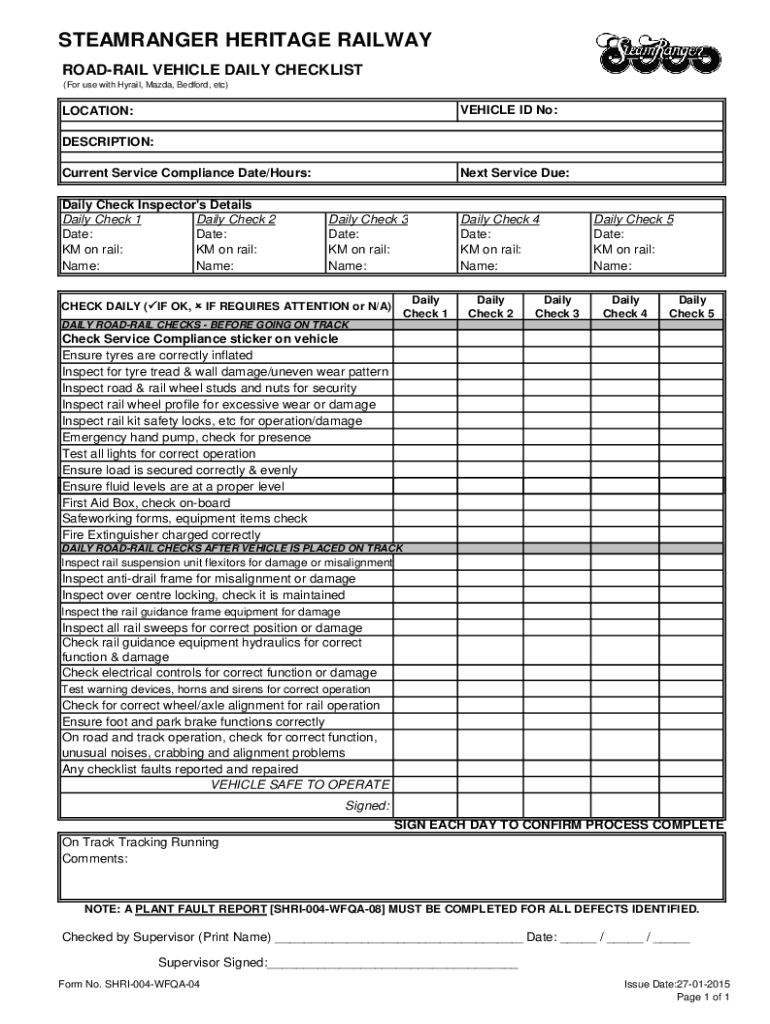







Definition and Purpose of the Rail Vehicle Inspection Form
A Rail Vehicle Inspection Form is an essential checklist used for evaluating the condition and functionality of rail vehicles, ensuring their safety and compliance with operational standards. This form is typically utilized by rail organizations like STEAMRANGER HERITAGE RAILWAY for routine inspections. It includes various checks such as roadworthiness, safety features, and mechanical components, serving as a documentation tool for inspectors to record findings, note defects, and confirm that all necessary criteria are met before a vehicle is placed on track.
Key Components
The Rail Vehicle Inspection Form comprises numerous sections focused on different aspects of a rail vehicle’s functionality. These components are each crucial in ensuring the safety and viability of the vehicle:
- Safety Checks: Ensures that all safety mechanisms, such as brakes, emergency stop systems, and alarms, are functioning properly.
- Mechanical Inspection: Covers the assessment of the vehicle's engine, wheels, and other mechanical parts.
- Compliance Verification: Ensures the vehicle meets all regulations and standards for rail operations.
- Inspector Information: A section is dedicated to recording details about the person conducting the inspection, enhancing the form's accountability.
Steps to Complete the Rail Vehicle Inspection Form
Completing a Rail Vehicle Inspection Form involves a methodical approach to thoroughly assessing the vehicle to ensure all components meet the required safety and operational standards. Here is a step-by-step breakdown:
- Initial Preparation: Gather all necessary tools and have the form ready on a mobile device or in print format.
- Perform Visual Checks: Begin with a full visual inspection of the vehicle for obvious signs of damage or wear.
- Detailed Component Testing: Assess specific parts of the rail vehicle, following the sections outlined on the form, such as mechanical, electrical, and safety systems.
- Record Findings: Document all findings on the form, noting any defects or areas needing maintenance.
- Review Compliance: Verify that the vehicle meets industry standards as listed on the form.
- Finalize the Report: Review the completed form for accuracy before affirming the inspection with a signature and date.
Key Elements of the Rail Vehicle Inspection Form
Understanding the primary elements of the Rail Vehicle Inspection Form can facilitate accurate and effective inspections. These elements are vital in recording comprehensive data:
- Checklist Items: Each item is a specific check to ensure full coverage of all critical areas.
- Defect Reporting Section: Clearly specified areas for noting any discovered defects, which aids in timely repairs and adjustments.
- Signature Boxes: Designated spaces for the inspector’s and potentially a verifier’s signature, offering proof of inspection and agreement on the vehicle’s state.
Important Terms Related to Rail Vehicle Inspection Form
The Rail Vehicle Inspection Form uses several technical terms that are important for accurate completion. Some of these terms include:
- Roadworthiness: Refers to the overall condition of a vehicle and its ability to be safely operated on the railways.
- Operational Standards: Set rules and guidelines established by governing bodies that rail vehicles must adhere to.
- Defect: Any part of the vehicle that is worn, damaged, or not functioning as intended.
Legal Use and Compliance
The legal aspect of using the Rail Vehicle Inspection Form centers around adherence to both federal and state regulations governing rail vehicle operation. Failure to comply with these regulations can result in penalties or legal actions. The form itself serves as a legal document evidencing that inspections have been performed and recorded correctly.
Key Compliance Factors
- Regulatory Adherence: Ensuring that all points on the form correspond with federal and state guidelines is crucial.
- Documentation Accuracy: Maintaining precision in documentation to avoid legal discrepancies or oversight.
Examples of Using the Rail Vehicle Inspection Form
Practical examples highlight the form's utility in real scenarios:
- Pre-Operation Checks: Conducted before a vehicle is allowed to enter service, ensuring all systems are optimal.
- Post-Maintenance Inspections: Used after service or repairs to confirm all issues have been resolved; critical for safety assurance.
- Routine Safety Audits: Integral to maintaining ongoing compliance with service and safety standards.
Variants and Alternatives to the Rail Vehicle Inspection Form
Different rail organizations may have customized versions of the Rail Vehicle Inspection Form to meet specific needs. These may range from digital forms that are integrated with document management systems to variations that account for specific vehicle types or operational environments.
Examples of Variants
- Digital Versions: Adapted for use on mobile devices, allowing easier data integration and sharing.
- Vehicle-Specific Forms: Tailored to particular types of rail vehicles such as freight, passenger, or maintenance vehicles.
Business Types That Benefit Most from the Rail Vehicle Inspection Form
The Rail Vehicle Inspection Form is particularly beneficial to entities involved in rail operations, including:
- Railway Operators: Ensures the safety and reliability of passenger and freight operations.
- Maintenance and Repairs Companies: Provides a structured method to assess maintenance requirements and outcomes.
- Safety Regulators: Utilizes the form to verify compliance and regulatory adherence during inspections.
Leveraging the Rail Vehicle Inspection Form ensures that rail operations run smoothly, safely, and in compliance with all pertinent regulations, ultimately enhancing efficiency and safety in the rail industry.




