







Definition & Meaning
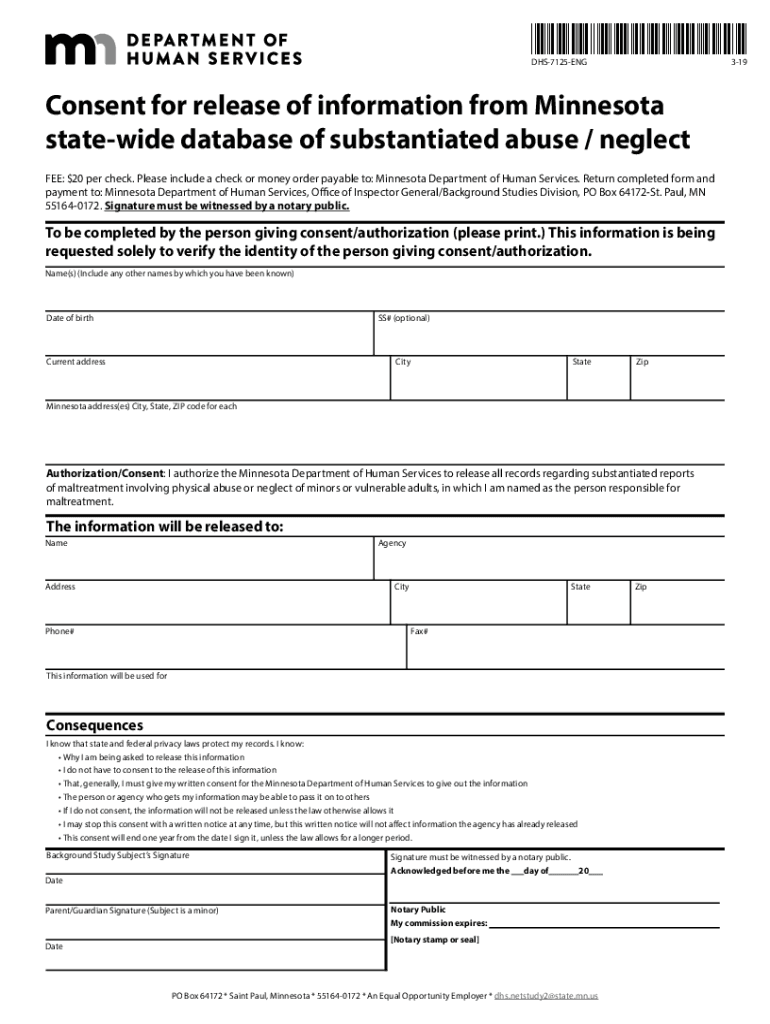
The "Consent for Release of Information from Minnesota State-Wide Database of Substantiated Abuse Neglect" is a formal document used to authorize the Minnesota Department of Human Services to disclose records pertaining to verified instances of abuse or neglect. This document is significant for individuals or entities needing access to sensitive information related to maltreatment cases involving minors or vulnerable adults. Understanding its purpose is vital to ensure compliance with Minnesota state regulations concerning privacy and information sharing.
Key Elements of the Consent Form
The form comprises several essential sections that require careful attention. These include:
- Personal Information: The form requires comprehensive information from the individual providing consent, such as name, address, and contact details.
- Details of the Information to be Released: This section specifies the type and scope of information that the consenter is allowing to be released.
- Purpose of Release: Clear indication of why this information is being requested is necessary to fulfill legal requirements.
- Authorization and Signature: To ensure legal validity, the form must be signed by the consenter and often requires notarization to confirm its legitimacy.
Steps to Complete the Consent Form
Completing the consent form involves a meticulous process to ensure all legal and procedural requirements are met. Here's a step-by-step guide:
- Gather Necessary Information: Before starting, collect all required personal details and understand why the information is being requested.
- Fill Personal Details: Accurately enter your full name, address, and any other identifying information required by the form.
- Specify Information Scope: Clearly designate which records or information you consent to release.
- State the Purpose: Explicitly state the reason for the information release to align with state guidelines.
- Sign and Notarize: Complete the form by signing it in the presence of a notary public. This step is crucial for legal validation.
Who Typically Uses the Consent Form
This consent form is primarily used by individuals or organizations that require access to sensitive records of abuse or neglect cases. Typical users include:
- Social Service Agencies: These entities may need the information for investigations or support services for affected individuals.
- Legal Representatives: Lawyers representing clients in related cases might require these records for evidence or case preparation.
- Healthcare Providers: Certain healthcare providers could require access to these records for the continued treatment of the affected individuals.


Legal Use of the Consent Form
The legal use of this consent form is bounded by state regulations and privacy laws. Providing or requesting unauthorized access or information can result in legal penalties. It’s crucial to:
- Understand the consent form in the context of Minnesota legal requirements.
- Ensure that the information is used for its declared purpose only.
- Adhere to any additional legal stipulations as outlined by the Minnesota Department of Human Services.
How to Obtain the Consent Form
The consent form can be obtained through various methods:
- Online Access: The Minnesota Department of Human Services website often provides downloadable versions of the form.
- In-Person Requests: Forms can be requested at local DHS offices for those who prefer a physical copy.
- Third-Party Services: Some organizations or legal representatives can facilitate obtaining the form on behalf of the individual.
State-Specific Rules for the Consent Form
Minnesota has specific regulations governing the access and dissemination of information from databases related to abuse and neglect. Key state-specific rules include:
- Only authorized entities and individuals may request and access this information.
- The scope of information released should be limited to what is relevant and necessary for the stated purpose.
- Privacy laws necessitate that the information remains confidential and is not further disseminated without additional consents.
Examples of Using the Consent Form
Understanding real-world applications of the consent form aids in grasping its utility:
- Child Welfare Cases: Legal guardians may use the form to obtain records crucial for the welfare and custody decisions of minors.
- Vulnerable Adult Services: Healthcare facilities may require access to these records to tailor services for adults requiring protection.
- Social Work: Social workers might employ the form to gather pertinent information when assessing the necessary action in substantiating neglect cases.
This content thoroughly covers the core aspects and implications of the "Consent for Release of Information from Minnesota State-Wide Database of Substantiated Abuse Neglect," providing comprehensive and practical insights for users needing to understand and utilize this document in line with Minnesota law.




