
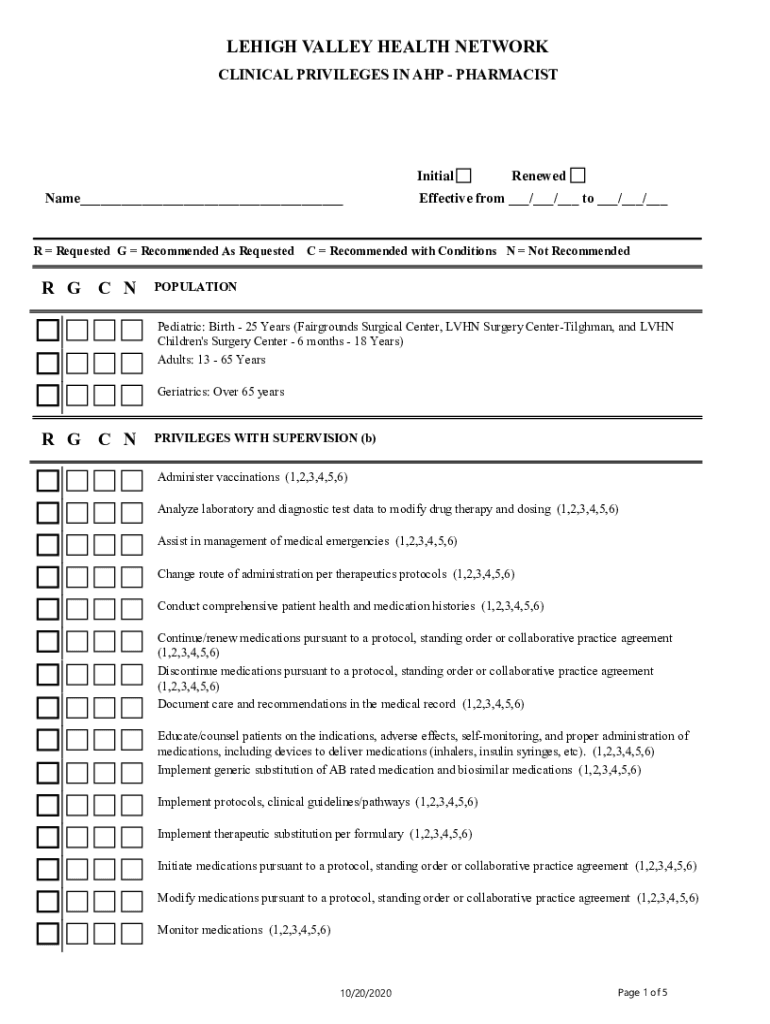







Definition & Scope of Clinical Privileges for Pharmacists
Clinical privileges in an allied health professional (AHP) context allow pharmacists to expand their roles in patient care. These privileges define the range of medical tasks pharmacists can perform, which typically include medication management, patient education, and sometimes more direct patient care activities. The privilege system offers a structured framework to ensure pharmacists can contribute effectively while adhering to established healthcare protocols.
Expanded Responsibilities
- Medication Therapy Management: Pharmacists are authorized to monitor and adjust medication regimens.
- Patient Education: Provision of detailed information on medication use and lifestyle modifications.
- Vaccination Administration: Authority to administer vaccines to specific age groups.
Supervisory Requirements
- Pharmacists often collaborate under the supervision of a physician.
- Levels of Supervision: Varying from direct oversight to more autonomous practice based on experience and institutional policies.
How to Use Clinical Privileges in AHP - Pharmacist
When practicing under clinical privileges, pharmacists must be aware of their allowed activities and the associated procedures. Proper utilization involves understanding and applying these privileges within the healthcare team.
Pharmacist Actions
- Clinical Assessments: Engage with patients to perform medication reviews and therapeutic assessments.
- Documentation: Keep comprehensive records to ensure all actions are compliant with legal and regulatory requirements.
- Collaboration: Work alongside doctors, nurses, and other healthcare professionals to optimize patient outcomes.
Real-World Scenario
- A pharmacist reviewing a patient’s medication regimen identifies potential drug interactions and consults with the prescribing physician to adjust therapy.
Steps to Obtain Clinical Privileges in AHP - Pharmacist
Obtaining clinical privileges involves several steps, which are necessary to ensure proper qualification and adherence to the healthcare facility's guidelines.
Application Process
- Credentialing: Submit credentials for review by the healthcare institution’s credentialing committee.
- Documentation: Provide proof of licensure, certifications, and any relevant continuing education.
- Interview: Participate in interviews or evaluations demonstrating competence in areas covered by the privileges.
Approval Timeline
- The process may take several weeks to months, with periodic updates provided to the applicant.
Important Terms Related to Clinical Privileges
Understanding key terminology is vital for pharmacists operating under clinical privileges to navigate their roles effectively.
Terminology Breakdown
- Scope of Practice: Defines the activities a licensed professional is authorized to perform.
- Credentialing: Verification process of a pharmacist’s qualifications and experience.
- Supervision Levels: Characterize how interventions by pharmacists are reviewed by supervising clinicians.
Legal Use of Clinical Privileges for Pharmacists
Pharmacists must practice within the bounds of their clinical privileges to avoid legal complications. This requires adherence to federal and state regulations, as well as institutional guidelines.
Compliance Requirements
- Ensure all activities align with the ESIGN Act and relevant healthcare laws.
- Maintain patient confidentiality and handle data per HIPAA guidelines.
Case Study
- A pharmacist administering vaccinations must do so under the policies established by their healthcare institution to ensure legal compliance.
Key Elements of the Clinical Privileges in AHP - Pharmacist
Clinical privilege documents include sections crucial for the accurate execution of duties and informed communication with other healthcare providers.
Document Components
- Practice Scope: Details permitted tasks and responsibilities.
- Acknowledgment Sections: Areas for practitioners and supervising physicians to confirm understanding and agreement of practices.
Practical Considerations
- Regular reviews and updates to practice scope may be needed to align with evolving healthcare laws or medical advancements.
State-Specific Rules for Clinical Privileges
Regulations concerning clinical privileges may vary significantly from one state to another. Understanding these differences is crucial for pharmacists practicing in multiple jurisdictions.
Regional Variations
- Licensing Requirements: States have unique licensing criteria and practice limitations.
- Prescriptive Authority: The extent of authority to prescribe medications differs by state.
Example
- In some states, pharmacists may face stricter limitations on prescribing or administering certain medications compared to others.
Examples of Using Clinical Privileges in Practice
Clinical privileges enable pharmacists to engage in a broad spectrum of healthcare services. Examining specific examples aids in conceptualizing these functions.
Practical Application
- Chronic Disease Management: Pharmacists can manage conditions like diabetes through regular monitoring and medication adjustment.
- Collaborative Practice Agreements: Working with physicians under formal agreements to provide focused patient care services.
Case Example
- A pharmacist in a geriatric care facility routinely adjusts medications for frail patients after consultations with healthcare teams.




