






Definition & Meaning
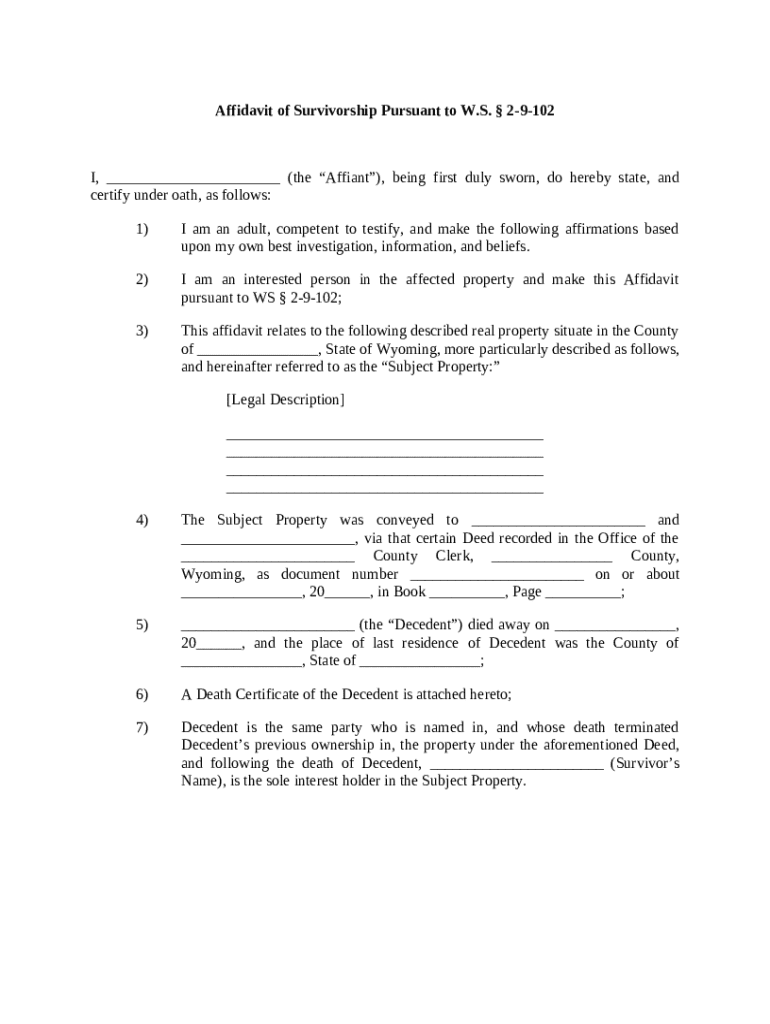
The Affidavit of Survivorship is a legal document used primarily in the United States to confirm the transfer of ownership of a property from a deceased co-owner to the surviving owner(s). This affidavit serves to certify the death of the deceased co-owner and to assert that the surviving owner is now the sole owner of the property. The document often includes details about the property, including its legal description, the name of the deceased co-owner, and the relationship between the deceased and the surviving owner. This affidavit is crucial in cases where the ownership of property is joint and typically involves real estate, but can also apply to other assets held jointly.
How to Use the Affidavit of Survivorship
An Affidavit of Survivorship is used by the surviving co-owner(s) to establish clear legal ownership of a jointly held property after the death of one of the owners. Once completed, this affidavit is usually filed with the county recorder's office or relevant local government entity to update the title records, thereby removing the deceased's name from the property title. This process ensures that the title reflects the surviving owner's sole ownership, allowing for future transactions, such as selling or refinancing, to proceed without legal complications.
Examples and Scenarios
- Real Estate: A married couple owns a house together. Upon the passing of one spouse, the surviving spouse uses the affidavit to become the sole owner of the property.
- Bank Accounts: Joint bank accounts can also be addressed by this affidavit, transferring full access to the surviving account holder.
Steps to Complete the Affidavit of Survivorship
-
Gather Necessary Information: Collect details about the property, including the legal description, and prepare a copy of the death certificate of the deceased co-owner.
-
Complete the Form: Fill out the affidavit with the required information, ensuring all fields are accurately completed, including your identification as the surviving owner.
-
Notarization: Have the affidavit notarized. This step is crucial for the affidavit to be legally binding.
-
File with Appropriate Entity: Submit the notarized affidavit to the local county recorder's office or any other relevant authority that maintains property records.
-
Update Property Title: Ensure the property title is updated to reflect your sole ownership.
Important Nuances
- Joint Tenancy with Right of Survivorship: If property ownership was established this way, the affidavit becomes a vital tool in asserting rights without going through probate.
- Accuracy and Completeness: Incomplete or incorrectly filled affidavits can lead to delays in processing or legal complications.
Important Terms Related to Affidavit of Survivorship
- Affiant: The person executing the affidavit, in this case, the surviving owner.
- Decedent: The deceased co-owner whose name is to be removed from the property title.
- Joint Tenancy: A type of concurrent ownership where two or more individuals hold title to property with equal rights to its use and possession.
Legal Use of the Affidavit of Survivorship
The legality of the Affidavit of Survivorship hinges on its compliance with local and state laws. It serves as a testament to the surviving owner’s claim to full ownership and is a substitute for probate processes in applicable cases. This document must adhere to state-specific statutes that govern property ownership, transfer, and recording procedures, such as those outlined in the Wyoming Statute 2-9-102.
Key Elements of the Affidavit of Survivorship
- Property Details: Includes the legal description and any other identifying information.
- Decedent Information: Name and date of death of the deceased co-owner.
- Survivor's Assertion: A sworn statement by the surviving owner affirming sole ownership rights.
- Notarization: A certified notary public must verify the document to validate its legal standing.
State-Specific Rules for the Affidavit of Survivorship
State laws can vary significantly regarding the use of the Affidavit of Survivorship. For instance, some states may require additional documentation, such as a court order or specific wording within the affidavit to be compliant with local statutes.
Examples
- Wyoming: Requires compliance with specifics under statute 2-9-102.
- Texas and California: Have particular forms and procedures that must be followed, including filing deadlines and fee structures.
Required Documents
To complete an Affidavit of Survivorship, you will generally need:
- Death Certificate: Verifies the passing of the decedent.
- Prior Deed or Title Document: Assists in confirming previous ownership status.
- Identification: Provides proof of identity for the surviving owner.
Form Submission Methods (Online / Mail / In-Person)
The submission of an Affidavit of Survivorship often involves several methods:
- Online Filing: Some jurisdictions allow electronic submission through official government portals.
- Mail: Traditional submission by mail is common, especially for locations without online facilities.
- In-Person: Direct submission to the county recorder's office, providing immediate confirmation of receipt and processing.
Each submission method may have unique requirements and timelines, so it is crucial to verify the specifics with local authorities in advance to ensure compliance.