




Definition & Meaning
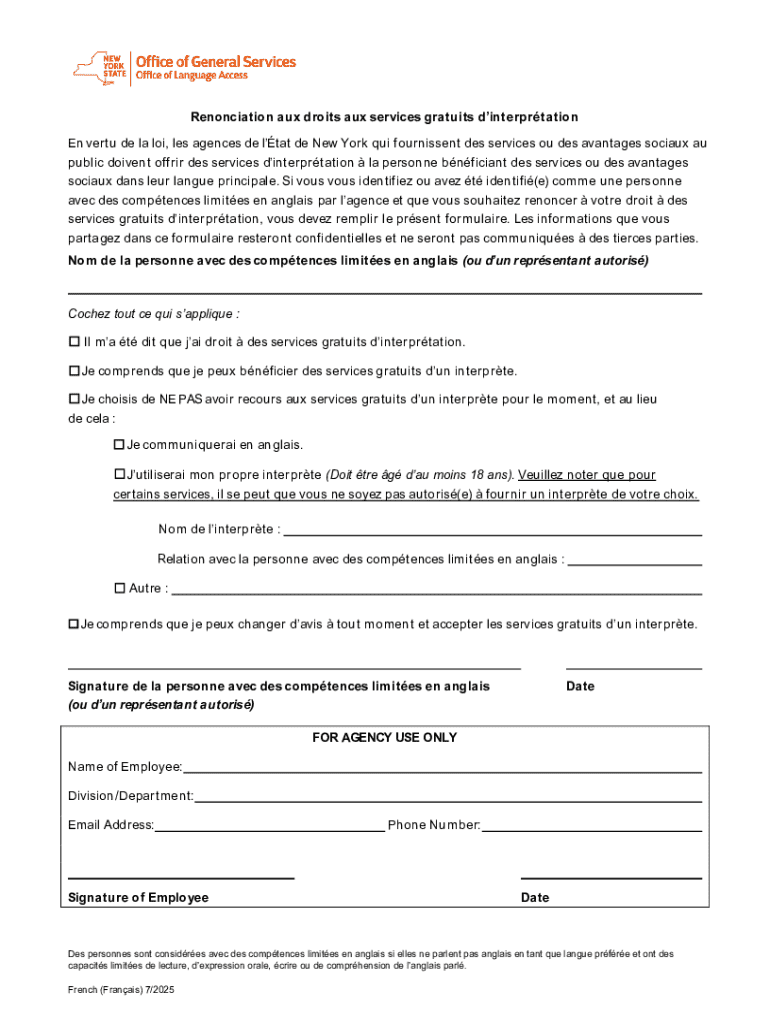
The waiver of the written form requirement is a legal agreement allowing parties involved in a contract or transaction to forgo the requirement that agreements be written and signed. This waiver is particularly relevant in scenarios where verbal agreements are sufficient for all parties, though it is essential to ensure that the waiver complies with relevant legal standards to maintain its enforceability. In the context of translating this waiver into French, it entails converting the waiver's content into the French language while preserving its legal integrity and meaning.
Legal waivers require careful drafting to ensure all terms and intentions are clear and unequivocal. When translating these waivers into French, it is crucial to maintain the original document's structure and semantics to avoid potential misunderstandings that could nullify the agreement or lead to disputes.
Key Elements of the Waiver of the Written Form Requirement
Several elements are fundamental to a valid waiver of the written form requirement. These include:
- Parties Involved: The names and roles of all participants must be clearly stated to ensure that all parties understand who is bound by the waiver.
- Scope of the Waiver: This section defines what aspects of the agreement are covered by the waiver, ensuring that only intended elements are excluded from the requirement of a written agreement.
- Intention to Waive: A clear statement declaring that the parties agree to waive the written format traditionally required and acknowledging that they understand the implications of doing so.
- Effective Date: The date when the waiver becomes effective is vital for determining the legal standing of the parties at any given time.
- Governing Law: Specifies which jurisdiction's laws govern the waiver, providing clarity on the legal framework applicable to the waiver and any disputes that may arise.
How to Use the Waiver of the Written Form Requirement - French Translation
Implementing the waiver of the written form requirement, especially in its French translation, involves several steps to ensure legal compliance and clarity:
- Review Original Document: Carefully examine the original waiver to understand its terms and ensure that nothing is lost in translation.
- Accurate Translation: Employ a professional legal translator to translate the document into French, maintaining the legal nuances and terminologies.
- Consult Legal Counsel: It is advisable to have legal counsel review the French translation to ensure that it remains legally binding and enforceable under relevant laws.
- Distribute to All Parties: Ensure that all parties involved receive and understand the translated waiver, acknowledging their consent to the terms outlined therein.
Steps to Complete the Waiver of the Written Form Requirement - French Translation
Completing the waiver requires meticulous attention to detail to ensure that all legalities are appropriately adhered to:
- Draft the Document: Create the waiver with all necessary elements in the original language, ensuring completeness and clarity.
- Translate the Document: Engage a certified translator specialized in legal documents for translation into French, preserving its legal intent and details.
- Review by Experts: Have a legal expert validate the French version to confirm that it reflects the intended agreement and complies with legal standards.
- Circulate Among Parties: Share the completed waiver with all signatories in its translated form, ensuring understanding and acceptance from all parties.
- Obtain Acknowledgement: Collect written acknowledgment from parties that they understand and agree to the waiver terms in French.
Who Typically Uses the Waiver of the Written Form Requirement - French Translation
This waiver is frequently used by multinational businesses and organizations operating in French-speaking regions who might require flexibility in their contract processes. These entities may include:
- International Corporations: Those engaged in cross-border agreements where one or more parties operate predominantly in Francophone regions.
- Small Businesses: Enterprises working closely with French-speaking clients or suppliers, for whom a full written contract may be unnecessary or impractical.
- Legal Professionals: Practitioners who prepare bilingual legal documents to accommodate diverse client needs.

Legal Use of the Waiver of the Written Form Requirement - French Translation
Legally, the waiver of the written form requirement permits parties to establish agreements that otherwise would require formal written contracts. Within the French translation, key considerations include:
- Adherence to Local Laws: Ensuring the waiver complies with the legal standards of the jurisdiction where it is to be enforced. For France and other French-speaking jurisdictions, this might involve reviewing local statutes that govern such exemptions.
- Validity and Proof: The waiver must include clear terms and be capable of demonstration in legal settings if needed, particularly critical in cases where disputes arise.
- Exclusions: Certain agreements, such as those involving real estate or regulated transactions, might still require written documentation notwithstanding a waiver. The translated waiver should clearly articulate any such exclusions.
State-Specific Rules for the Waiver of the Written Form Requirement - French Translation
In the U.S., the application and acceptance of such waivers can vary significantly based on specific state regulations. Understanding these variances is crucial:
- Uniformity vs. Variability: Some states may have uniform laws regarding waivers, while others might impose different standards based on local legal frameworks.
- French-Speaking Populations: States with significant French-speaking communities, like Louisiana, might have unique provisions or considerations due to historical and cultural connections.
- Legal Precedents: Evaluating existing state precedents where waivers have been tested in court can offer insights and guide how translations should be prepared and enforced.
Examples of Using the Waiver of the Written Form Requirement - French Translation
Examples showcase practical applications of this waiver and how translation into French can benefit or complicate an agreement:
- International Trade Agreements: Companies engaged in importing and exporting goods between the U.S. and French-speaking countries might use this waiver to expedite processes while still maintaining legal enforceability.
- Community Projects: Collaborations between English-speaking and French-speaking communities where formal contract requirements can be hindrances rather than benefits, necessitating a waiver for efficiency.
- Cultural or Educational Collaborations: Institutions like universities that frequently partner with French-speaking counterparts or alumni may employ such waivers for less formal yet legally acknowledged collaborations.
By covering the intricacies and practical applications of a "waiver of the written form requirement" in its French translation, this content provides extensive insight into the legal and practical utility of such documents, ensuring readers understand both their purpose and implementation.