
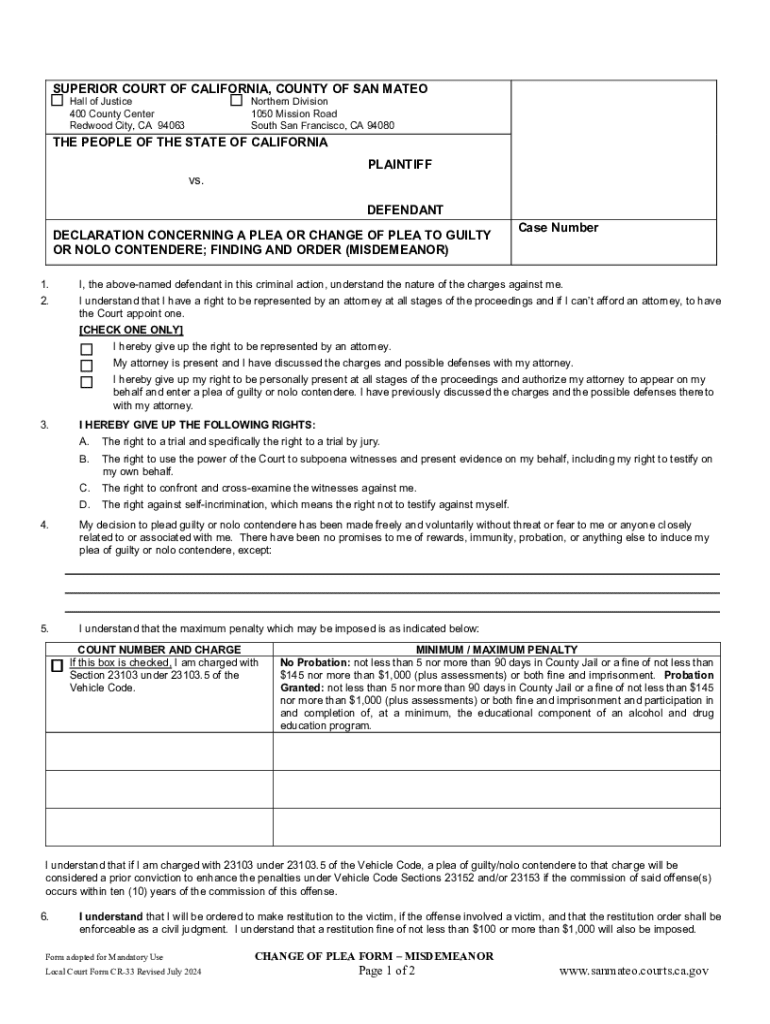







Definition & Meaning
The "Declaration Concerning a Plea or Change of Plea to Guilty or Nolo" is a legal document used primarily in the context of misdemeanor cases. It is essential for formalizing a defendant's decision to plead guilty or "no contest" (nolo contendere), meaning they do not dispute the charges but their plea cannot be used as an admission of guilt in a civil case. This form is crucial for ensuring the defendant is fully aware of the rights they are waiving, such as the right to a trial, and acknowledges the potential penalties associated with the charges.
Purpose and Explanation
This document serves multiple purposes. It acts as a formal record of the defendant’s decision, ensuring it is made knowingly and voluntarily. It also provides a clear outline of the legal consequences and rights being waived by the defendant, supporting the integrity of the court proceedings.
Key Elements of the Declaration
The declaration includes several critical components that require careful attention from the defendant, their attorney, and the presiding judge.
Waived Rights
- Right to a jury trial
- Right to confront witnesses
- Right to remain silent and not incriminate oneself
These rights are central to the legal protection of defendants, and acknowledging their waiver is a significant part of the plea process.
Potential Penalties
- Fines and restitution payments
- Probation terms
- Possible imprisonment
Understanding these potential outcomes is crucial for the defendant to make an informed decision regarding their plea.
Steps to Complete the Declaration
Completing the "Declaration Concerning a Plea or Change of Plea to Guilty or Nolo" requires several methodical steps to ensure accuracy and compliance with legal standards.
-
Consultation with Legal Counsel: Before completing the form, the defendant should consult their attorney to fully understand the rights being waived and the potential legal implications of their plea.
-
Fill in Personal Information: Include full name, case number, and details of the charges being faced.
-
Select the Plea: Indicate whether pleading guilty or nolo contendere. Clearly state the choice to ensure no ambiguity.
-
Review and Acknowledge Rights and Consequences: Carefully read each section related to waived rights and potential penalties, understanding the legal implications.
-
Signatures: The defendant, their attorney, and, if necessary, an interpreter must sign the document to validate the plea. The form is incomplete without these signatures.
-
Judge's Acceptance: The form must be presented in court for the judge’s approval, which officially accepts the plea and incorporates it into the case record.
Who Typically Uses the Declaration
This legal form is primarily used by defendants in misdemeanor cases, with specific relevance to those seeking to streamline their legal proceedings by avoiding a trial.


Involved Parties
- Defendant: The individual charged with the misdemeanor.
- Defense Attorney: Advises the defendant and ensures the form is filled accurately.
- Prosecutor: May be involved in plea negotiations preceding the form’s completion.
- Judge: Reviews and accepts the plea to confirm its voluntary and informed nature.
Legal Use of the Declaration
The "Declaration Concerning a Plea or Change of Plea to Guilty or Nolo" holds a significant position in the legal process, safeguarding both the defendant's rights and the judicial system's integrity.
Ensuring Compliance
The form ensures that defendants are not coerced into pleading guilty or nolo and that they are fully informed of the consequences, thereby protecting their legal rights.
Documentation of Consent
By signing the form, all parties involved affirm that the plea is made voluntarily, without any compulsion, and with a complete understanding of the legal effects.
Important Terms Related to the Form
Understanding the terminology used in and around this form is crucial for proper completion and comprehension of its implications.
Key Terms
- Nolo Contendere: Plea of no contest; not admitting guilt but accepting penalty.
- Restitution: Financial compensation ordered to be paid to the victim by the defendant.
- Waiver: The intentional relinquishment of a known right, such as the right to a trial.
Familiarity with these terms can help ensure the defendant fully comprehends the document and the process it supports.
State-Specific Rules for the Declaration
Though the form’s primary elements remain consistent, specific state regulations can influence the process and requirements for completing this legal document.
Regional Variations
- Varied court procedures for accepting pleas
- Differences in the acceptance of nolo contendere depending on state laws
- State-specific penalties and sentencing guidelines
Defendants should consult their attorneys to understand any regional particulars that may affect their case.
Examples of Using the Declaration
Real-world scenarios illustrate how this form functions within the legal system.
Case Studies
- A defendant facing DUI charges opts for a plea of nolo contendere, avoiding the drawn-out process of a trial while still accepting a temporary license suspension and court-imposed fines.
- In a minor theft case, the defendant pleads guilty, acknowledging full responsibility and understanding the imposed penalties such as community service and compensation for damages.
Each case exemplifies the varied application and outcomes of using this declaration within the legal framework.




