






Definition & Meaning
The "Notice of Appearance of Counsel" is a formal legal document that signifies an attorney's intention to represent a party in a legal proceeding. This document notifies the court and other parties involved in the case that a particular lawyer or law firm is acting on behalf of the client. Filing a Notice of Appearance is an essential procedural step to ensure that communication and legal notices are delivered correctly. Often required by courts, failure to file this document might result in missed legal communications or procedural missteps.
In practical terms, this notice ensures that a designated attorney receives all relevant information, including court dates, motions, and other legal documents related to the case. Accurate filing ensures that the client’s legal representation is transparent and formally acknowledged by the court. For clients and their attorneys, it facilitates clear communication channels and proper legal protocol adherence.
How to Use the Notice of Appearance of Counsel
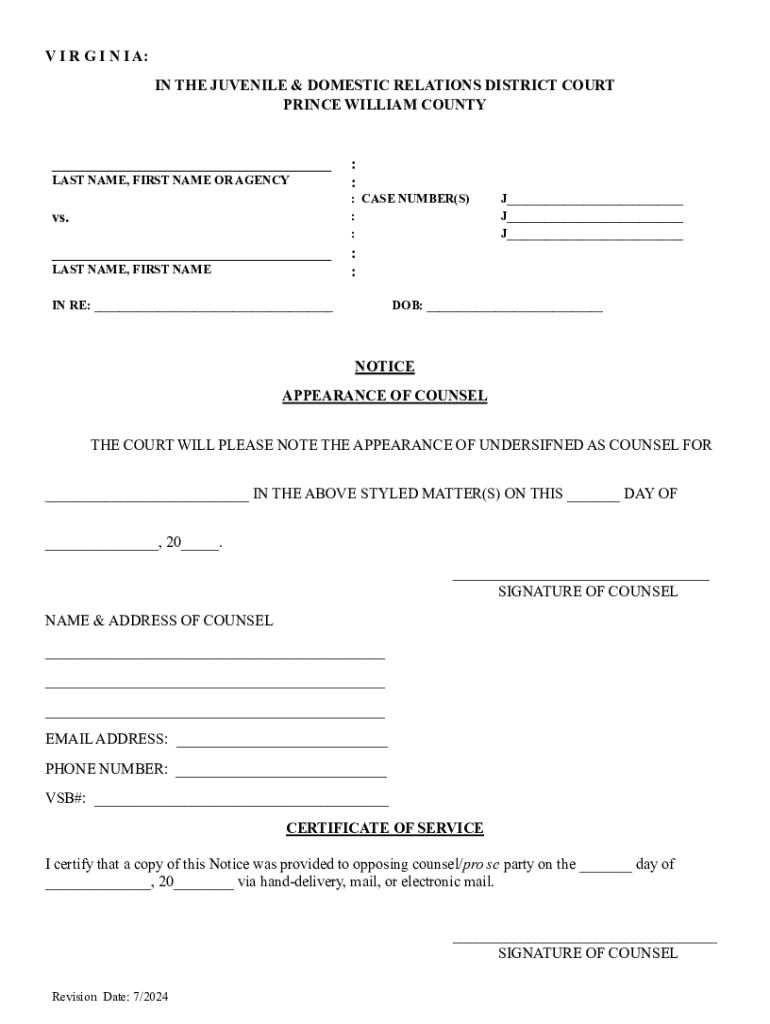
Using a Notice of Appearance of Counsel involves several important steps to ensure its proper execution and filing. Attorneys must first complete the form accurately, including all necessary case details such as the names of the parties, the case number, and other pertinent legal information. The document must be signed by the attorney and submitted to the court as per the court’s specific requirements.
-
Preparation: Gather all necessary case information, including case number and client details.
-
Filling Out the Form: Include all relevant details about the case and the counsel.
-
Submission: Submit the form to the appropriate court and serve a copy to all parties involved in the case. The method of serving can vary; it might involve mailing or electronic filing, depending on the jurisdiction.
-
Confirmation: Confirm receipt by the court and other parties to ensure compliance.
Using this form correctly is crucial as it establishes the attorney’s role in the legal proceedings and enables them to receive all communications pertinent to the case.
Steps to Complete the Notice of Appearance of Counsel
Filling out the Notice of Appearance of Counsel is straightforward but must be done with precision to avoid errors. Below is a step-by-step guide:
-
Identify the Appropriate Court: The form should be directed to the court handling your case. Make sure to verify the court's requirements for submission.
-
Input Case Information: Clearly provide the case number, title, and names of the parties involved in the legal matter, ensuring no details are left out.
-
Attorney Information: Fill in the attorney’s full name, contact details, and their bar identification number. This section legitimizes the attorney's authority to represent the client.
-
Client Details: Include the client’s name and other essential identification to correctly associate the legal representation.
-
Signature and Date: The attorney must sign the document and note the date to validate the form correctly.
-
Filing: Submit copies to the court and other parties as dictated by the court’s procedural rules.
Following these steps diligently ensures compliance with legal procedures and helps maintain order in legal proceedings.
Key Elements of the Notice of Appearance of Counsel
The Notice of Appearance of Counsel consists of several critical components that must be filled out accurately:
- Case Number: Essential for tracking and recording the document in the correct file.
- Names of Parties: Both the plaintiff and defendant must be correctly referenced to avoid any conflict or confusion.
- Attorney Information: Comprehensive details about the representing attorney or firm.
- Client Representation: Clear acknowledgment of the client the counsel represents.
- Certificate of Service: Confirms that a copy of the notice was provided to all parties, establishing transparency.
Each of these elements serves a purpose in formalizing the attorney’s involvement and ensuring all parties acknowledge their role.
Legal Use of the Notice of Appearance of Counsel
Legally, the Notice of Appearance of Counsel serves as a formal declaration to a court that an attorney has taken over responsibility for legal representation of a party. It assures the court that all legal communications will be directed to the proper channel. This contributes significantly to the court's and legal system's efficiency, as it defines clear lines of communication and responsibility.
For clients, this document can establish peace of mind, assuring them they are appropriately represented throughout the legal proceedings. For courts, it aids in maintaining organized records of who is authorized to speak on behalf of parties involved in cases.
State-specific Rules for the Notice of Appearance of Counsel
Different states may have varying requirements and procedures regarding the filing of a Notice of Appearance of Counsel. Some states require electronic filing, while others may still allow mailed paperwork or in-person submissions. Attorneys need to familiarize themselves with local court rules to ensure compliance. Failure to adhere to state-specific guidelines can lead to delays or complications in legal proceedings.
For instance, some states might demand additional certifications or affidavits to accompany the Notice of Appearance. Therefore, it’s vital to review the specific requirements of the jurisdiction where the case is being heard.
Examples of Using the Notice of Appearance of Counsel
Consider a scenario in Virginia where an attorney is representing a client in a juvenile court case. The attorney must file a Notice of Appearance to officially enter the case, providing the court with assurance that all communications related to the case are forwarded to the proper legal representative.
Another example is a multi-state business case, wherein attorneys from different states might need to coordinate and submit separate Notices to ensure each jurisdiction formally acknowledges their role.
These examples highlight the form's practical applications across various legal settings and case types.
Penalties for Non-Compliance
Failing to submit a Notice of Appearance of Counsel can lead to several penalties and issues. Without proper filing, an attorney may miss critical communications, potentially jeopardizing the client’s case due to lack of information. Courts may also impose fines or other punitive measures for non-compliance, particularly in cases where procedural requirements are stringent.
Furthermore, non-compliance can reflect poorly on the professional standing of the attorney or firm involved, leading to reputational damage and loss of client trust.
Digital vs. Paper Version
The availability of digital vs. paper versions of the Notice of Appearance of Counsel varies by jurisdiction. Many courts now offer electronic filing systems, which benefit attorneys through convenience and speed. Digital submissions reduce paper waste and offer immediate confirmation of receipt, while traditional paper methods may lag due to mailing times and processing.
Attorneys should evaluate which method best suits their practice and jurisdiction, capitalizing on the legal system’s modernization where applicable. Digital filing has become increasingly preferred, allowing for streamlined communication and efficiency in legal processes.