






Definition & Meaning
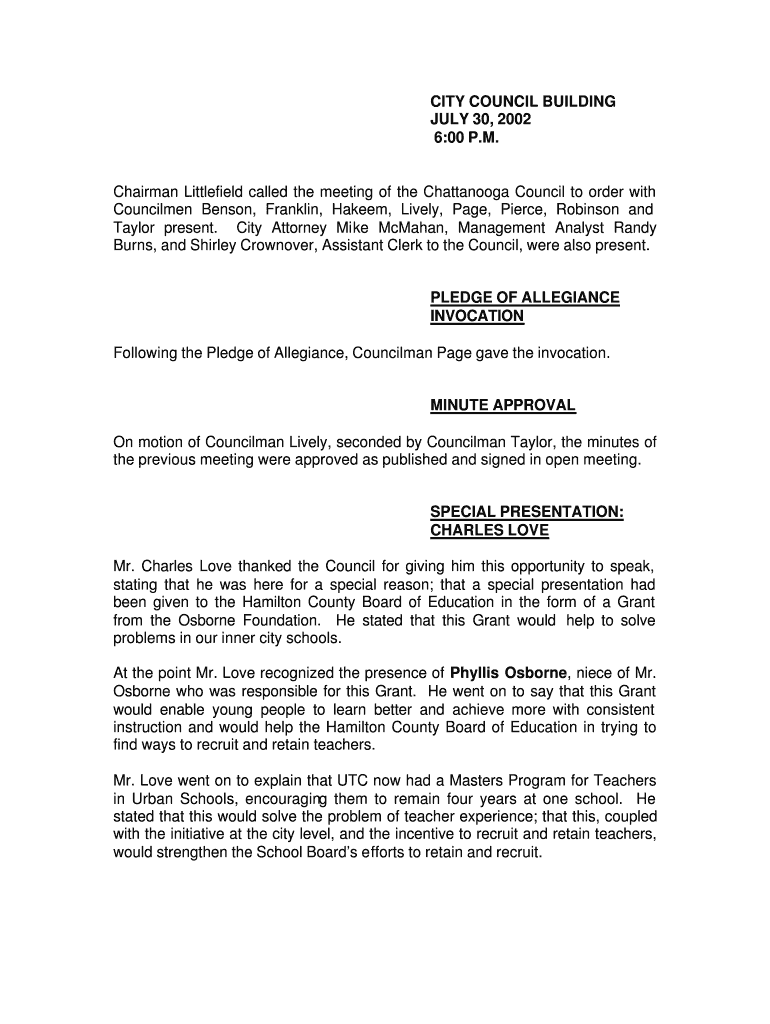
The "CITY COUNCIL BUILDING JULY 30, 2002 6:00 P M Chairman" refers to a meeting held by the city council in Chattanooga on July 30, 2002, presided over by the chairman. This meeting was convened to discuss a variety of municipal affairs, including the approval of previous meeting minutes, budget allocations, and community initiatives. Understanding the proceedings of this meeting is crucial as it provides insights into legislative decisions and community engagement at that time. Such records serve as an official account of discussions and decisions made by city governance bodies, laying the groundwork for future policies and community developments.
Purpose and Use
City council meetings play a vital role in ensuring transparent governance. They are platforms where elected officials deliberate, debate, and make decisions on public policies and community issues. The meeting on July 30, 2002, included crucial topics like educational grants, tax ordinances, and community recognition. Minutes from such meetings are essential for public records, offering constituents a clear view of their representatives' actions and facilitating accountability.
Steps to Complete the City Council Documentation
Understanding how to document a city council meeting involves several key steps. Accurately minuting such meetings ensures that all proceedings are officially recorded and accessible for future reference.
-
Preparation Before the Meeting:
- Gather all necessary materials, including previous minutes, agenda, and supplementary documents.
- Ensure recording devices are functional for precise documentation.
-
During the Meeting:
- Record the time the meeting is called to order and list attendees.
- Take note of key discussions, motions put forward, outcomes of votes, and decisions made.
- Log specific items discussed, such as ordinances and stakeholder comments.
-
Post-Meeting Documentation:
- Compile and format the minutes in a structured manner.
- Review for accuracy, ensuring that all decisions and motions are captured correctly.
- Distribute the documented minutes to council members for approval and archiving.
Detailed Breakdown of Key Elements
- Agenda Items: Record each agenda point, ensuring all proposed items are addressed.
- Public Comments: Log insights from public contributors to capture community sentiments and concerns.
- Resolutions and Ordinances: Detail resolutions passed and ordinances introduced or amended.
- Voting Outcomes: Document how each council member voted to maintain a clear record of decisions.
Key Elements of the Meeting
The July 30, 2002, city council meeting involved multiple essential components, integral for understanding its impact.
Major Topics Discussed
- Approval of Previous Meeting Minutes: The council reviewed and accepted the minutes from the last meeting, ensuring a continuous record of governance.
- Educational Grants: Discussions focused on allocating funds to support educational initiatives, highlighting the city's commitment to educational development.
- Tax Increase Proposal: A proposed 4% hotel tax increase to fund the Riverfront Plan was a significant point of debate, with stakeholders expressing concern about potential impacts on the hospitality sector.
Stakeholder Involvement
Stakeholders from various sectors participated, offering diverse perspectives that guided council considerations. This involvement underscores the collaborative approach to decision-making, ensuring that multiple voices contribute to shaping city policies.
Legal Use of Meeting Minutes
Documented minutes serve as a legal record, necessary for compliance and future legal references. They provide transparency and accountability, protecting the city council and its members from potential legal disputes by offering a factual basis of proceedings.
Compliance and Record-Keeping
- Ensure all minutes are accurate and approved to meet legal standards.
- Store minutes securely, making them accessible for public and legal review.
Who Typically Uses Meeting Minutes
City council minutes serve a broad audience, from public officials to community members.
Primary Users
- Elected Officials: Utilize these minutes for reference in future decision-making processes.
- Community Members: Access minutes to stay informed about local governance.
- Legal and Regulatory Bodies: Review minutes for legal and compliance verification.
State-Specific Rules
While general practices for city council minutes exist, specific rules can vary by state.
- Tennessee-Specific Guidelines: The meeting in Chattanooga adheres to Tennessee's public records act, ensuring that all council documentation is publicly accessible and adequately preserved.
Examples of City Council Meeting Use
The city council meetings provide essential archival value.
- Historical Records: Serve as a point of reference for historians studying municipal governance evolutions.
- Educational Resources: Offer case studies for students and researchers in public administration and political science courses.
By thoroughly reading and analyzing the minutes, stakeholders can gain a comprehensive understanding of local governance and its historical context.