






Definition & Meaning
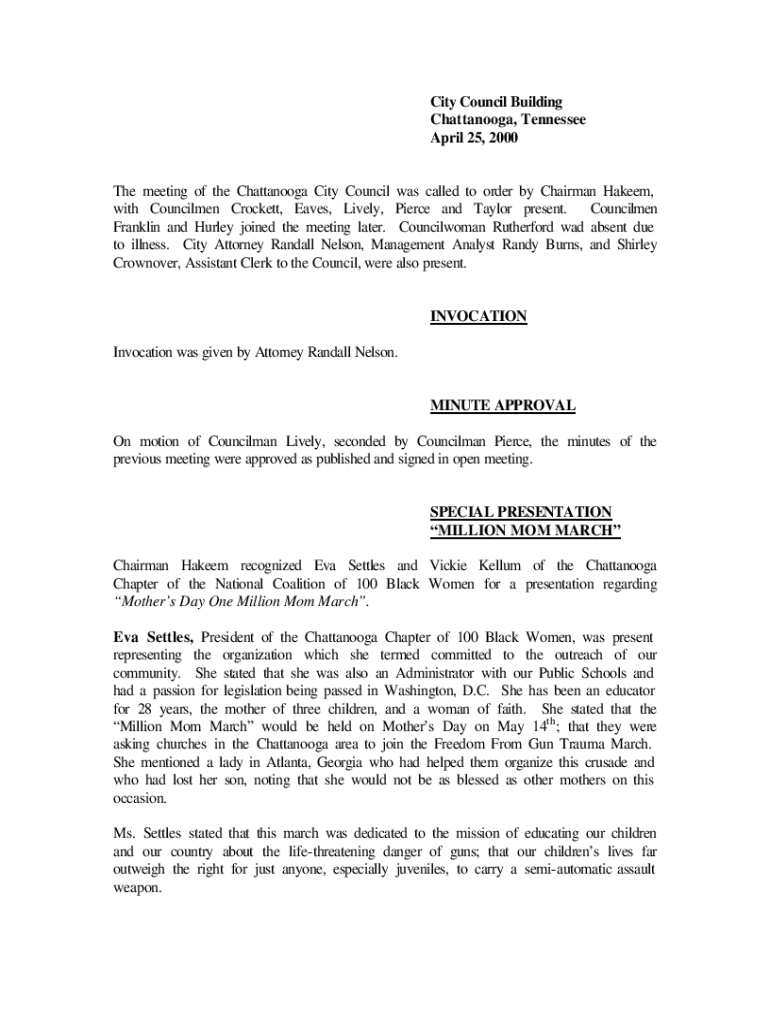
The "City Council Building Chattanooga, Tennessee April 25, 2000 The" refers to a specific city council meeting held in Chattanooga, Tennessee, on April 25, 2000. This event involved discussions on various civic matters, including rezoning issues, tax sales, and property conveyance. The minutes serve as an official record of the proceedings, capturing attendance, decisions made, and discourse on significant topics.
- City Council Meetings: These sessions are formal gatherings where elected officials discuss, debate, and make decisions on city governance matters.
- Importance of Minutes: They provide a transparent account of decisions, serve as a legal document, and offer insights into governmental operations.
Key Elements of the Meeting
Key components of the April 25, 2000, meeting involved various civic issues and resolutions. These elements included:
- Rezoning Discussions: A significant topic was the proposed rezoning by MC Properties. The debate saw varied opinions from council members and community representatives and eventually led to the denial of the rezoning request.
- Delinquent Tax Sales: Resolutions relating to the sale of properties due to unpaid taxes were addressed, impacting municipal revenue and property ownership.
- Property Conveyance: The council considered transferring property to Habitat for Humanity, emphasizing community development and affordable housing initiatives.
How to Use the City Council Building Chattanooga, Tennessee April 25, 2000 The
Understanding how to utilize city council meeting minutes effectively can enhance engagement in local governance:
- Research Tool: Analyze past decisions to anticipate future council actions and understand governance trends.
- Community Involvement: Use insights from the minutes to participate meaningfully in public hearings or council meetings.
- Legal Reference: Utilize documented decisions for legal proceedings or addressing civic concerns.
Steps to Complete the City Council Building Chattanooga, Tennessee April 25, 2000 The
While minutes themselves don't require completion, engaging with the content requires specific actions:
- Access the Minutes: Obtain copies from the city website, municipal office, or public library archives.
- Review Key Issues: Focus on sections relevant to ongoing civic projects or personal interests.
- Prepare for Engagement: Use the analyzed information to draft queries or proposals for upcoming meetings.
Who Typically Uses the Meeting Minutes
Various groups find value in city council meeting minutes, including:
- Residents: To stay informed about local governance and community development efforts.
- Business Owners: To understand regulatory changes or property developments.
- Legal Professionals: As records for civic-related legal cases.
- Researchers: For studies on urban development, policy changes, or historical governance trends.


Legal Use of the Meeting Minutes
Meeting minutes from the city council serve multiple legal and administrative purposes:
- Official Records: Provide a legal account of city council actions, imperative for transparency and accountability.
- Evidence: Useful in court cases or disputes regarding municipal decisions.
- Policy Development: Inform the creation and amendment of city policies or ordinances.
Important Terms Related to the Meeting
Understanding key terms enhances comprehension of the minutes:
- Rezoning: The process of changing land use designations, crucial for urban planning and development.
- Resolution: A formal expression of decision or opinion adopted by the council.
- Invocation: An opening prayer or statement, often part of official proceedings.
State-Specific Rules
Although city council meetings may follow general formalities, specific regulations can vary:
- Open Meetings Act: Ensures public access to municipal proceedings, promoting transparency.
- Local Governance Statutes: Determine procedural requirements and member roles, influencing meeting structure.
Examples of Using the Meeting Minutes
Real-world applications highlight the functionality of meeting minutes:
- Community Planning: Residents reference past minutes to propose new parks or development projects.
- Policy Advocacy: Advocacy groups use documented votes to support or contest upcoming legislative actions.
- Historical Research: Analysts examine the minutes to track the evolution of city policies and public sentiment over time.