






Definition & Meaning
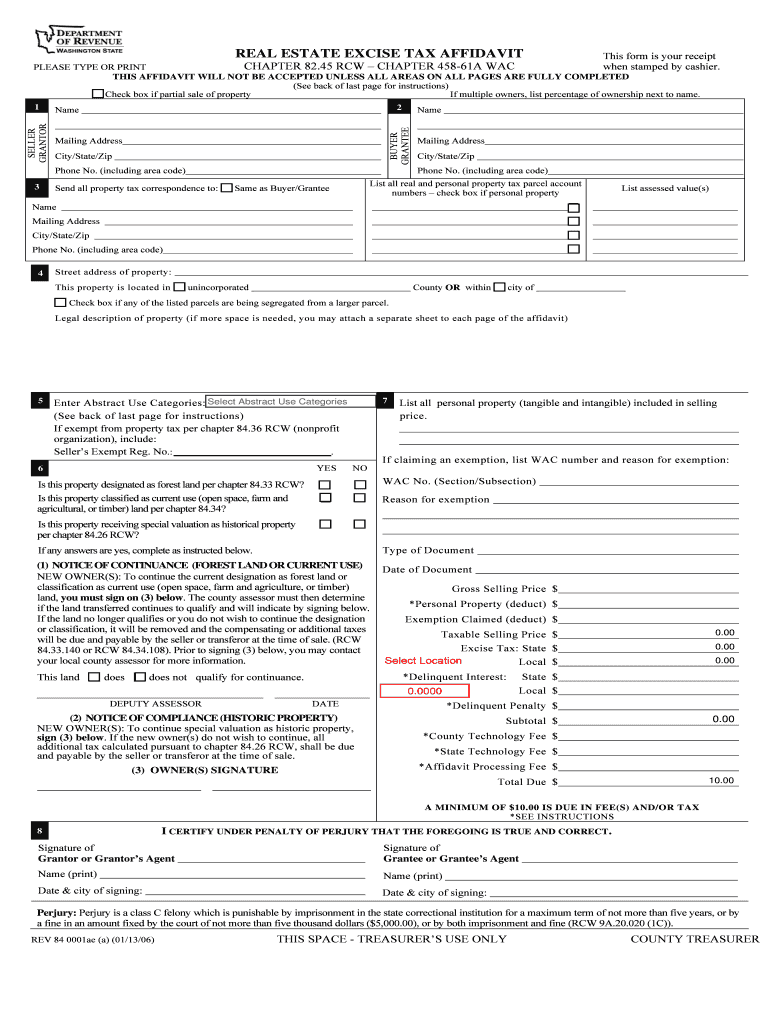
The Real Estate Excise Tax Affidavit, often referred to as REETA, is a mandatory document used in Washington State for all property transactions. This form serves to disclose critical details about the real estate transfer, including the calculated excise tax due based on the property's selling price. By completing this affidavit, parties involved in the transaction ensure that the required taxes are assessed appropriately, thereby facilitating the accurate recording of property sales with the County Treasurer's or Recorder's Office.
Key Elements of the REAL ESTATE EXCISE TAX AFFIDAVIT
- Property Details: This includes the address, parcel number, and legal description of the property being transferred.
- Buyer's and Seller's Information: Personal details, such as names and contact information of both parties involved in the transaction.
- Ownership Percentages: Any shared ownership should be clearly stated, detailing each owner's percentage.
- Exemption Clauses: If applicable, list reasons for any exemptions from excise tax as per the state's guidelines.
- Tax Calculation: A detailed calculation of the excise tax to be paid, derived from the property's sale price and any applicable exemptions.
How to Obtain the REAL ESTATE EXCISE TAX AFFIDAVIT
To obtain a REETA form in Washington State, you can visit the local County Treasurer's or Recorder's Office. Alternatively, many county websites offer downloadable versions of the form for convenience. It's essential to use the most current version of the form to ensure compliance with any recent updates to tax laws or regulations.
Steps to Complete the REAL ESTATE EXCISE TAX AFFIDAVIT
- Gather Information: Collect all necessary details regarding the property and parties involved.
- Fill Out Property Information: Enter the legal description, parcel number, and address.
- Provide Buyer and Seller Details: Input the complete names and contact information for both the buyer and seller.
- Specify Ownership: Clearly outline any ownership percentages, if applicable.
- Calculate the Tax: Use the property's selling price to determine the excise tax owed. Consider any possible exemptions.
- Review and Submit: Double-check all entries for accuracy before submission to the appropriate county office.
Legal Use of the REAL ESTATE EXCISE TAX AFFIDAVIT
The REETA form is legally required for every property transfer in Washington to ensure accurate taxation and public record keeping. Failing to submit this affidavit can result in penalties and delays in the property registration process. It also acts as a legal declaration by the buyer and seller regarding the transaction details.
State-specific Rules for the REAL ESTATE EXCISE TAX AFFIDAVIT
Washington State mandates the use of REETA forms for property transactions, with regulations enforcing its submission at the county level. Each county may have specific nuances in form completion and submission guidelines, making it vital for users to check local requirements. Statewide, the excise tax rates may vary, and certain counties may offer unique exemptions.
Penalties for Non-Compliance
Non-compliance with the REETA requirements can lead to significant penalties, including fines and interest on unpaid taxes. Failure to submit an accurate affidavit might also impede the legal transfer of property ownership, resulting in additional legal complications. Parties are encouraged to adhere to submission deadlines to avoid incurring late fees.
Form Submission Methods (Online / Mail / In-Person)
The REETA can be submitted through multiple channels:
- Online: Some counties offer digital submission to streamline the process.
- Mail: Mail the completed form to the appropriate county office, ensuring all requisite documents are included.
- In-Person: Direct submission at the County Treasurer's or Recorder's Office ensures immediate processing and the opportunity to address discrepancies on the spot.
Required Documents
When submitting the REETA, you will need:
- Completed Affidavit: Full and accurate completion of the form.
- Sale Agreement: A copy of the real estate purchase contract.
- Payment Evidence: Proof of excise tax payment or exemption eligibility.
- Supporting Documentation: Any documents supporting claimed exemptions or special conditions.
Examples of Using the REAL ESTATE EXCISE TAX AFFIDAVIT
Consider a scenario where a homeowner in King County sells their property. They would need to fill out a REETA, detailing the sale price, applicable tax calculations, and any exemptions they qualify for, such as interfamily transactions or specific state-offered exemptions. Proper completion and submission within time limits lets new owners gain official ownership rights without future disputes.