
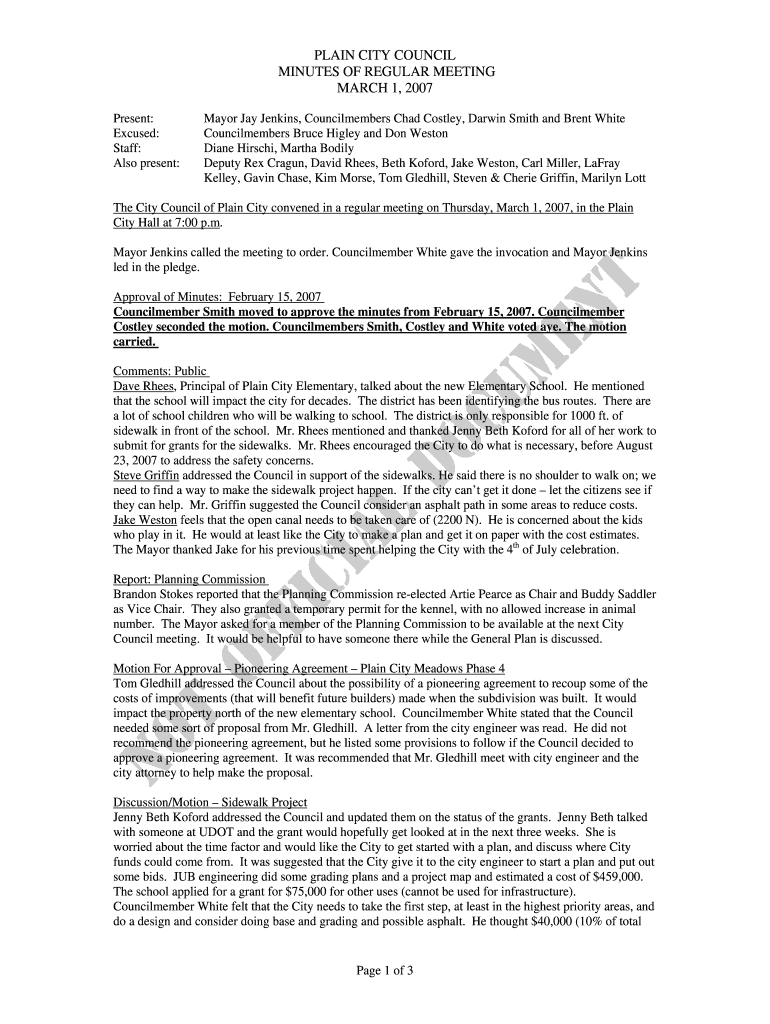







Definition & Meaning of the Table of Contents - Plain City
The "Table of Contents - Plain City" refers to a structured list or index that outlines the main topics and subtopics covered in a document related to Plain City. This could include public records, municipal meeting notes, or other official documents produced by or for Plain City Council. The table of contents is essential for providing a clear, organized overview of the document's content, allowing readers to quickly navigate to their area of interest.
Importance of a Table of Contents
- Navigational Tool: Acts as a roadmap, guiding users to specific sections within larger documents.
- Organizational Aid: Helps in structuring complex information, improving comprehensibility.
- Enhances Accessibility: Facilitates quick access to relevant information, especially in lengthy documents.
Practical Applications
- City Council Meetings: Outlines minutes and agenda items for public viewing.
- Development Plans: Details future projects and associated community impacts.
- Public Announcements: Lists municipal updates and changes relevant to residents.
How to Use the Table of Contents - Plain City
Using the table of contents effectively requires an understanding of its layout and function. Each entry in the table typically links to a specific section, allowing for efficient navigation.
- Identify Main Sections: Main headings in the table of contents should reflect the major sections of the document.
- Use Subsections for Detail: Detailed subsections help in drilling down to specific points of interest.
- Leverage Hyperlinks: In digital formats, hyperlinks can be used to jump directly to relevant sections.
Steps for Efficient Use
- Familiarize with Main Topics: Skim through the primary headings to understand the document's structure.
- Focus on Relevant Subsections: Identify and click on specific subsections relevant to the user's needs.
- Reference Back and Forth: Use the table of contents to move between sections as needed.
How to Obtain the Table of Contents - Plain City
Acquiring a table of contents typically involves accessing the document through official city resources or online platforms.
Sources for Access
- City Website: Municipal documents are often available for download through official city websites, providing quick access to the table of contents.
- Public Libraries: Libraries may maintain archives of local government documents, including those relevant to Plain City.
- Direct Request: Requesting the document directly from city officials or departments can be a method to obtain the specific table of contents.
Steps to Complete the Table of Contents - Plain City
For those creating or updating a table of contents related to Plain City documents, a systematic approach ensures comprehensive and accurate organization.
- Compile Document Sections: Gather all headings and subheadings from the document.
- Organize Hierarchically: Arrange headings in a logical order from broad topics to specifics.
- Align with Document Order: Ensure the order of topics in the table matches the document sequence.
Important Details to Include
- Major Headings: Reflects key topics.
- Subsection Details: Provides specific insights under each main category.
- References: Includes page numbers or hyperlinks for easy navigation.
Why You Should Use the Table of Contents - Plain City
The utility of a table of contents in municipal documents is significant, offering numerous benefits for both creators and users.
Key Advantages
- Improves Efficiency: Saves time by providing direct access to sections of interest.
- Enhances Understanding: Helps in grasping the overall scope and structure of complex documents.
- Facilitates Better Communication: Supports clearer dissemination of information across various stakeholders.
Who Typically Uses the Table of Contents - Plain City
Different groups within the community rely on the table of contents to access and comprehend local government documents.


Common User Groups
- City Officials: Use the table for organizing and referencing governmental proceedings.
- Residents: Access public information on developments and community issues.
- Researchers & Academics: Analyze municipal documents for studies or projects.
Key Elements of the Table of Contents - Plain City
Identifying the essential components of an effective table of contents is vital for ensuring its usability and effectiveness.
Structural Components
- Main Headings: Represent the core sections of the document.
- Subheadings: Offer granularity within primary topics.
- Pagination or Links: Provide direct access option to each section.
Tips for Effective Table Creation
- Maintain Consistency: Use uniform formatting and style for headings.
- Ensure Clarity: Keep language straightforward for easy understanding.
- Update Regularly: Reflect any document changes promptly to maintain accuracy.
Examples of Using the Table of Contents - Plain City
Insight into practical examples underscores why having a functional table of contents is beneficial in Plain City's documentation context.
Real-World Scenarios
- City Planning: Residents reviewing future development plans can quickly locate sections on zoning changes using the table of contents.
- Council Minutes: Individuals interested in specific agenda items from council meetings can navigate directly to the relevant portions.
- Policy Review: Legal professionals referencing local ordinances or policy documents can efficiently identify applicable sections.
By thoroughly covering these aspects, this guide on the "Table of Contents - Plain City" offers deep insights and multiple examples of its practical applications, enhancing the usability for residents and officials alike.




