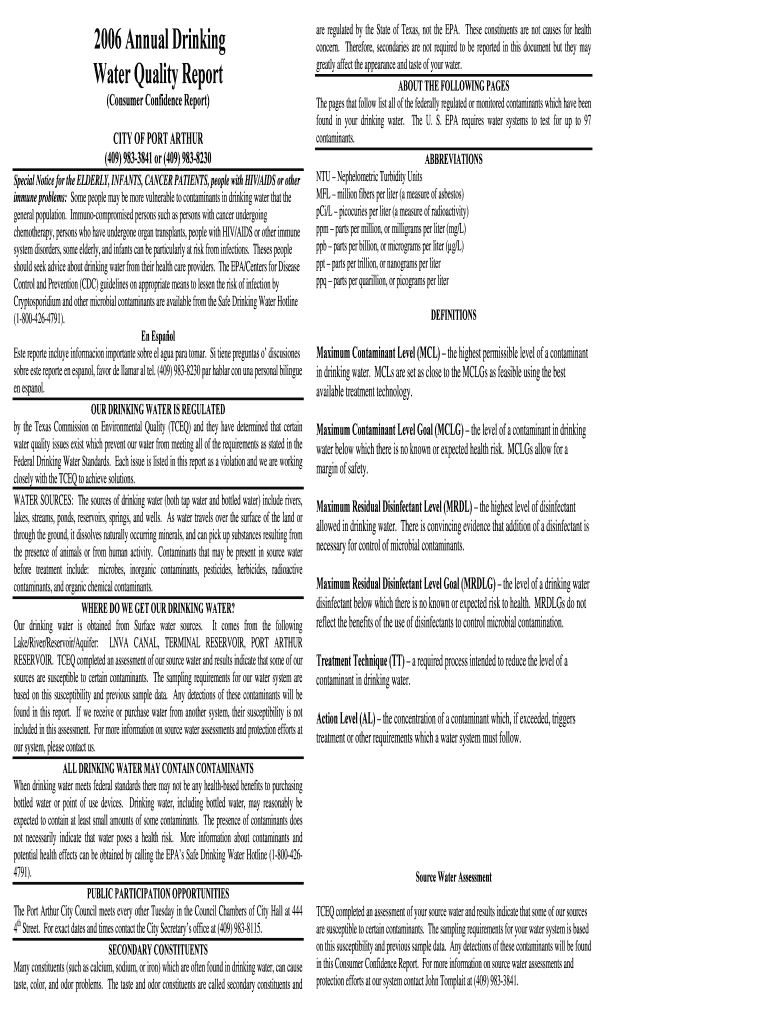







Definition and Meaning of the 2006 Annual Drinking Water Quality Report
The 2006 Annual Drinking Water Quality Report for the City of Port Arthur, Texas, is a comprehensive document that provides detailed information about the safety and quality of the drinking water supplied to residents. It includes data on contaminants present in the water, their concentrations, and compares these levels to federal and state standards. This report aims to inform residents about the quality of their drinking water and any potential health risks associated with its consumption.
Key Components of the Report
- Contaminant Levels: Details of specific contaminants found in the water, such as lead, arsenic, and nitrates, alongside measured concentrations.
- Comparison to Standards: Analysis of how water quality measures against EPA and state health standards.
- Source Information: Description of water sources, such as rivers, reservoirs, or groundwater, supplying the city.
- Health Implications: Explanation of the health risks for vulnerable populations, including infants, the elderly, and individuals with compromised immune systems.
Importance of Understanding the Report
Understanding this report is crucial for residents to make informed decisions about their water consumption and to participate in city discussions regarding water quality issues. It also serves as a transparency tool, allowing the public to verify city compliance with safety regulations.
How to Use the 2006 Annual Drinking Water Quality Report
The report is a critical resource for residents, policymakers, and health officials to assess local water quality and its implications for public health. Users can leverage the information to advocate for changes in water treatment practices if necessary.
Steps to Interpret the Report
- Identify Contaminants: Look at the list of contaminants found in the water supply.
- Review Health Risks: Understand the potential health effects associated with these contaminants.
- Compare Standards: Evaluate how the contaminant levels stack up against national and state standards.
- Engage with Local Authorities: Use the report to raise questions or concerns with city officials.
Practical Examples
- Residents: Can use the report to identify if additional water filtration is necessary for personal use.
- Policy Makers: May analyze the report to inform decisions about infrastructure investments or public health campaigns.
How to Obtain the 2006 Annual Drinking Water Quality Report
The report is typically made accessible through multiple channels to ensure broad distribution and transparency.
Ways to Access
- City Website: Often available as a downloadable PDF or document from the City of Port Arthur’s official site.
- Local Library: Physical copies may be archived for public access.
- City Hall: Copies can be requested in person or via phone call.
Benefits of Multiple Access Points
Providing the report through various avenues ensures that individuals without internet access or those who prefer printed materials can still obtain crucial water quality information.
Steps to Read and Understand the Report
Successfully interpreting and using the information within the report involves breaking down its components methodically.
Detailed Steps
- Start with the Summary: Review the executive summary for an overview of findings.
- Analyze Data Tables: Examine detailed tables that list contaminant levels and their sources.
- Understand Regulatory Context: Familiarize yourself with applicable federal and state regulations mentioned in the report.
- Note Recommendations: Pay attention to any recommended actions for residents, especially vulnerable groups.
Real-World Scenario
A local health department may reference the report to develop targeted interventions in areas where contaminant levels approach regulatory limits, ensuring public safety and mitigating health risks.
Why Should You Review the 2006 Annual Drinking Water Quality Report?
Reviewing the report empowers individuals with knowledge about their water quality, fostering informed decision-making.
Benefits for Residents
- Health Safety: Ensures awareness of any immediate health risks.
- Community Engagement: Encourages active participation in local governance and infrastructure planning.
- Regulatory Compliance: Understanding helps ensure municipal accountability and adherence to water quality standards.
Case Study
In situations where historical data indicate rising contaminant levels, community groups can utilize this report to galvanize support for improved water management practices.
Key Elements of the 2006 Annual Drinking Water Quality Report
The report is structured to provide comprehensive information across several critical components.
Main Elements
- Water Source Descriptions: Identifies origins of water supply and potential vulnerabilities.
- Contaminant Details: Offers a detailed account of findings on specific substances present in the water.
- Health Guidance: Presents guidelines for interpreting risks based on levels of exposure.
Considerations for Residents
By focusing on these key elements, residents can better understand the safety and quality of their drinking water, which can influence their daily consumption habits.
State-Specific Rules for Drinking Water Reports
While federal guidelines govern overall water quality standards, specifics can vary by state.
Texas-Specific Regulations
- Local Jurisdiction Standards: Texas may have additional stipulations dictating how information is reported or what additional contaminants are monitored.
- State Health Department: Ensures compliance and can impose more stringent measures than federal levels as needed.
Implications
Understanding state-specific rules helps clarify the nuances in regulatory compliance and guides residents in properly assessing their local water quality data.
Legal Use of the 2006 Annual Drinking Water Quality Report
The report has legal implications tied to regulatory compliance and public health standards.
Application in Legal Contexts
- Regulatory Compliance: Used by legal entities to confirm that the city meets mandatory health standards.
- Public Health Advocacy: Utilized by consumer advocacy groups to hold municipalities accountable for safe water delivery.
Legal Actions
Residents who experience health issues related to water quality may leverage the report in legal proceedings to demonstrate potential negligence or regulatory breaches by the city.